

65% TSER Isn’t Enough: Installer Checks to Verify Window Film
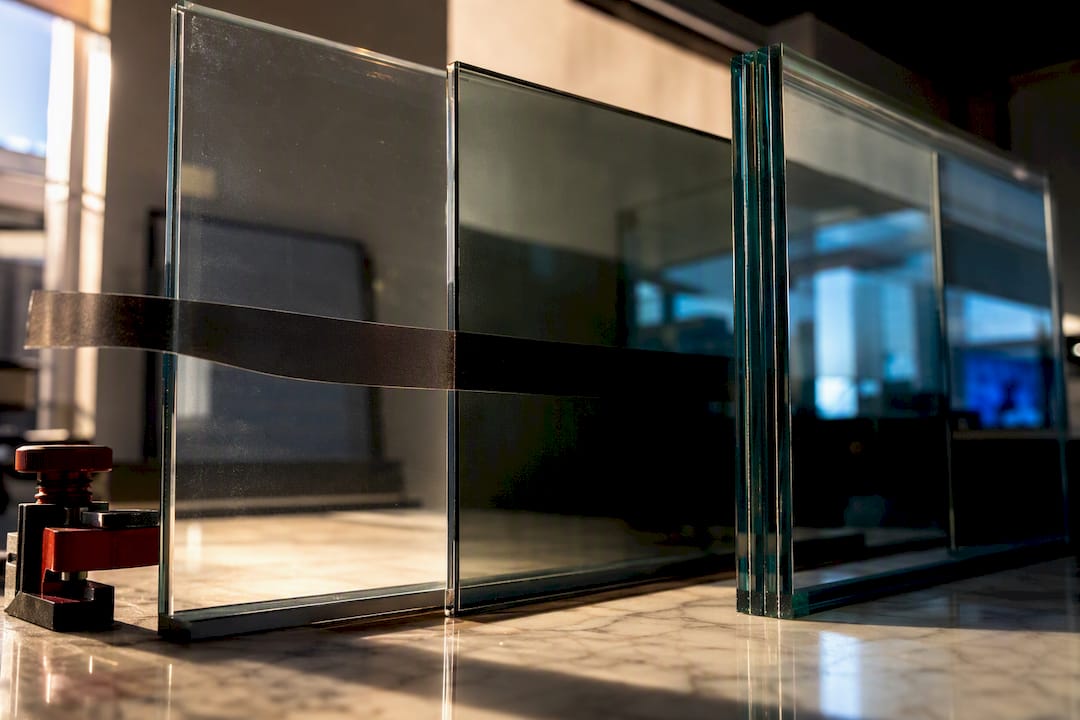
TSER, or Total Solar Energy Rejected, measures the percentage of the sun’s full energy spectrum a film blocks, and it’s the single best number for comparing heat rejection across brands. Use it as your primary filter, then cross-check visible light transmittance (VLT) so you don’t sacrifice too much daylight. As a baseline, look for TSER above 50% for meaningful heat control, above 65% for strong performance, and above 75% for the exceptional tier.
TL;DR:
- Most window films offer realistic TSER ranges between 25 and 75 percent, depending on the film type and quality.
- TSER measures heat rejection across ultraviolet, visible, and infrared bands, making it the most comprehensive metric for heat control.
- Confirm that TSER, VLT, and IR rejection figures are tested under the same reference glass conditions to ensure accurate comparisons.
- Higher TSER ratings generally result in darker or reflectively mirrored films, so match the film to your specific sun exposure and interior needs.
- Proper installation and verified NFRC testing are essential to ensure the film performs at the rated TSER level over its lifespan.
Table of Contents
- What TSER Measures and Why It Matters
- VLT and IR Rejection: What Each Number Really Tells You
- Realistic TSER Ranges by Film Type
- How to Read a Spec Sheet Without Getting Misled
- What Higher TSER Actually Feels Like Indoors
- Why Installation Quality Changes What TSER You Actually Get
- Three Rules for Picking the Right TSER Target
- Getting the TSER Performance You’re Actually Paying For
- Where to Verify TSER Claims Yourself
- Sources
What TSER Measures and Why It Matters
TSER accounts for the entire solar spectrum hitting your glass: ultraviolet, visible light, and infrared. Because it covers all three bands, it’s the most comprehensive single metric for judging how much heat a film actually keeps out, rather than how it performs in one narrow slice of sunlight.
UV rejection matters for fading fabrics and protecting skin, but UV carries a small fraction of the sun’s total energy. The Skin Cancer Foundation notes UV protection is a genuine health benefit, though it’s not the main driver of indoor heat buildup. Visible light and infrared do the heavy lifting there.
TSER and Solar Heat Gain Coefficient (SHGC) describe the same physical reality from opposite directions. SHGC measures the fraction of solar heat that passes through the glass and film assembly; TSER measures the fraction rejected. A film with a 0.35 SHGC is blocking roughly 65% of solar heat, in the same neighborhood as a 65% TSER rating, though the two aren’t always calculated on identical scales or reference conditions.
That reference condition is the catch. TSER numbers only mean something when tied to a known pane of glass, and NFRC exists specifically to standardize how that testing happens. A few things worth confirming before you trust a TSER figure:
- Whether it’s tested on clear annealed glass or a coated, tinted, or laminated pane
- Whether the manufacturer discloses the glass thickness used in testing
- Whether the same reference condition applies to every film you’re comparing
VLT and IR Rejection: What Each Number Really Tells You
VLT tells you how much visible light passes through the film, essentially how bright a room feels. IR rejection tells you how much infrared energy, the invisible heat you feel radiating off glass, gets blocked. Neither number alone tells you how a film performs overall.
A light, nearly clear film can carry a high TSER if it’s engineered with ceramic or spectrally selective layers. Meanwhile, a very dark film can post a surprisingly low TSER if most of its performance comes from blocking visible light rather than infrared or UV. Darkness and heat rejection are not the same thing, despite what intuition suggests.
IR rejection claims are where marketing gets slippery. A manufacturer might quote “99% IR rejection,” but that figure often applies to a single wavelength, not the full infrared band. Full-spectrum IR rejection is much harder to inflate than a cherry-picked wavelength. This is exactly why TSER remains the more trustworthy comparison tool.
- VLT: brightness and visibility, not heat performance on its own
- IR rejection: radiant heat feel, but verify it’s full-spectrum, not single-wavelength
- TSER: the composite number that accounts for both, plus UV
Pro Tip: Ask any dealer quoting an IR rejection percentage whether it’s measured across the full near-infrared band (roughly 780 to 2,500 nanometers) or at one wavelength. If they can’t answer, treat the number with skepticism.
Realistic TSER Ranges by Film Type
Film chemistry sets a ceiling on what TSER you can realistically expect, and knowing those ceilings keeps you from chasing numbers no product in that category delivers. Published spec-sheet comparisons put realistic ranges at roughly these levels:
- Dyed film: around 25 to 35% TSER. Affordable, but heat rejection is modest and dye can fade over years of UV exposure.
- Carbon film: around 35 to 45% TSER. More stable than dyed film, with a matte, non-reflective look that many homeowners prefer.
- Metallized film: around 60 to 75% TSER. Strong heat rejection, but the metal content can interfere with cell signals and gives a reflective, mirror-like exterior.
- Ceramic and spectrally selective films: commonly 45 to 75% TSER, depending on the specific product line. These films use nano-ceramic particles to reject heat without relying heavily on tint or metal, so you can hit high TSER while keeping VLT reasonably high too.
VLT and TSER pull against each other. A film that blocks almost everything (very high TSER) usually does so by cutting visible light sharply or by reflecting a large share of the spectrum, which is why the highest-TSER options tend to look darker or mirrored. If you want a nearly clear film with strong heat performance, spectrally selective ceramic film is typically your best middle ground, even though it costs more than dyed or carbon options.
Match your target TSER to your actual sun exposure rather than chasing the highest number on the shelf:
- South or west-facing rooms with direct afternoon sun generally benefit from films with relatively higher TSER.
- Mixed exposure or partial shade often requires moderate TSER performance.
- Shaded or north-facing glass gains noticeable comfort improvements from lower TSER films, allowing prioritization of higher visible light transmittance instead.
How to Read a Spec Sheet Without Getting Misled
Every TSER figure on a spec sheet is only as trustworthy as the reference glass behind it, so that’s the first thing to verify, not the last. Ask the dealer directly: was this tested on clear annealed glass, or on tinted, coated, or laminated glass? A film tested against already-tinted glass will show a lower apparent TSER contribution than the same film tested on clear glass, even though the film itself hasn’t changed.
Request SHGC and VLT figures measured on that same reference glass, not pulled from a different test report. Mixing reference conditions across numbers on the same page is one of the most common ways specs get misread, even by experienced buyers.
A few concrete checks before you sign anything:
- Confirm the TSER, SHGC, and VLT figures all reference the same glass type and thickness
- Ask whether IR rejection is full-spectrum or single-wavelength
- Request the actual NFRC label or test report, not just a marketing brochure
- Watch for “up to” language attached to any single number, since that phrasing often describes a best-case product in the line, not the one you’re buying
NFRC test methods exist precisely because manufacturers self-report differently, and independent verification closes that gap.
Pro Tip: If a quote lists TSER but not the reference glass, ask for it in writing. A legitimate manufacturer or installer will have that data on hand within minutes, not days.
What Higher TSER Actually Feels Like Indoors
Government energy guidance treats window film as a practical retrofit for cutting cooling costs, and Energy frames film selection as a climate-and-orientation decision, not a one-size number. That framing matters because the same film performs differently depending on where it’s installed.
Several variables shift the real-world outcome beyond the TSER figure itself:
- Existing glass type, since double-pane low-e glass already blocks some solar heat before film gets involved
- Window orientation and how many hours of direct sun the glass receives daily
- Local climate, since a 65% TSER film matters more in a hot, sunny region than a mild coastal one
- HVAC setup, since a smart thermostat responding to reduced heat load compounds the savings
A west-facing living room with unshaded afternoon sun is one of the toughest scenarios in a home. A film in the 65 to 75% TSER range, paired with moderate VLT to keep the room from feeling dim, typically produces a noticeable drop in surface glass temperature and a real reduction in how hard the AC has to work through peak afternoon hours.
Applied research on low-emissivity film performance reinforces that outcomes are genuinely site-specific. Two identical films on two different homes can produce different comfort results depending on glass age, orientation, and existing insulation, which is exactly why a reputable installer measures your specific windows rather than quoting a blanket recommendation.
Why Installation Quality Changes What TSER You Actually Get
A film’s lab-tested TSER assumes a clean, correctly applied installation. Bubbles, edge lifting, or improper adhesive curing degrade optical clarity and can shorten the film’s working life well before its rated lifespan. Twtwindowfilm’s installations use 3M and LLumar film, both backed by a lifetime warranty, on projects ranging from residential solar control to specialized data center and server room installations where consistent performance matters even more.
Before you commit to a quote, request:
- The NFRC label or test report tied to the specific film being installed
- Written warranty terms, including whether they cover bubbling, peeling, or discoloration
- Before-and-after temperature or glare comparisons from similar past projects
- On-site measurement of your actual glass rather than a generic recommendation
Three Rules for Picking the Right TSER Target
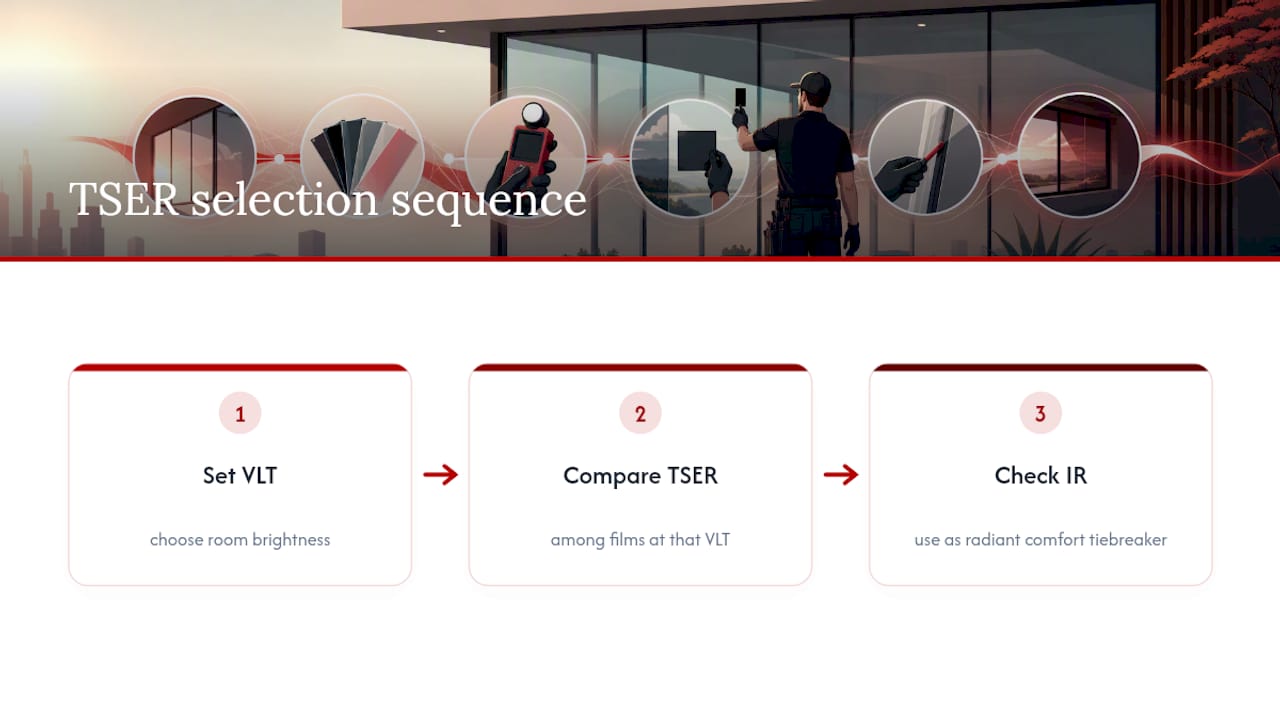
Prioritize VLT first to set how bright you want the room, then use TSER to compare heat performance among films that hit that VLT target, then check IR rejection as a tiebreaker for radiant comfort. That sequence, recommended by practitioner guides, keeps you from chasing the highest TSER number at the cost of a room that feels like a cave.
Reach for spectrally selective ceramic film when you want high TSER without losing much VLT. Reach for reflective or metallized film only when raw heat rejection matters more than appearance or cell signal, like a west-facing garage or storage building.
Film has limits. Single-pane glass, failing seals, or windows past their functional life are cases where replacement outperforms even the best film on the market, and an honest installer should tell you that instead of selling you a film that’s fighting a losing battle.
— Jake
Getting the TSER Performance You’re Actually Paying For
Reading a spec sheet tells you what a film should do. Getting that performance in your own home or building depends entirely on the installer behind it. Twtwindowfilm has spent since 2008 installing 3M and LLumar film across Orange County and Los Angeles County, and every job comes with a lifetime warranty, so the TSER number on the sheet isn’t a hopeful estimate. It’s what you can expect to still be getting years later.
Whether you’re a homeowner dealing with a west-facing living room that turns into an oven every afternoon, or a facility manager evaluating commercial solar control film across a whole building, the right move is the same: get your actual glass measured instead of guessing from a brochure. Twtwindowfilm provides free on-site estimates, confirms the reference glass and NFRC data behind every recommendation, and matches film choice to your specific exposure rather than pushing the highest number on the price list. If you’re also weighing other envelope upgrades, pairing window film with newer interior doors can compound the energy savings. Start with a free estimate on Twtwindowfilm’s services page and get a TSER recommendation built around your actual windows, not a generic spec sheet.
Where to Verify TSER Claims Yourself
For readers who want to check manufacturer claims directly, NFRC publishes the test standards behind SHGC and related film ratings. Energy.gov’s window covering guidance covers broader retrofit strategy, and the RenoHouse spec-sheet explainer breaks down realistic TSER ranges by film class in plain language.