
Stop Costly Glass Replacement: Anti Graffiti Film for Storefronts
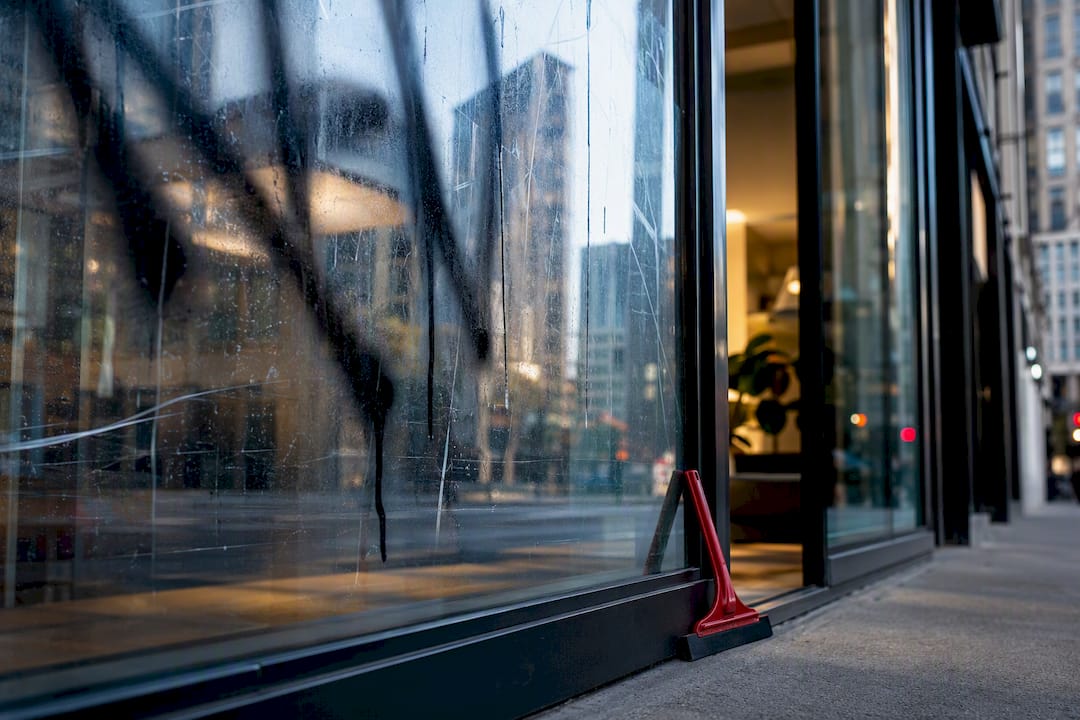
Anti-graffiti film is an optically clear sacrificial layer that protects glass from paint, marker, acid etching, and scratches, and you peel it off and replace it if someone vandalizes it. Most products run 4 to 8 mil thick, and professional installation is what keeps the finished surface looking like bare glass instead of a cheap sticker. It’s not right for every surface. Brick, stucco, and concrete need a different fix entirely, but for storefront glass, it’s usually the cheapest way to dodge a full glass replacement bill.
TL;DR:
- Anti-graffiti film thickness typically ranges from 4 to 8 mil, with heavier shield films used for high-vandalism areas to improve puncture resistance.
- The pressure-sensitive adhesive allows for easy removal and reapplication without residue, provided the installation is properly done on suitable surfaces.
- Cost savings are significant, as replacing film is faster and cheaper than full glass reglazing, especially if vandalism occurs multiple times annually.
- Film is ineffective on porous or textured surfaces like brick or concrete, where specialized coatings offer better durability and chemical resistance.
- Proper installation and maintenance involve thorough surface prep, wet application, careful edging, and routine cleaning with mild solutions to avoid film damage or delamination.
Table of Contents
- What Anti-Graffiti Film Is Made Of and What the Specs Mean
- How Anti-Graffiti Film Actually Protects the Glass
- Where Film Wins and Where It Falls Short
- How Installation and Maintenance Actually Work
- What Anti-Graffiti Film Actually Costs
- How to Choose a Product and Vet an Installer
- The Windows Tinting SoCal Perspective on Storefront Protection
- Get a Free On-Site Estimate for Anti-Graffiti Film
- Sources
- FAQ
What Anti-Graffiti Film Is Made Of and What the Specs Mean
Anti-graffiti film is built from polyester film with an abrasion-resistant top coat and a pressure-sensitive adhesive on the back. That adhesive layer matters more than most buyers realize: it’s engineered to hold the film flat against glass without forming a permanent chemical bond, which is why the whole sheet can be stripped off later without pitting or hazing the glass underneath.
When you’re comparing products, a handful of numbers on the spec sheet tell you almost everything you need to know.
- Mil thickness: Most storefront-grade films run 4 or 6 mil; heavier “shield” films built for high-vandalism zones can go thicker for extra puncture resistance.
- Visible light transmission (VLT): A clear anti-graffiti film should sit close to raw glass, often with high visible light transmission comparable to raw glass, so the storefront doesn’t look tinted or hazy.
- UV rejection: Quality films block a large share of UV rays, which helps slow fading on merchandise, signage, and interior finishes near the glass.
- Abrasion resistance: 3M’s AG4 technical datasheet lists ASTM test values for scratch resistance and tensile strength, and those numbers are the real trust signal, not marketing copy.
Beyond the base product, you’ll find printable overlaminates for branding, decorative or frosted variants for privacy, and dedicated shield films with extra thickness for entryways that see repeat vandalism. Ask any supplier for the datasheet before you sign anything.
How Anti-Graffiti Film Actually Protects the Glass
The whole system works because the film, not the glass, takes the damage. Spray paint, permanent marker, keys, and even acid-based etching creams attack the top surface, and since that surface is a removable sheet of polyester rather than the storefront window itself, none of it reaches the actual glass.
The abrasion-resistant coating is what resists scratching and light chemical attack in the first place, and the pressure-sensitive adhesive underneath is what keeps that coating from ever forming a permanent bond with the glass. That combination is deliberate: it lets an installer strip the vandalized film off in one piece and reapply a fresh sheet without leaving residue or clouding behind, a design detail confirmed in 3M’s AG4 datasheet.
There’s a secondary benefit that surprises a lot of storefront owners: UV rejection. Blocking most UV rays doesn’t just protect merchandise from fading. It also cuts the amount of heat gain coming through the glass, which changes how a room feels without noticeably darkening it, since VLT stays high on clear grades.
Pro Tip: Ask to see a sample panel under direct sunlight before you commit. Cheap films sometimes shift from clear to slightly gray or green once installed, and you want to catch that on a sample, not on your storefront.
Where Film Wins and Where It Falls Short
Film earns its keep on cost and speed. Replacing a damaged sheet of film generally takes less time and money than swapping out a full pane of tempered or laminated storefront glass, and that difference compounds fast for any business that gets hit more than once.
- Lower cost than glass replacement: Materials and labor for a film swap are a small slice of what reglazing costs, and you skip the lead time on custom-cut glass.
- Minimal downtime: A damaged panel can often be stripped and reapplied within a day, versus days or weeks waiting on a glazier.
- UV protection and appearance: You get fade protection and a clean, undamaged look without changing how the storefront reads to customers.
The limitation is baked into the design: it’s sacrificial. Severe vandalism, deep gouges from tools, or repeated acid etching in the same spot will eventually mean pulling the whole sheet and starting over, sometimes more than once a year in high-traffic urban corridors.
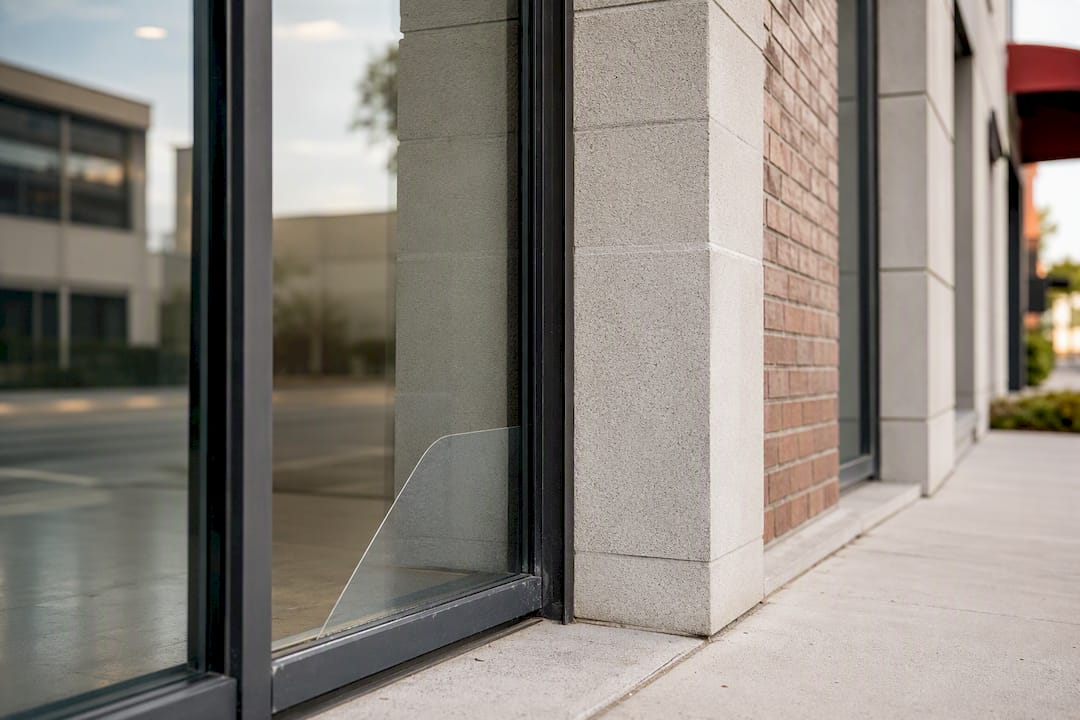
Film also isn’t the right tool for porous or textured substrates like brick, stucco, or unsealed concrete. Adhesive won’t hold reliably on those surfaces, and permanent, non-sacrificial coatings, typically silane or polysiloxane based, are built for that job instead. Those coatings chemically bond into the material and can survive multiple cleaning cycles before needing reapplication, which makes them the better long-term choice for masonry that gets tagged repeatedly. Film stays the better call for anything transparent.
How Installation and Maintenance Actually Work
Getting a clean, bubble-free result comes down to process, not luck. A professional crew follows a fairly consistent sequence:
- Surface prep: The glass gets scraped and washed to remove old adhesive, dirt, and mineral deposits that would otherwise trap under the film.
- Wet application: Installers apply a slip solution to the glass and the film’s adhesive side, which lets them float and reposition the sheet before it sets.
- Squeegeeing: A hard squeegee pushes out the slip solution and air in overlapping passes, working from center to edges.
- Trimming: Excess film gets trimmed tight to the frame with a fresh blade, since a sloppy edge is the number one place peeling starts.
- Curing: The film needs roughly a few days to fully set and clear any minor haze, depending on temperature and humidity.
DIY jobs usually fail at steps two and three. Dust trapped under the film shows up as a permanent speck, a rushed squeegee pass leaves trapped moisture that clouds over time, and an uneven trim at the edge gives vandalism (or just weather) a place to start peeling the film loose. Installer training programs put heavy emphasis on exactly this kind of edge work and wet-application technique, because it’s what separates a film that lasts years from one that’s failing within months.
Pro Tip: Check the corners and edges first when inspecting any installed film. That’s where delamination starts, long before it shows up in the middle of the pane.
For routine cleaning, it is recommended to use mild soap and water or the cleaner your installer recommends. Avoid ammonia-based glass cleaners on tinted or coated films, since ammonia can degrade certain film coatings over time. Light graffiti or marker can sometimes be cleaned off the film’s surface without full replacement, but deep gouges, spray paint that’s penetrated the coating, or etched-in acid damage almost always call for pulling and replacing the sheet.
What Anti-Graffiti Film Actually Costs
Pricing varies based on a number of predictable variables, so it helps to know what’s actually driving your quote before you compare bids.
- Square footage: Bigger storefronts and multi-pane facades cost more, but the per-square-foot rate often drops as the job gets larger.
- Film mil and grade: Heavier shield films and printable overlaminates cost more than standard 4 mil clear film.
- Access and height: Second-story windows, tall entryways, or awkward angles add labor time and sometimes equipment costs.
- Old film removal: Stripping a prior installation before applying new film adds a line item most people don’t budget for.
- Local labor rates: Installer pricing varies by region the same way any skilled trade does.
The core economic case for film is straightforward: materials plus labor plus near-zero downtime almost always beats the cost of custom-cut replacement glass, delivery lead times, and the lost foot traffic while a boarded-up window sits waiting for a glazier. Before choosing between film and a permanent solution, run through a short checklist: how often does this location get hit, how much does downtime cost you per day, and is the surface glass or masonry? If vandalism happens more than once or twice a year on the same glass, film usually pays for itself quickly. Preserving intact glass also matters for reasons beyond vandalism, since keeping original glazing in good condition protects a building’s overall look and resale value.
How to Choose a Product and Vet an Installer
Not every quote you get will be a good one. Before signing anything, run through these checks:
- Confirm substrate compatibility. Ask directly whether the film is rated for your specific glass type and whether tempered or laminated glass needs a different adhesive.
- Request the VLT and haze numbers. A legitimate supplier can hand you a datasheet with those figures, not just a marketing brochure.
- Ask about the removal and replacement process. Find out whether they’ve done tear-off-and-reapply jobs before and how long a typical replacement takes.
- Get the warranty terms in writing. Ask what’s covered, for how long, and whether labor for a future replacement is included or billed separately.
- Verify installer authorization. Premium film brands typically require dealer training, and an authorized installer should be able to prove it.
Watch for a few red flags: vague answers about mil thickness, no sample panel available, warranty language that only covers materials and not labor, or a quote that’s dramatically cheaper than every other bid you got. That last one is almost always a sign of thinner film, no authorization, or both.
The Windows Tinting SoCal Perspective on Storefront Protection
Anti-graffiti film requests come from storefronts, government buildings, and schools more than any other property type, and the priority is almost always the same: keep the glass optically clear and get the location back open fast. During a free on-site estimate, our team checks the actual substrate, measures the glass, and shows a sample panel so you can see the clarity before committing. Twtwindowfilm has installed window film across Southern California since 2008, backed by a lifetime warranty and materials from 3M and LLumar. That partnership matters most on jobs where downtime is expensive, like retail storefronts that can’t afford a boarded-up window for even a day.
— Jake
Get a Free On-Site Estimate for Anti-Graffiti Film
Twtwindowfilm skips the guesswork that comes with mail-order film kits or big-box installers who’ve never trained on a specific brand’s adhesive system. As an authorized installer working with 3M and LLumar, every job comes backed by a lifetime warranty on the installation itself, not just the material.
A free on-site estimate covers exact measurements, a check of your glass or substrate, a sample panel you can see in real light, and a written quote before any work starts. Whether you’re running a retail storefront, managing a government building, or looking after a place of worship that’s been targeted before, the process is the same: we assess, we show you the sample, and you decide. Serving Orange County and Los Angeles County, Twtwindowfilm is ready to book your on-site visit through the services page whenever you’re ready to stop patching damaged glass and start protecting it.
FAQ
What Is Anti-Graffiti Film?
It’s a clear, sacrificial polyester film with an abrasion-resistant coating and pressure-sensitive adhesive that sits over glass, absorbing paint, marker, and etching damage so the underlying glass never gets touched.
Does Anti-Graffiti Film Actually Work?
Yes, when it’s professionally installed on the right substrate. It won’t make glass indestructible, but it turns a costly repair into a same-day film swap, since manufacturer guidance confirms quick replacement is the main operational value.
How Much Does Anti-Graffiti Film Cost?
Pricing depends on square footage, film grade, access difficulty, and local labor rates, but it consistently runs far below the cost of custom glass replacement, which is why most storefronts recover the expense after just one or two vandalism incidents.
What’s the Difference Between Anti-Graffiti Coatings and Film?
Film is sacrificial and made for glass. Coatings, usually silane or polysiloxane based, chemically bond to porous surfaces like brick or concrete and can survive many cleaning cycles without full removal, making them the better fit for masonry rather than transparent glazing.