

Up to 97% IR Rejection, No Tint: Spectrally Selective Film for SoCal Homes
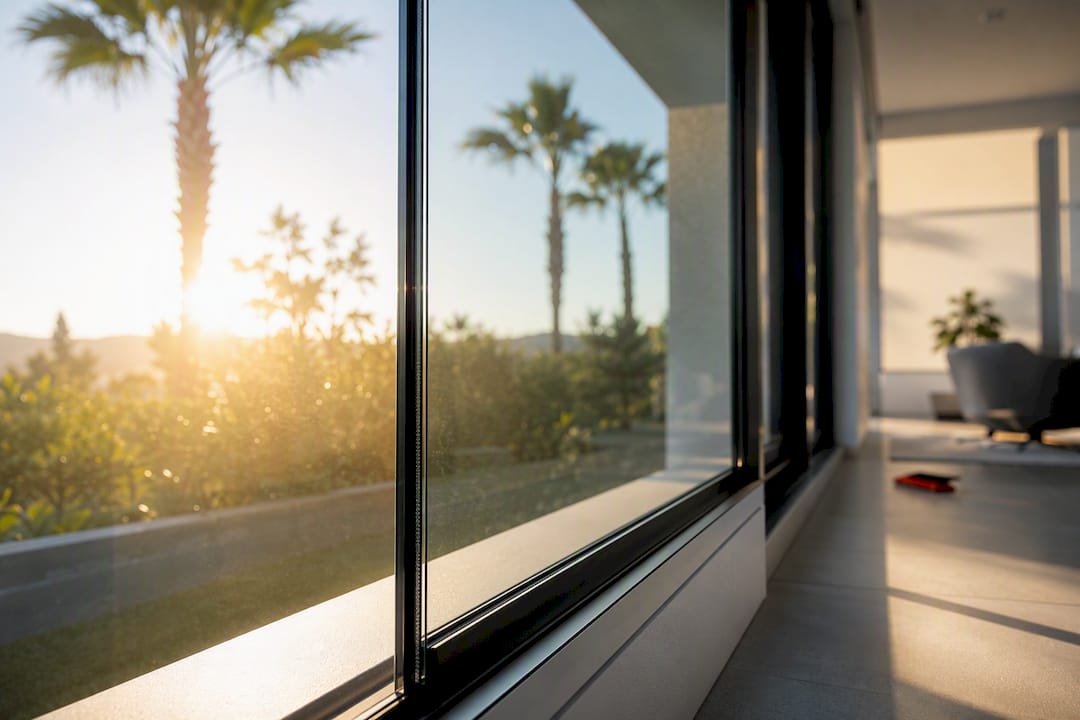
Spectrally selective window film blocks the infrared wavelengths that carry solar heat and filters out UV rays, while letting most visible light pass straight through. It suits homeowners fighting hot afternoon rooms and facility managers trying to cut HVAC costs, without turning glass into a dark mirror. If glare, fading furniture, or a west-facing wall that turns your living room into a greenhouse describes your problem, this is the fix worth understanding before you call an installer.
TL;DR:
- Spectrally selective window films reject up to 97% of infrared heat and block nearly all UV rays, providing effective heat reduction without darkening rooms.
- Proper installation by authorized professionals guarantees that the film performs as specified and prevents issues like bubbling and warranty nullification.
- The performance of the film depends on key metrics like IR rejection, UV blocking, and solar heat gain coefficient, which override the importance of VLT alone.
- Actual energy savings vary significantly based on climate, window orientation, and building specifics, making modeling essential before purchase.
- High-quality films come with warranties of several years, but only if installed by certified dealers, and the choice should depend on specific goals like heat rejection or daylight preservation.
Table of Contents
- What Makes Spectrally Selective Window Film Different
- What Kind of Performance Should You Actually Expect
- Why Installation Quality Decides Whether You Get These Numbers
- How To Pick The Right Film For Your Windows
- Where To Prioritize Film Across A Property
- Why Most Buyers Overthink The VLT Number
- Getting A Real Estimate Instead Of A Guess
- Sources
- FAQ
What Makes Spectrally Selective Window Film Different
Ordinary tint darkens everything it touches. It blocks heat by blocking light, indiscriminately, which is why older films leave rooms dim even when they work. Spectrally selective film takes a narrower approach: it targets the near-infrared band, the part of sunlight you feel as heat but never see, while leaving the visible spectrum largely untouched.
The construction matters here. Sputtered metal or metal-oxide coatings, laid down in microscopically thin layers, reflect infrared selectively based on wavelength rather than absorbing broad swaths of light. Ceramic and nanoceramic variants use non-conductive particles to achieve a similar split without the slight reflectivity metal coatings can add. 3M explains that this targeted approach can cut perceived heat without visibly darkening a room, which runs against the old assumption that better heat control always means a darker window.
When you read a manufacturer’s spec sheet, four numbers actually matter:
| Metric | What it tells you |
|---|---|
| VLT (visible light transmission) | How much daylight passes through, expressed as a percentage |
| IR rejection | How much infrared heat energy the film blocks |
| UV block | Percentage of ultraviolet rays filtered, tied directly to fading protection |
| TSER / SHGC | Total solar energy rejected / solar heat gain coefficient, the closest thing to a real-world heat score |
Ignore marketing copy that only lists one of these. A film with 70% VLT and no stated IR rejection number tells you almost nothing about how it will actually perform on a July afternoon.
What Kind of Performance Should You Actually Expect
Manufacturer numbers give you a real baseline, not just marketing language. 3M’s Prestige Series rejects up to 97% of infrared light and blocks up to 99.9% of UV rays, while still keeping visible light transmission high enough that rooms don’t feel tinted. Avery Dennison’s exterior spectrally selective line publishes comparable UV block figures alongside VLT and solar heat gain data across its product variants, giving you a second reference point when comparing quotes.
Less radiant heat hitting your skin near the window, a noticeably cooler surface temperature on the glass itself, and in many cases a lighter load on your air conditioning during peak sun hours. HVAC savings vary by climate, orientation, and how much glass you have, so treat any specific percentage claim about your utility bill with some skepticism until you’ve seen it modeled for your building.
The tradeoff worth knowing: lighter, higher-VLT spectrally selective films protect daylight better but reject slightly less total heat than the darkest solar films on the market. If you want a bright kitchen that still stays cool, that’s the correct compromise. If you’re treating a server room where heat matters more than aesthetics, you might lean toward a lower-VLT option instead. LLumar’s framing of these products as ones that “let sunlight in and keep heat out” captures the pitch accurately, and it’s the reason spectrally selective film has become the default answer for anyone who doesn’t want their windows to look tinted.
Why Installation Quality Decides Whether You Get These Numbers
A film’s datasheet performance and its real-world performance are two different things if the installation goes wrong. Consumer Reports flags DIY application as a common failure point: trapped bubbles, edges that lift within months, and film that never bonds properly to the glass. Beyond looking bad, a poor seal lets moisture in and shortens the film’s working life dramatically.
There’s also a warranty trap many buyers miss. Certain window and glass manufacturers will void their own product warranty if an incompatible film is applied, particularly on insulated or low-E glass units. A qualified installer checks glazing type before applying anything.
Warranted durability is your other clue to quality. Exterior spectrally selective films in professional product lines typically carry warranty ranges from several years up to a typical professional durability period, depending on the product and climate exposure. Before hiring anyone, ask for:
- The manufacturer’s technical data sheet for the exact film being installed
- Written warranty terms, including what voids coverage
- Confirmation the installer is an authorized dealer for that brand
- Glass compatibility sign-off in writing
Pro Tip: Ask the installer directly whether your specific window type (dual-pane, low-E coated, tempered) has ever caused thermal stress cracking with the film they’re proposing. A confident, specific answer means they’ve actually checked; a vague “should be fine” means they haven’t.
How To Pick The Right Film For Your Windows
Start with what you’re actually trying to fix, because that decision drives every spec that follows.
- Define the goal first. A sunroom that needs daylight but less glare wants higher VLT with strong IR rejection. A west-facing storefront baking in afternoon sun can tolerate lower VLT for maximum heat rejection.
- Get the glazing checked. Confirm your windows are compatible with the specific film before you fall in love with a spec sheet. Dual-pane, tempered, and low-E glass all behave differently under film.
- Ask for measured SHGC or TSER, not just VLT. A film advertised only by its light transmission number is hiding the half of the story that actually predicts your energy bill.
- Compare warranty length against installer authorization. A ten-year warranty means little if the installer isn’t an authorized dealer for that brand and the claim gets denied.
- Weigh lifecycle cost, not sticker price. A cheaper film that fails in three years costs more than a properly installed one that lasts a decade.
Running through this list on a vendor call takes five minutes and eliminates most of the guesswork that leads to buyer’s remorse.
Where To Prioritize Film Across A Property
South and west-facing glass takes the worst solar beating in almost every building, which makes those windows the obvious starting point if budget forces you to phase the project. Sunrooms and storefronts with large expanses of unshaded glass follow close behind, since both suffer from glare and fading as much as raw heat.
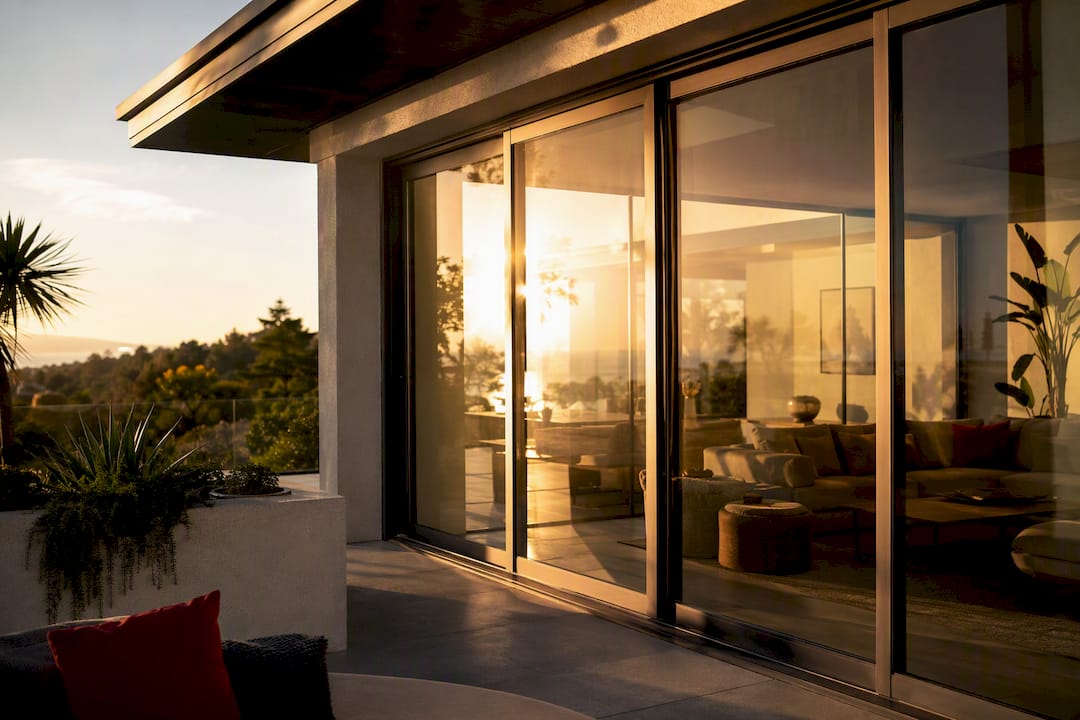
Server rooms deserve special mention. Even modest solar heat gain through a window can push a data center’s cooling system harder than the room’s own equipment does, which is why spectrally selective film gets specified in server-room retrofits specifically for its heat rejection without visible darkening. Interior application is usually the practical choice for occupied buildings, but exterior-grade film performs better on true heat load and is often the right call for standalone structures or historic buildings where preservation rules restrict what can touch the original glass. If fading carpets, artwork, or upholstery is your main complaint, treat whichever room gets direct afternoon sun first. That’s where UV damage compounds fastest.
Why Most Buyers Overthink The VLT Number
Here’s a pattern worth naming: buyers spend most of their research time obsessing over visible light transmission percentages, comparing 68% VLT against 70% VLT like it’s the number that matters most. It rarely is. Two films with nearly identical VLT can perform completely differently on infrared rejection, and IR rejection is what actually changes how a room feels in August.
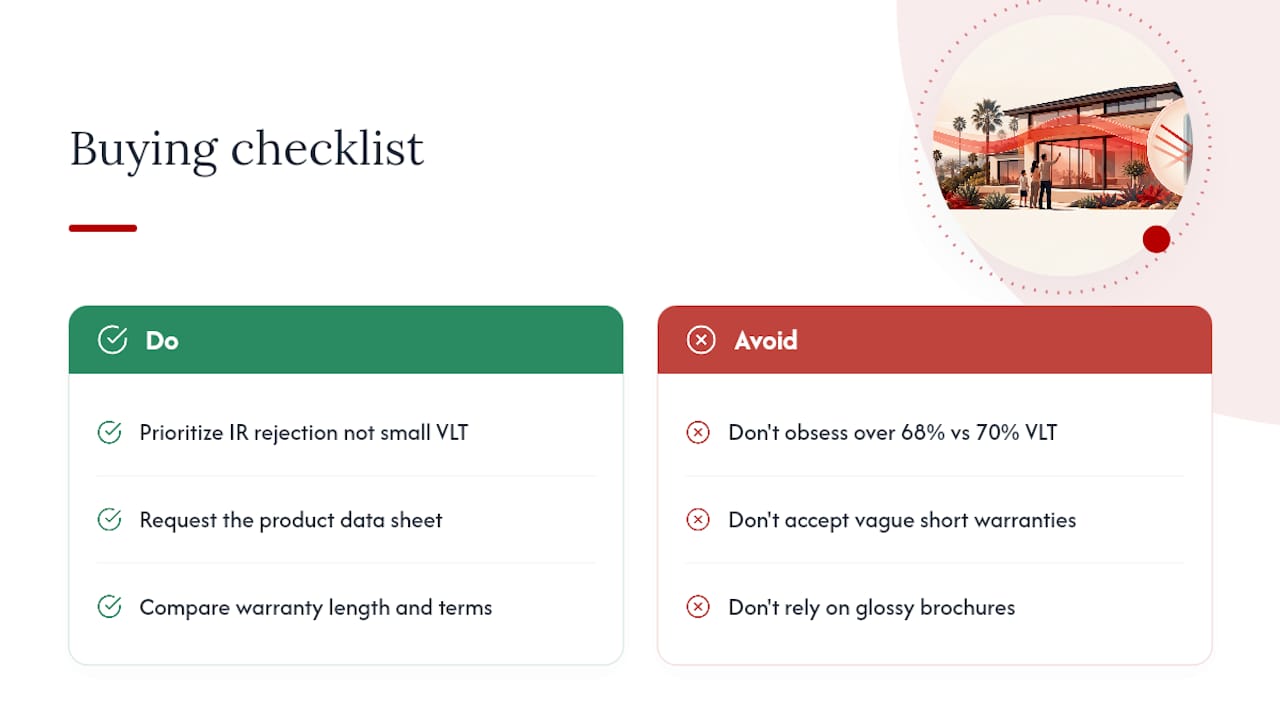
The bigger blind spot is warranty fine print. People will negotiate hard over a few hundred dollars in installation cost, then sign off on a film with a vague three-year warranty because the salesperson said it was “basically the same” as a competitor’s seven-year product. It isn’t. Warranty length is often the clearest signal a manufacturer has actually tested a product for real climate durability rather than just marketed it well.
If there’s one habit worth building before you buy: ask every installer for the actual data sheet, not a glossy brochure. A brochure sells a feeling. A data sheet tells you what the film does.
— Jake
Getting A Real Estimate Instead Of A Guess
This company specializes in window film installation with experience dating back to 2008, offering warranties on installation that extend beyond standard manufacturer coverage.

They work with premium brands to ensure their spectrally selective films have reliable manufacturer testing and durability data. A free on-site estimate typically involves measurements, sample film application previews, reviewing product data sheets, and explanation of warranty terms before commitment. The team handles everything from single-family homes to retail storefronts, government buildings, and sensitive environments like data centers where heat control isn’t optional. If you’re ready to see actual numbers for your own windows rather than general estimates, request a free estimate through the residential solar film page or browse the full range of services to find the right fit for your property.
Sources
Verify any vendor’s claims against 3M’s technical product pages and Avery Dennison’s exterior film data sheets for real performance numbers. For installation pitfalls, Consumer Reports’ window film guidance and this practical heat-film overview both cover risks worth knowing before you sign a contract.
- Consumer Reports — Best window films and installation guidance
- Avery Dennison – Exterior Spectral Selective Solar Films (data sheet)
- LLumar — Spectrally Selective Window Film
FAQ
What Is Spectrally Selective Film?
It’s a window film engineered to block infrared heat and UV rays while letting most visible light pass through, so rooms stay bright without heavy tinting.
What Are Spectrally Selective Clear Films?
These are near-clear versions of the same technology, often with VLT above 60 to 70%, designed for buildings where owners want strong heat rejection without any visible darkening of the glass.
Is There A Window Film That Lets You See Out But Not In?
That’s a different product category, one-way reflective or privacy film, and it works through reflectivity rather than the infrared filtering that defines spectrally selective film; the two are sometimes combined but aren’t the same thing.
What Are The Downsides Of Using Window Film?
The biggest risks are poor DIY installation causing bubbles or peeling, and incompatible film voiding a glass manufacturer’s warranty, both of which Consumer Reports points to as reasons to use a professional, authorized installer.