

Sliding Door Privacy: Best Options for Light and Renters
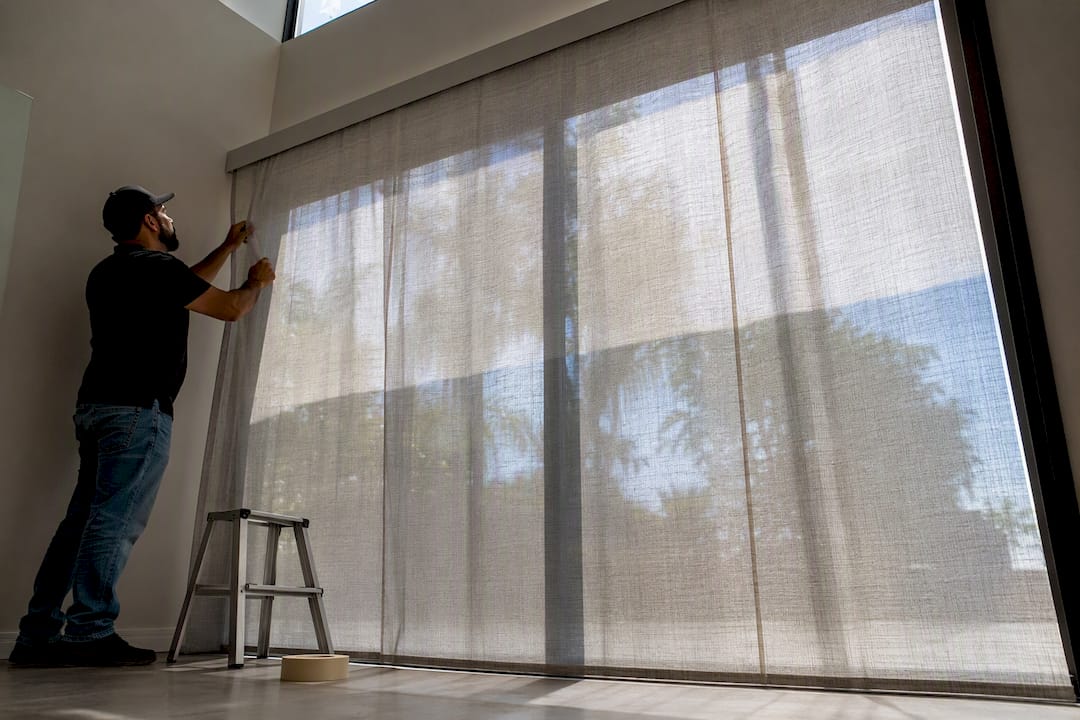
For most sliding glass doors, the best privacy fix depends on when you need it and whether you own or rent. For daytime privacy with a view intact, sheer curtains or frosted window film win. For total nighttime coverage, pair a blackout-lined panel with a sheer on a second track. For a permanent, low-maintenance solution with energy and security perks, professionally installed privacy film from brands like 3M or LLumar beats fabric every time. Renters get the best of both worlds with static-cling film or tension-rod curtains that come down without a trace.
The right pick usually comes down to three questions: How often is the door used? Do you need to see out, or just block others from seeing in? And is this your house or someone else’s?
- Living room or patio door: sheer curtains or frosted film for daytime privacy that keeps natural light.
- Bedroom or media room: dual-track curtains (sheer plus blackout liner) to kill nighttime silhouettes.
- Renter or temporary need: static-cling film or a tension-rod curtain, both fully removable.
Layering matters more than most people expect. A single treatment rarely handles both daytime glare and nighttime exposure, which is why dual-track systems and combination film-plus-drape setups show up again and again in real installations.
Key Takeaways
Professionally installed privacy film delivers the most durable, low-maintenance sliding door privacy, while layered curtains give the most day-to-night flexibility, and renters get both benefits through removable static-cling film.
| Point | Details |
|---|---|
| Match solution to need | Sheers or frosted film for daytime privacy; dual-track curtains or switchable film for nighttime coverage. |
| Size curtains correctly | Use 2 to 3 times fabric fullness and a 4 to 6 inch center overlap to avoid gaps. |
| Choose vertical, not horizontal | Vertical cellular shades and panel-track systems stack aside without blocking the door’s slide path. |
| Renters can go temporary | Static-cling film and tension-rod curtains remove cleanly with no landlord approval needed. |
| Professional film adds durability | Twtwindowfilm installs 3M and LLumar film with a lifetime workmanship warranty for long-term, energy-efficient privacy. |
Table of Contents
- At-a-Glance Comparison of Sliding Door Privacy Solutions
- Window Film Options: Frosted, Decorative, Solar, and Switchable
- Curtains and Panel-Track Systems for Style and Flexible Privacy
- Blinds and Shades That Actually Work on Sliding Doors
- Renter-Friendly and Temporary Privacy Fixes
- Measuring and Basic Installation Considerations for Sliding Doors
- Typical Cost Ranges and Timelines: DIY vs Professional Installation
- Care and Maintenance to Keep Privacy Solutions Working
- How to Choose: A Buying Checklist and Questions to Ask
- What Author Perspective Says About the Best Sliding Door Privacy Fix
- Get a Professional Estimate for Long-Term Sliding Door Privacy
- Frequently Asked Questions
- Sources
At-a-Glance Comparison of Sliding Door Privacy Solutions
Every option trades off privacy strength against light, cost, and how much commitment it demands from your door frame. Window film sits at one end of the spectrum (permanent, low-profile, always-on privacy), while tension-rod curtains sit at the other (fast, cheap, zero commitment).
| Solution | Privacy Level | Light Control | Style Fit | Install Difficulty | Cost Band | Permanence | Energy/UV Benefit | Best For |
|---|---|---|---|---|---|---|---|---|
| Frosted/decorative film | Complete | Filtered | Modern, minimal | Easy DIY to moderate | Low to mid | Semi-permanent | Low | Bathrooms, home offices, renters (removable versions) |
| Solar/privacy film | Complete | Filtered | Clean, neutral | Professional | Mid to high | Permanent | High | Whole-home privacy, energy-conscious owners |
| Switchable film | Complete on demand | Sheer to blackout | High-tech, modern | Professional | High | Permanent | Moderate | Home offices, media rooms, luxury remodels |
| Sheer curtains | Low to medium | Sheer | Soft, layered | Easy DIY | Low | Removable | Low | Living rooms, patios |
| Blackout curtains | Complete (night) | Blackout | Bold, structured | Easy DIY | Low to mid | Removable | Moderate | Bedrooms, media rooms |
| Vertical cellular/panel-track shades | Medium to complete | Filtered to blackout | Sleek, architectural | Moderate | Mid to high | Semi-permanent | High | Wide openings, energy-focused homes |
| Static-cling film | Medium | Filtered | Simple | Easy DIY | Low | Removable | Low | Renters, apartments |
The biggest trade-off is permanence versus flexibility: film gives you constant, hands-free privacy but stays put once installed, while curtains let you open things up on a whim but need daily management. If nighttime silhouettes worry you more than daytime glare, weight your decision toward blackout fabric or switchable film rather than sheers alone.
Pro Tip: Before buying anything, measure your panel stack space (the width the door needs to slide fully open) and subtract it from your total treatment width. A curtain or panel track that eats into that stack zone will jam the door or force you to leave it partly closed.
Window Film Options: Frosted, Decorative, Solar, and Switchable
Film is the only category on this list that changes the glass itself instead of covering it, and that difference is why it holds up better over years of daily door use than fabric or slats ever will.
Frosted and decorative film etches or laminates a translucent finish onto the glass. It blocks direct sightlines while letting daylight pour through, which is why it works so well on bathroom sliders, home office doors, and any spot where you want privacy without turning the room into a cave. Patterns range from plain frost to geometric etchings that double as a design statement.
Solar and privacy film does double duty: it blocks the view in while cutting glare and heat gain. This is the category where brand quality actually shows up in daily performance. 3M and LLumar both manufacture films rated for UV rejection and long-term clarity, meaning they won’t yellow or bubble the way bargain adhesive films do after a couple of summers in direct sun.
Switchable film is the newest and most dramatic option. A layer of liquid crystal sits between two panes or laminated sheets, and a low-voltage switch flips it from clear to frosted instantly. You get on-demand privacy without ever touching a curtain. The catch is wiring: sliding doors move, so the film needs a power connection that moves with them. Installers typically solve this with retractable cable boxes or magnetic connectors that maintain contact whether the door is open, closed, or halfway.
Here’s how the three stack up for a typical homeowner:
- Frosted/decorative: best when you want light plus privacy and don’t need to adjust it day to day.
- Solar/privacy film: best when heat and UV exposure are as big a concern as the neighbors’ sightline.
- Switchable: best when you want the option to go from full view to full privacy in seconds, budget allowing.
Installation type matters as much as film type. DIY adhesive film kits work fine for small accent panels, but full sliding-door coverage is a two-person job that’s easy to mess up. Bubbles, misaligned seams, and peeling edges are the usual results of a rushed DIY attempt. Professional wet-install methods use a squeegee-and-solution process that eliminates air pockets and gives a cleaner edge finish, which is one reason installer-backed warranties matter. A lifetime installation warranty protects you against exactly the failure modes that plague amateur jobs: peeling, discoloration, and adhesive failure. Manufacturer warranties from 3M and LLumar cover material defects, but the labor and workmanship guarantee usually comes from the installer, not the film maker.
Pro Tip: If you love your view, start with a light frost or a gradient/etched pattern instead of jumping straight to full opacity. You can always upgrade to a denser film later, but you can’t un-frost glass that’s too heavy for the room once it’s installed.
Curtains and Panel-Track Systems for Style and Flexible Privacy
Curtains remain the go-to choice for anyone who wants privacy to flex with the time of day, and sliding doors respond well to layering when the hardware is sized correctly.
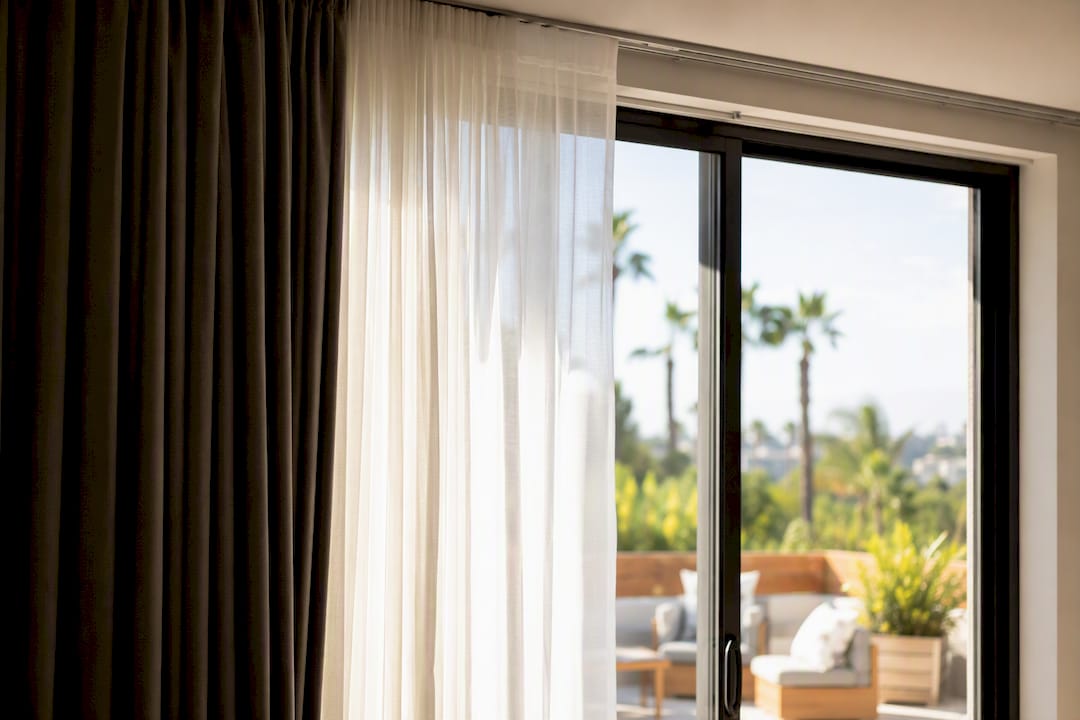
A single-track setup with sheers gives you daytime privacy and diffused light, but it does nothing for nighttime silhouettes once the lamps go on inside. That’s the gap a dual-track system closes: one track for a sheer, a second for a blackout-lined panel, so you slide across whichever layer the moment calls for. This combination is a standard recommendation for sliding-door treatments, and it holds up in practice because it separates the two jobs a single curtain can’t do at once.
Sizing rules matter more here than on a standard window. Aim for fabric fullness of 2 to 3 times the door’s width so the panel actually gathers instead of hanging flat, and plan for a center overlap of 4 to 6 inches where the two curtain halves meet. Skimp on fullness and you’ll see gaps at the center seam exactly where privacy matters most.
Hardware placement is where most DIY installs go wrong. Mount the rod or track high, close to the ceiling, and stack the curtain panel to the side of the door’s stationary panel rather than over the moving one. Designers consistently recommend this stacking approach because it keeps the fabric completely clear of the sliding path, and hanging the rod high makes the whole wall look taller as a side benefit.
For fabric choices, sheers in linen or a light polyester blend handle daytime privacy without blocking airflow if you crack the door open. For bedrooms or media rooms, look for room-darkening panels with a thermal or blackout liner. Retail options like H.VERSAILTEX offer extra-wide, 108 inch panels built specifically for sliding-door widths, which saves you from piecing together standard-width panels that leave gaps.
- Sheers for daytime privacy that preserves airflow and light.
- Thermal or blackout liners for bedrooms, home theaters, or east-facing rooms with early sun.
- Extra-wide panels (100 inches plus) sized for the door, not a standard window.
- Grommet or clip-ring tops for smooth sliding across the track.
Pro Tip: Set your blackout track closest to the glass and your sheer track in front of it. That order lets you close the sheer alone during the day without dragging the heavier blackout panel across the door every time you want a little privacy.
Blinds and Shades That Actually Work on Sliding Doors
Horizontal blinds are the wrong tool for a sliding door and it shows the first week you own them. The slats hang parallel to the floor, which means every time the door slides, the blind either has to be raised completely out of the way or it gets tangled in the track. Vertical and side-stacking systems solve that by moving with the door instead of against it.
Vertical cellular shades and panel-track systems are the two solutions that consistently show up as the preferred choice for sliding glass doors, because both stack neatly to one side and never cross the door’s path. Vertical cellular shades add an insulation benefit that fabric alone can’t match. Certain constructions reach R-values up to R-4, meaning they trap a layer of air that cuts heat loss in winter and heat gain in summer. That makes them a strong pick for anyone whose sliding door faces west or gets hit with direct afternoon sun.
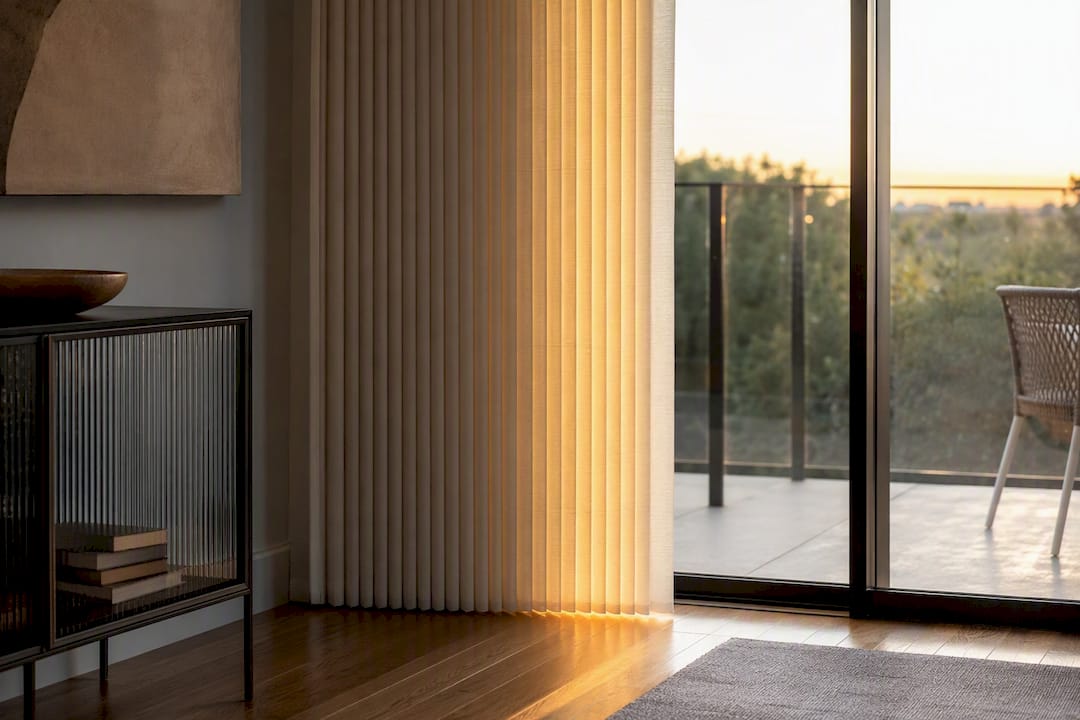
Panel-track shades work like wide vertical blinds but with solid fabric panels instead of slats. Light control ranges from a sheer, filtered look to a full blackout depending on the fabric you choose, which makes them one of the few single-system solutions that can handle both daytime and nighttime privacy without swapping tracks.
Motorized versus manual comes down to how often the door gets used and who’s using it. A household with kids or anyone managing mobility limits benefits from motorization simply because there’s no cord to snag or child-safety hazard to manage. Battery-powered retrofit kits have made motorization realistic for existing shades without an electrician, though they add ongoing cost for battery replacement or charging.
- Manual shades: lower upfront cost, no maintenance beyond occasional cleaning, and no batteries or wiring to think about.
- Motorized shades: higher upfront cost, added convenience for wide or hard-to-reach doors, and a real safety upgrade in homes with young children or pets prone to chewing cords.
For a single, occasionally used sliding door, manual is usually the more practical spend. For a wide opening you operate multiple times a day, or one where cord safety is a genuine concern, motorization earns its price difference fast.
Renter-Friendly and Temporary Privacy Fixes
You don’t need a lease violation to get real privacy. Every option below comes off clean and leaves the original glass or wall exactly as you found it.
- Static-cling frosted film: uses water tension instead of adhesive, so it sticks without glue and peels off without residue.
- Removable adhesive film: slightly stronger hold than static cling, still designed for clean removal, good for longer tenancies.
- Tension-rod curtains: a spring-loaded rod wedges into the door frame with zero drilling, supporting lightweight sheers or curtain panels.
- Removable panel-track kits: some panel-track systems mount with adhesive brackets rather than screws, making them tenant-safe.
- Temporary room dividers or screens: freestanding options that need no wall contact at all.
For any adhesive-backed product, test a small corner first, ideally somewhere out of sight, and wait 24 hours before committing to the full door. This confirms the film releases cleanly on your specific glass and frame finish before you’ve covered the whole thing.
- Clean the glass thoroughly, since dust or residue under film causes bubbling.
- Apply a test patch and check for residue after removal.
- Install the full film or curtain, working slowly to avoid trapped air or misalignment.
- Photograph the original door before installing anything, in case your landlord ever asks about its condition.
Static cling and tension rods are fine for a year-long lease or less. If you’re settling into a place for several years and want something closer to permanent film performance, that’s the point to ask your landlord about semi-permanent upgrades rather than pushing a temporary fix past its limits.
Measuring and Basic Installation Considerations for Sliding Doors
Sliding doors punish sloppy measurements more than any other window type, because the moving panel needs somewhere to go. Before buying film, curtains, or shades, walk through this checklist.
- Measure the full width and height of the glass opening, not just the visible frame.
- Note the track projection, meaning how far the door’s hardware sticks out from the wall, since this affects how close curtain rods can sit.
- Check whether the door swings inward, slides on an outer track, or recesses into a pocket wall, since each affects panel stacking clearance.
- Measure the space available for the panel to stack when the door is fully open.
- Confirm handle and lock height so curtain rings or panel brackets don’t collide with hardware.
| Measurement | Recommended Value | Why It Matters |
|---|---|---|
| Fabric fullness | 2 to 3 times door width | Prevents flat, gap-prone panels |
| Center overlap | 4 to 6 inches | Closes the gap where two panels meet |
| Rod height above frame | 4 to 6 inches | Makes the room look taller, clears hardware |
| Stack clearance | Equal to one full panel width | Keeps the door’s sliding path unobstructed |
For film, edge prep is everything. Clean the full perimeter of the glass, not just the center, since dust along the edges is what causes peeling months later. For panel tracks, mount the head rail level and confirm it clears the door’s top hardware before drilling. Switchable film needs an added step: mapping out where the wiring or cable box will sit before installation day, since retrofitting power access afterward means pulling the film back off.
Typical Cost Ranges and Timelines: DIY vs Professional Installation
Budget swings widely depending on material grade and whether you’re doing the work yourself. DIY static-cling or adhesive film for a standard sliding door runs low cost and can be done in an afternoon. Professional film installation costs more upfront but includes proper edge sealing and, in Twtwindowfilm’s case, a lifetime warranty that DIY kits simply don’t offer.
Curtains and panel tracks span a wide range too. Off-the-shelf panels in standard widths sit at the low end; custom-width panel-track systems or motorized shades push into mid to high cost territory, especially once motorization or specialty fabric enters the picture.
- DIY static-cling film: low cost, same-day install, best for renters or a quick trial run.
- Professional privacy or solar film: mid to high cost, typically scheduled within one to two weeks, backed by a workmanship warranty.
- Off-the-shelf curtains or panel tracks: low to mid cost, same-day to same-week install depending on custom sizing.
- Motorized shades or switchable film: high cost, often two to four weeks out due to custom sizing, wiring, or electrical coordination.
A few project types almost always call for a professional rather than a DIY attempt: switchable film wiring, any film job on a large or custom-shaped sliding door, and any installation where you want a warranty that actually holds up if something fails. DIY film on a small accent panel is forgiving. DIY film across an 8-foot slider, much less so.
Care and Maintenance to Keep Privacy Solutions Working
Privacy treatments earn their cost back over years, not months, so a little upkeep goes a long way toward protecting that investment.
For window film, stick to a soft cloth and a mild, ammonia-free cleaner. Ammonia breaks down the adhesive layer over time and can cloud the film’s finish, which is the single most common way people accidentally shorten a film’s lifespan. For curtains and fabric panels, check the care label. Most sheers and blackout liners tolerate a gentle machine wash, but heavier thermal-backed fabrics often do better with professional cleaning to protect the liner.
Hardware needs attention too. Sliding door tracks collect dust and debris that make the door stick or drag, so a quick vacuum of the track channel every few months keeps things moving smoothly. Curtain rods and panel-track head rails should get an occasional check for loose brackets, since a sagging rod puts uneven strain on the fabric.
- Use ammonia-free glass cleaner on privacy film, never abrasive pads.
- Vacuum door tracks regularly to prevent drag and sticking.
- Wash or professionally clean fabric panels per the care label, not by guesswork.
- Check curtain rod brackets seasonally for looseness.
Pro Tip: Do a seasonal check of film edges for any lifting or bubbling and re-tension curtain rods before the weather turns. Catching a lifted film edge early is usually a simple fix; catching it a year later after dust and moisture get underneath usually means replacement, and can also affect whether a warranty claim gets approved.
How to Choose: A Buying Checklist and Questions to Ask
Start by naming your actual priority, because “privacy” means different things depending on the room. Is this about blocking a nosy neighbor during the day, killing a nighttime silhouette, cutting heat gain, or all three?
- Define your primary goal: privacy, energy savings, style, or a combination.
- Note how often the door is actually used, since heavy daily use rules out anything that blocks the track.
- Check your sun exposure, since west-facing doors benefit more from solar film or insulated shades.
- Confirm whether you own or rent, since that decides between permanent film and removable alternatives.
- Measure your stack clearance before shopping for any curtain or panel-track system.
When you’re talking to a retailer or installer, a few questions separate a solid choice from a regretted one:
- How long is the warranty, and does it cover labor or just materials?
- What brand of film is being installed, and is it a recognized name like 3M or LLumar?
- What’s the installation method, and how long does it take?
- For switchable film, what’s the wiring plan for a door that moves?
- Can I see a physical sample before committing to full coverage?
- What’s the removal policy if I’m renting or plan to move?
Watch for warning signs: no written warranty, no willingness to show past work or references, low-quality or outdated sample books, and any installer pushing permanent adhesive-backed film onto a rental without confirming landlord approval first. Any of these should send you looking elsewhere.
What Author Perspective Says About the Best Sliding Door Privacy Fix
Most people ask which single product solves sliding door privacy, and the honest answer is that it’s usually two products working together. In my read of how these installations actually perform over time, professionally installed film handles the permanent, year-round job. Layered curtains handle the flexible, day-to-night job. Trying to make one product do both usually leaves a gap somewhere.
Where a solution comes with a real workmanship warranty and materials from an established manufacturer like 3M or LLumar, that combination consistently outperforms budget alternatives over a five-year span, not because of marketing, but because film failure (peeling, discoloration) is exactly what those warranties are built to catch and fix before it becomes a bigger problem.
Get a Professional Estimate for Long-Term Sliding Door Privacy
Curtains and static-cling film solve the short-term problem. If you want privacy that doesn’t require adjusting a curtain twice a day or replacing peeling film every couple of years, professional window film is the durable option, and it’s what Twtwindowfilm installs across Orange County and Los Angeles County using premium materials from 3M and LLumar.

Every installation comes with a free on-site estimate, where a technician measures your actual door, walks you through film samples in person, and maps out any wiring needs if you’re considering switchable film. Every job carries a lifetime warranty, covering both the material and the installation work, which matters most on high-traffic doors that get opened and closed dozens of times a day.
Hiring a pro makes the most sense for large or custom sliding doors, any switchable film project, or anywhere security and energy savings matter as much as privacy. If your sliding door sees daily use and you’re tired of managing curtains, request a free estimate and get a warranty-backed film solution measured for your exact door.
Frequently Asked Questions
What’s the best way to get sliding door privacy without blocking light? Frosted or lightly tinted privacy film and sheer curtains both preserve daylight while blocking direct sightlines, making them the top picks for daytime privacy over solid blackout options.
Are there good renter-friendly options for privacy for sliding glass doors? Yes. Static-cling film and tension-rod curtains install without adhesive or drilling and remove cleanly, making them the safest renter-friendly options for sliding door privacy screens.
How do I ensure door privacy at night without curtains looking heavy? Layer a sheer with a blackout-lined panel on a dual-track system. You get an airy daytime look and full nighttime coverage without committing to one heavy fabric year-round.
What are the best sliding door locks for added security alongside privacy? Multi-point locking hardware paired with a restricted-vision security screen adds a physical security layer to whatever privacy treatment you choose, particularly on ground-floor doors.
Does sliding glass door privacy film affect how much natural light comes in? Frosted and solar films filter and diffuse light rather than block it, so rooms stay bright while direct sightlines disappear, unlike blackout curtains which cut light significantly.
Sources
- 23 Sliding Glass Door Treatment and Covering Ideas
- Curtains Sliding Patio Door Buying Guide - MAWEB
- Sliding Door Blinds - Patio Door Blinds & Window Treatments | Blindsgalore
- Transforming Sliding Doors with Switch Film: The Ultimate Upgrade for Privacy and Elegance