

Shatterproof Window Film in SoCal: Anchoring Beats 8 mil
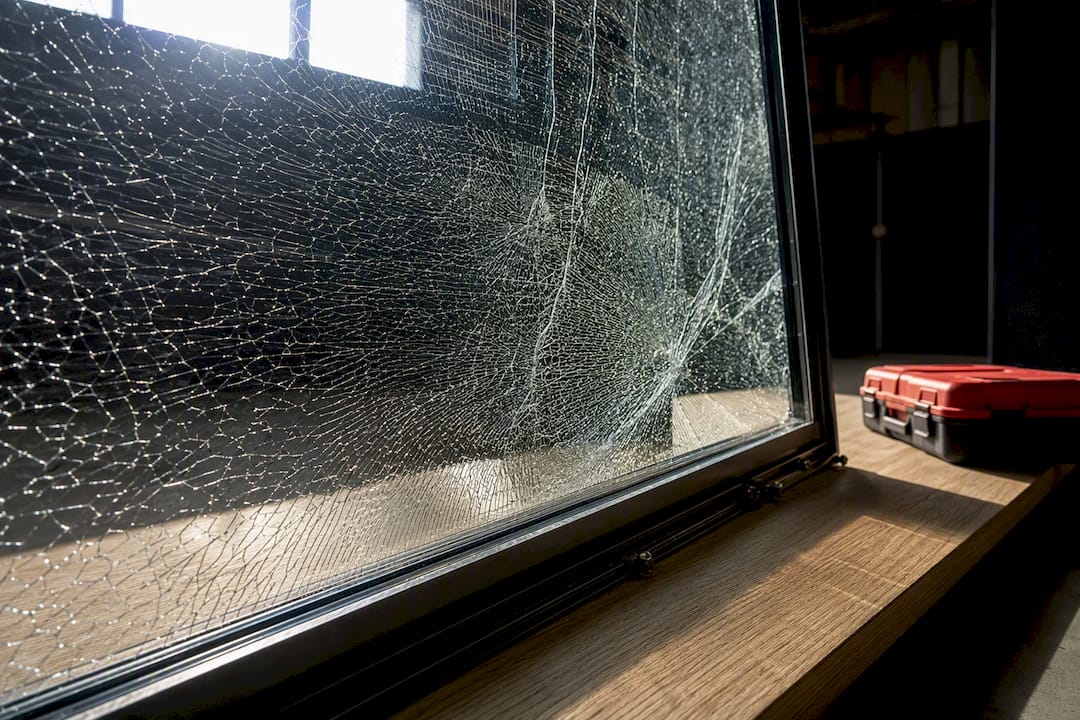
Shatterproof window film holds broken glass in place instead of letting it scatter into shards, and a properly anchored system can slow down someone trying to force their way through a window. It also blocks UV rays and cuts solar heat, which lowers cooling costs and protects furniture from fading. The catch: the film only performs as well as its edge attachment and the frame behind it, and no film sold for homes or businesses is bulletproof.
TL;DR:
- The effectiveness of shatterproof film heavily depends on proper edge attachment and a secure frame, not just the film thickness or material.
- Thinner films around 4 mil are suitable for small panes and basic safety, while thicker 7 mil or more are needed for larger or higher-security applications.
- The film does not make glass bulletproof; it only delays forced entry and reduces injury from shattered glass, requiring proper anchoring systems for real security.
- Proper installation involves precise tension, anchoring hardware, and a thorough site assessment, making professional installation essential for security purposes.
- Buyers should prioritize the type of attachment system and installer credentials over film thickness or marketing claims of bulletproof or shatterproof durability.
Table of Contents
- How Shatterproof Window Film Works
- What Thickness Do You Actually Need?
- Beyond Security: What Else Does the Film Do?
- Why Shatterproof Film Isn’t Bulletproof Glass
- DIY Installation vs. Hiring a Professional
- What to Ask Before You Hire an Installer
- What Happens During Installation and After
- What Clients Can Expect From a Local Installer
- The Honest Take on Shatterproof Film
- Ready for a Professional Security Film Installation?
- Sources
How Shatterproof Window Film Works
Shatterproof film is a layer of polyester (PET) or polyurethane bonded to glass with a pressure-sensitive adhesive. When the glass breaks, the shards stay stuck to that film instead of falling free, which is the core mechanic behind fragment retention. Polyurethane constructions stretch further before tearing than standard PET, giving them more capacity to absorb energy from a thrown object or a forced blow before failing.
The adhesive bond matters as much as the film itself. A film can be rated thick and tough, but if the glue lets go at the edges, the whole sheet peels away under stress.
- PET film resists puncture but has less stretch than polyurethane
- Polyurethane elongates further, useful for security-grade applications
- Adhesive strength determines whether shards stay bonded during impact
- 3M states plainly that its safety and security films help hold glass together and can delay intruders, but they are not bulletproof
What Thickness Do You Actually Need?
Film thickness is measured in mils or microns, and the right number depends on pane size and what you’re protecting against. Thin panes and lower risk situations need less material than large storefront glass or a first floor window facing the street.
- Around 4 mil (100 microns) works for smaller panes and general safety upgrades
- 7 mil (175 microns) or heavier suits larger panes and higher security needs, a range industry guidance backs up
- Exterior-grade films handle weather exposure better but can show more haze than interior films
- Blast-rated products, used mostly on government and commercial buildings, combine thicker film with certified anchoring for pressure events
Picking a thicker film without matching anchoring is a common buyer mistake. The film can be strong enough to hold the shards, yet the whole assembly still fails if the edges aren’t secured to the frame.
Beyond Security: What Else Does the Film Do?
Security isn’t the only reason people install this film. UV and heat control show up on almost every buyer’s list once they start comparing quotes.
- UV blocking on some 3M safety and security products reaches close to 99%, which slows fading on floors, furniture, and artwork
- Solar heat gain reduction keeps rooms cooler and can ease the load on air conditioning during summer months
- Tinted or frosted options add privacy without blocking daylight completely
- Heavier tints cut glare on screens and reduce visibility from outside, though they also darken the room somewhat
Homeowners often start out shopping for security film and end up choosing a product mainly for the energy savings once they see how much heat comes through untreated glass.
Why Shatterproof Film Isn’t Bulletproof Glass
The biggest misconception buyers bring into a sales conversation is that security film turns ordinary glass into something close to bulletproof glass. It doesn’t. Film delays and deters. It buys time during a break-in attempt or reduces injury from flying glass in a storm, but it does not guarantee an intruder or a piece of debris stays out.
Manufacturers are direct about this limit: 3M’s own product documentation for its Scotchshield line states that certain security films require an Impact Protection Attachment sealant or equivalent anchoring to be effective against forced entry or windstorm loads, and even then the product is explicitly not bulletproof.
Frame condition changes the outcome too. Old aluminum frames or wood that’s warped won’t hold anchored film the way a solid frame will, and the whole pane can blow out around the edges even with premium film installed. Marketing claims also run into legal limits in some regions. Florida, for instance, restricts advertising certain films as hurricane or impact protection, so always confirm what a warranty actually covers in writing rather than trusting a sales pitch.
DIY Installation vs. Hiring a Professional
DIY film kits work fine for basic tint or light privacy jobs on a garage window or a back door. Where DIY breaks down is anywhere security matters, because the edge attachment is what makes or breaks the whole system.
- Clean the glass thoroughly and measure with roughly 15% overage for trimming
- Apply wetting solution, position the film, and squeegee out air and excess liquid
- Trim edges cleanly and let the adhesive cure without disturbing the film
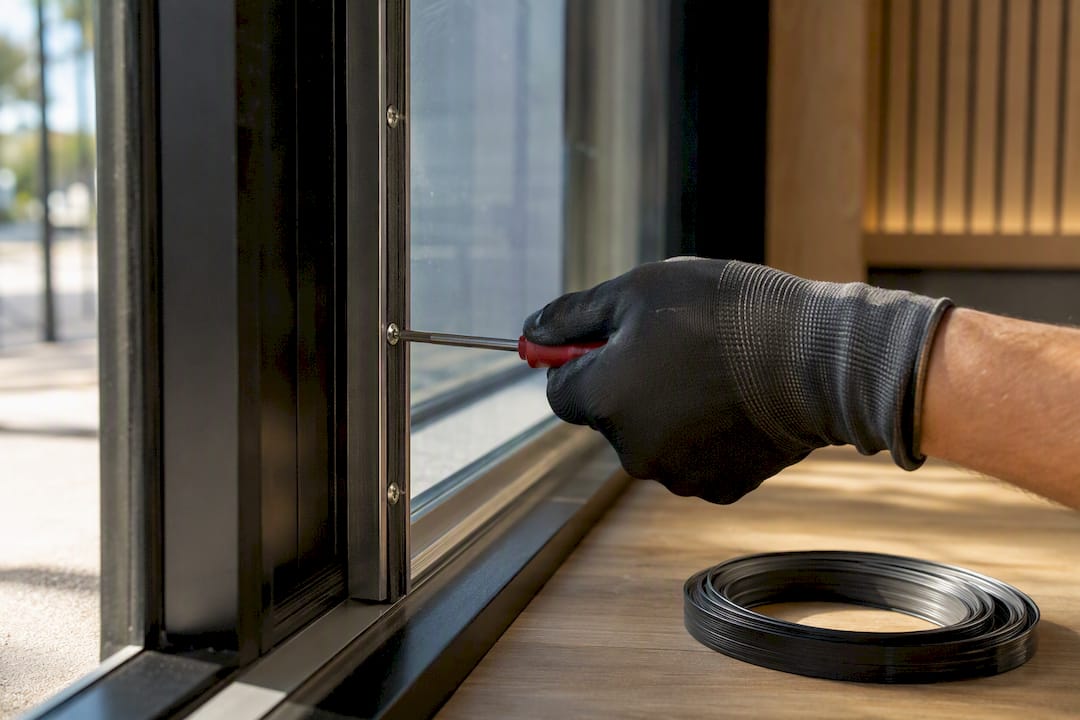
Those basic steps get a homeowner a decent-looking result for simple tinting. Security film is a different job entirely. It usually needs an edge attachment system, wet glaze using structural silicone, mechanical anchoring hardware like FrameGard, or a restraining cord system, all of which require precise tensioning and a controlled cure environment. Madico’s SafetyShield program notes that anchoring systems like FrameGard and wet glaze significantly increase retention and can be engineered for higher load or blast scenarios, something a kit from a hardware store isn’t built to replicate.
Pro Tip: If a quote doesn’t mention an attachment method by name, ask directly. “We install the film” and “we install the film with mechanical anchoring” are two very different jobs.
What to Ask Before You Hire an Installer
A good vendor conversation should feel more like a technical interview than a sales pitch. Bring a short list of questions to every estimate.
- Ask whether the installer is authorized to install the specific product line and request the technical datasheet
- Ask what attachment method they use and why, given your frame type and glass
- Request warranty terms in writing, including what voids coverage
- Ask for before and after photos or references from similar jobs
- Compare full project cost, meaning film plus anchoring hardware plus labor, not just a per-window film price
Cost varies widely depending on film grade, glass size, and anchoring complexity, so treat any number quoted over the phone as a rough placeholder until someone measures your actual windows.
What Happens During Installation and After
A typical project starts with a site visit to measure every opening and check frame condition, followed by scheduling once the film and hardware are confirmed. Most residential jobs finish in a single day, while larger commercial storefronts or schools may take longer depending on pane count and anchoring work.
- Film needs a curing period, often several days to weeks, before it reaches full adhesion
- Avoid ammonia-based cleaners on tinted or coated film; stick to mild soap and a soft cloth
- Confirm in writing what the warranty covers: peeling, bubbling, adhesive failure, and for how many years
- Ask if the warranty is backed by the manufacturer or only the installer, since that affects what happens if the company closes
What Clients Can Expect From a Local Installer
A local company has installed window film across homes and businesses in Southern California since 2008, working with 3M and LLumar products under a lifetime warranty. Clients typically come in looking for security or heat reduction and leave with both, once they see how much a proper film and anchoring combination changes comfort and glare in a room.
An on-site assessment covers frame condition, glass type and thickness, sun exposure by window, and which attachment method fits the property, whether that’s a home, a retail storefront, or a school building. That survey is what turns a general product recommendation into a plan matched to the actual building.
The Honest Take on Shatterproof Film
The window film industry has a marketing problem: too many product pages let “shatterproof” and “bulletproof” blur together in a buyer’s mind, and too few sales conversations correct that impression before the contract gets signed. That’s backwards. The film matters less than most buyers assume, and the attachment system matters more. A premium 8 mil film with no anchoring will underperform a moderate film installed with proper wet glaze or mechanical hardware every time glass actually gets tested.
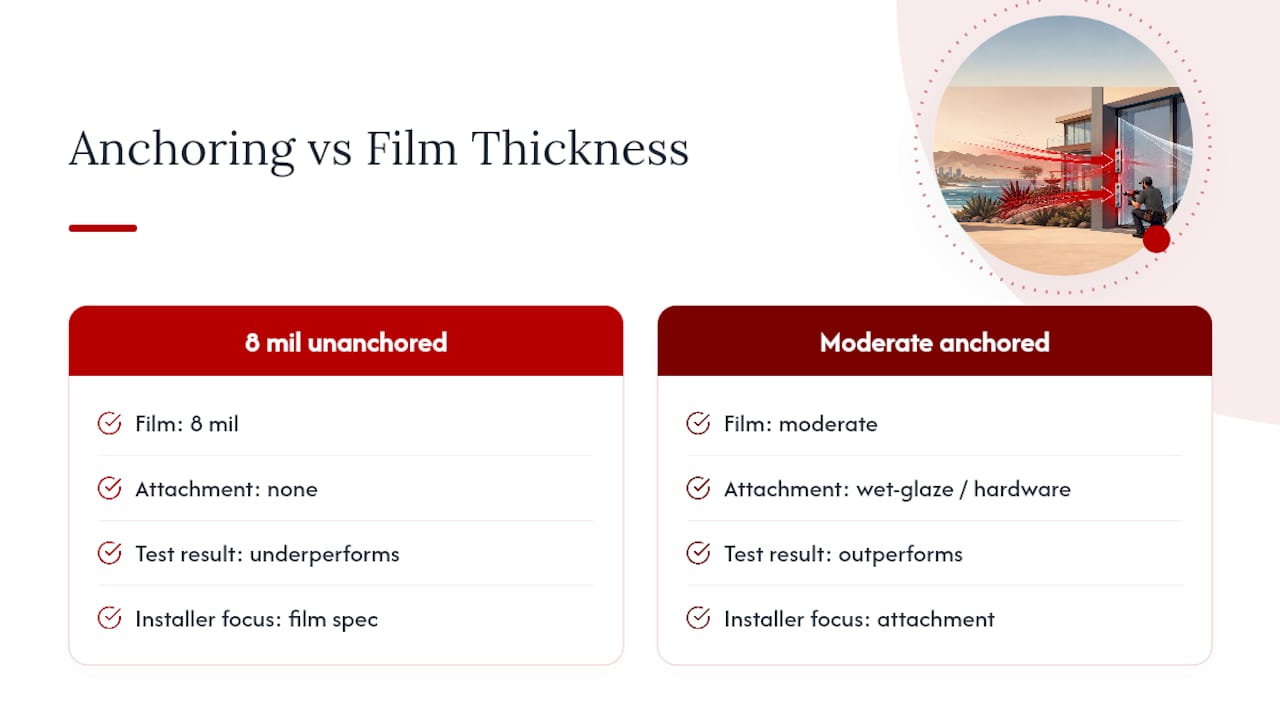
Where conventional advice falls short is the assumption that thickness alone equals protection. It doesn’t. Frame condition, glass type, and installation quality decide the outcome as much as the film specification on the label. If you’re evaluating quotes, prioritize the attachment method and the installer’s willingness to explain it over the mil rating printed on the brochure. A contractor working on DIY door and window projects will tell you the same thing about doors: the hardware and the fit matter more than the material.
Buy for the system, not the spec sheet. Ask what holds the film to the frame before you ask what the film is made of.
— Jake
Ready for a Professional Security Film Installation?
A local installer working across Orange County and Los Angeles County pairs 3M and LLumar security films with proper edge attachment, backed by a lifetime warranty on the installation itself, not just the material.
A free on-site estimate covers your specific windows, frame condition, and sun exposure, then recommends a film and anchoring method matched to your building rather than a one-size answer pulled from a catalog. Whether you’re protecting a home, a retail storefront, or a government facility, the next step is simple: request a free estimate and get a straight answer on what your windows actually need.