

Retail Window Tinting: What Storefronts Should Install
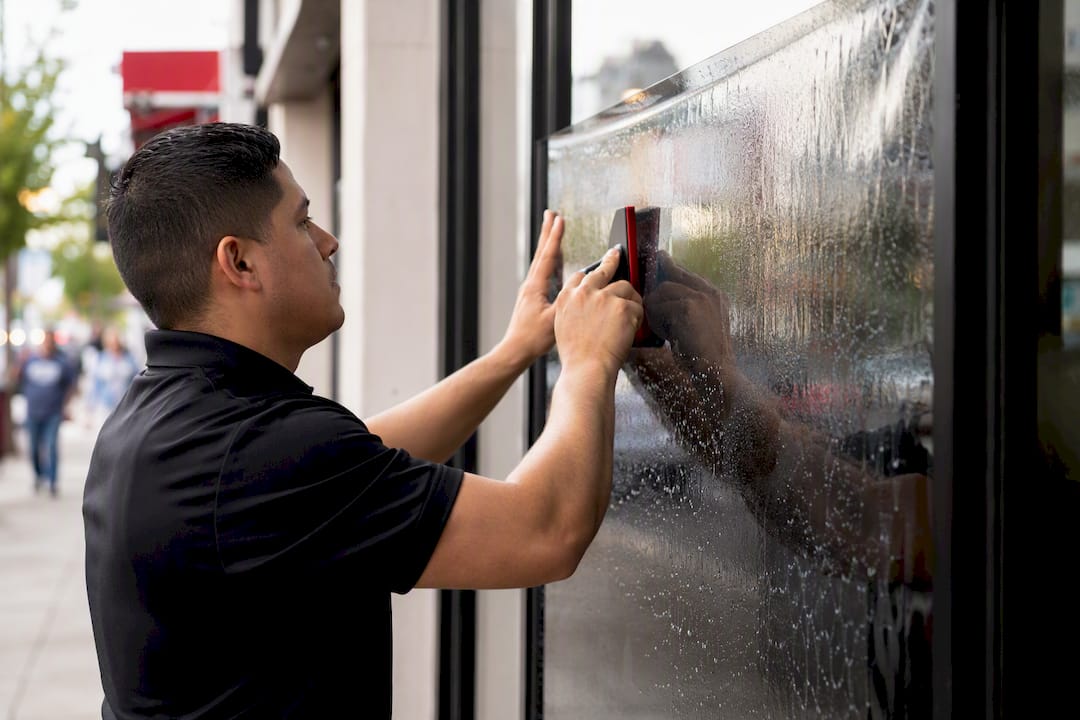
For most storefronts, a spectrally-selective solar control film covers the core problem: heat, glare, and fading. If your store sits in a smash-and-grab hotspot, add 8-mil security film underneath it. If branding matters more than the view, decorative film earns its keep instead.
Each option solves a different retail headache. Solar control protects comfort and energy bills without changing how the glass looks. Security film buys you time during a break-in attempt. Decorative film turns blank glass into a billboard.
- Spectrally-selective solar control: best default for brand-facing windows that need to stay visually true
- 8-mil security film: added protection for storefronts in high-theft areas or with expensive display inventory
- Decorative or frosted film: for branding, privacy, or hiding a stockroom view
Before committing to any of it, ask an installer for a physical sample on your actual glass and get the warranty terms in writing.
Key Takeaways
Retail storefronts get the best results by matching spectrally-selective solar control to brand-facing glass, adding 8-mil security film where theft risk is high, and confirming specs and warranty terms in writing before installation.
| Point | Details |
|---|---|
| Start with spectrally-selective film | It rejects heat while staying nearly clear, keeping brand-facing windows visually true. |
| Add security film for high-risk entrances | Look for 8-mil or greater thickness, and confirm the anchoring method with your installer. |
| Check VLT and reflectivity before signing | The wrong grade can wash out daytime signage or hide lit displays at night. |
| Request a sample on your actual glass | Mock-ups reveal daytime and night-time appearance better than a showroom sample. |
| Twtwindowfilm backs installs with a lifetime warranty | Locally owned since 2008, partnered with 3M and LLumar, serving Orange County and Los Angeles County retail storefronts. |
Table of Contents
- Why Retail Storefronts Are Installing Window Film
- What Types of Film Work Best in a Retail Setting?
- How Do You Pick the Right Film Grade for Your Storefront?
- What Happens During Installation, and How Long Does It Take?
- What Does a Retail Window Film Project Actually Cost?
- Why Professional Installation Matters More Than the Film Itself
- Do You Need a Permit for Retail Window Tinting?
- Will Tinted Windows Make My Signage Harder to See?
- Does Window Film Work With Your Existing Storefront Lighting and Displays?
- Editorial Take: Storefronts Overthink Darkness and Underthink Specs
- Get a Retail Window Film Estimate From Twtwindowfilm
- Frequently Asked Questions
- Sources
Why Retail Storefronts Are Installing Window Film
Storefront glass takes a beating that most owners never think about until the damage shows up on the sales floor. Solar heat builds a “warm band” near entrances that makes the first few steps inside uncomfortable, which can cause a poor first impression before a customer even reaches the register.
Fading is the quieter cost. Window film that blocks up to 99% of UV rays protects merchandise, packaging, and printed signage from the sun damage that fades colors and degrades materials over months of direct exposure.
Glare matters more in retail than people assume. Cutting glare makes window displays and point-of-sale screens easier to see, both for customers browsing outside and staff working the counter.
Security is the benefit owners often skip until after an incident. Films rated at 8 mil or greater hold shattered glass together on impact, which slows a break-in and buys time for alarms or police response.
- Solar control: less heat at the entrance, fewer HVAC cycles
- UV protection: up to 99% blocked, protecting merchandise and signage from fading
- Glare reduction: sharper visibility for displays and POS areas
- Security film: 8-mil-plus grade slows forced entry and reduces injury risk
- Decorative film: brand presence without replacing glass
Pro Tip: Ask your installer to measure surface temperature on your worst window before and after a sample install. It’s a fast way to see the heat difference instead of taking a sales pitch on faith.
What Types of Film Work Best in a Retail Setting?
Not every storefront needs the same film, and matching the category to the actual problem saves money.
- Solar control film cuts heat and glare while keeping the window looking close to normal glass.
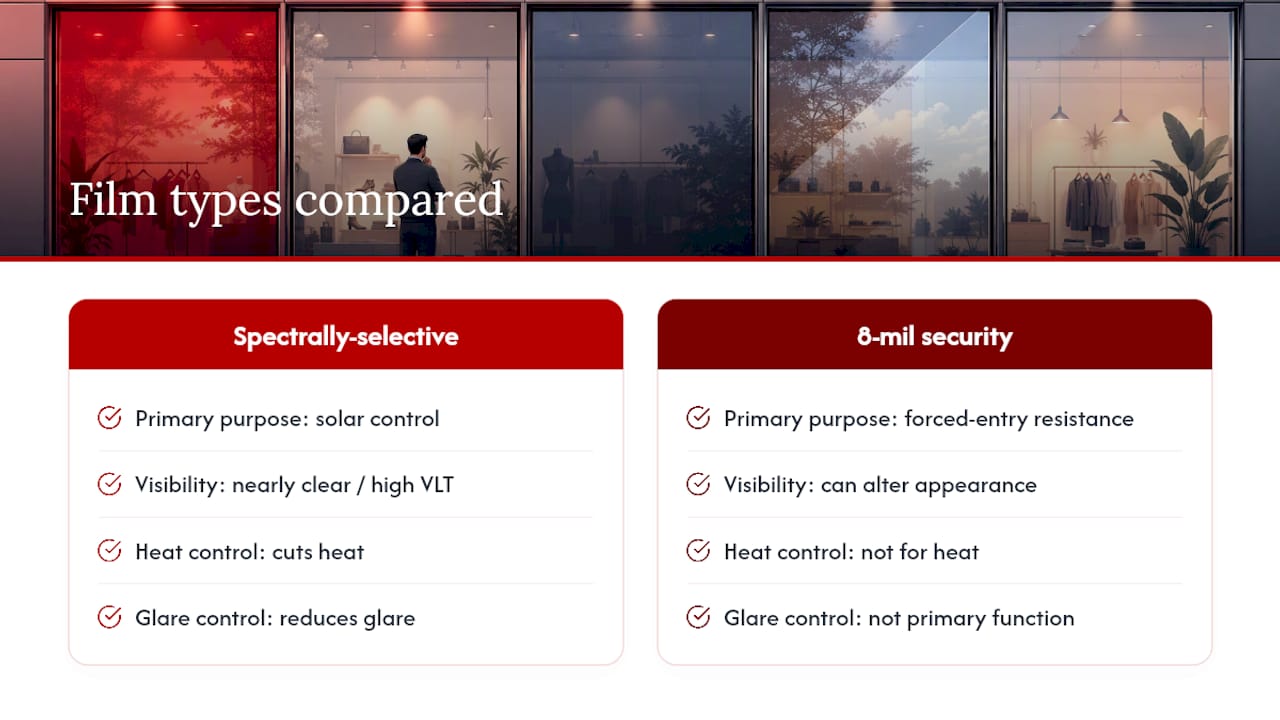
- Spectrally-selective film goes a step further. It rejects heat while staying nearly clear, which matters most on brand-facing glass where a visible tint would clash with your storefront design.
- Security and safety film, typically 8 mil or thicker, is built to hold broken glass in place rather than reduce heat or glare. It’s a defensive layer, not a comfort upgrade.
- Decorative, frosted, or branded film handles privacy and year-round marketing. It’s a cost-effective way to reinforce brand presence without the expense of custom glass.
- Anti-graffiti film acts as a sacrificial layer on high-risk panes, so vandalism gets removed and replaced instead of etched permanently into the glass.
A single storefront often uses two or three of these together, not one film for the whole building. A jewelry store, for instance, might run spectrally-selective film on the main display windows and 8-mil security film on the door glass.
How Do You Pick the Right Film Grade for Your Storefront?
Comparing quotes gets easier once you know which specs actually matter. Ask every installer to give you these numbers in writing, not just a general description of “premium film.”
- UV block percentage. Look for films rated near 99% UV rejection to protect merchandise and signage from fading.
- Visible light transmission (VLT). This determines how much natural light still gets through, and it directly affects how your displays read at night under interior lighting.
- Film thickness (mil rating). Standard solar films run thinner; security-grade film typically starts at 8 mil.
- Spectrally-selective performance. Confirm whether the film targets infrared heat specifically, since that’s what lets it stay nearly clear while still cutting heat load.
- Reflectivity. Higher reflectivity can create a mirror effect during the day that hides your display from the sidewalk. Lower reflectivity keeps merchandise visible but rejects less glare.
Security mil rating alone doesn’t tell the whole story. Performance also depends on the anchoring system used at the frame, so ask specifically how the film will be secured to the glass edge, not just what thickness it is.
Pro Tip: Request a mock-up on your actual glass before you sign anything. Film that looks great in a showroom sample can read differently against your specific lighting and glass tint.
What Happens During Installation, and How Long Does It Take?
A single-pane storefront window often gets filmed in a few hours, start to finish. Larger multi-pane façades, especially on corner locations or two-story storefronts, usually need an overnight or weekend install window so the work doesn’t interfere with trading hours.
Before quoting, a good installer checks your glass type. Single-pane glass and insulated double-pane glass behave differently under film, and that difference affects both film choice and price.
- Confirm glass type and frame condition before the quote is finalized
- Ask for a physical sample or on-glass mock-up, not just a printed spec sheet
- Get cleaning instructions in writing since improper cleaning products can void a warranty
- Avoid ammonia-based cleaners on tinted glass; use a soft cloth and mild soap instead
- Ask how soon after install the film can be cleaned for the first time
Mock-ups matter more than most owners expect. They confirm the daytime look and how the film reads at night, when interior lighting shines through the glass differently than it does under afternoon sun.
What Does a Retail Window Film Project Actually Cost?
Price swings on a handful of factors, and knowing them helps you read a quote instead of just comparing bottom-line numbers.
- Film grade and thickness: security-grade 8-mil film costs more per square foot than standard solar control film
- Square footage and glass complexity: curved storefront glass or multiple small panes takes longer to install than one large flat window
- Access and scaffolding: second-story or hard-to-reach glass adds labor cost
- Old film removal: stripping a failed prior install before applying new film adds time and cost
The payback usually comes from three places: lower cooling costs near the entrance, fewer faded displays and signage that need replacing, and avoided losses if security film slows down a break-in attempt. If budget is tight, film your west-facing windows and highest-value display panes first, then expand from there. Always get an itemized quote and written warranty terms before comparing prices across installers.
Why Professional Installation Matters More Than the Film Itself
Twtwindowfilm has operated in Southern California since 2008, working with 3M and LLumar film lines, and backs every retail install with a lifetime warranty. That combination matters because a good film poorly installed underperforms a mid-grade film installed correctly.
Professional installers catch problems DIY approaches miss, like glass that’s incompatible with certain film grades or edge sealing that fails within a year.
- Manufacturer-backed specs plus a written installer warranty are the two trust signals worth insisting on before you pay a deposit
- On-glass mock-ups let you preview the actual look under your storefront lighting, not a showroom sample
- A documented warranty protects you if film starts to bubble, peel, or discolor prematurely
- Proper installation avoids voiding manufacturer warranties through incorrect handling of edges and seams
Do You Need a Permit for Retail Window Tinting?
Window film rules for commercial storefronts vary significantly by city and county, and they’re rarely identical to residential tinting laws. Most jurisdictions that regulate window film focus primarily on vehicle tint, not storefront glass, but a growing number of municipalities do apply rules to ground-floor commercial glass, especially around reflectivity and visible light transmission near sidewalks and roadways.
Some cities also have historic district or downtown design guidelines that restrict how much of a storefront window can be covered with opaque or heavily tinted film, since blocked storefront glass can affect pedestrian sightlines and street-level character. Fire and building codes occasionally come into play too, particularly for security film applied near emergency egress points, where inspectors want confirmation that the glass can still be broken through in an emergency if needed.
None of this means permits are always required. Many retail film installations proceed with no permit process at all. But because rules differ by city, county, and sometimes by business improvement district, the responsible move is to check with your local planning or building department before installation, particularly if you’re covering a large percentage of street-facing glass or installing a highly reflective film.
A reputable installer who works regularly in your area will usually know the local requirements already and can flag anything that needs a permit or design review before work begins. That local knowledge is worth asking about directly during your estimate.
Will Tinted Windows Make My Signage Harder to See?
This is the question that stops a lot of retail owners from tinting at all, and it’s a fair concern. The wrong film grade absolutely can wash out signage or make displays disappear behind a mirror-like glare during the day.
The fix is choosing film based on reflectivity and VLT, not just heat rejection numbers. High-reflectivity film looks sleek but can turn your window into a mirror during daylight hours, hiding exactly the display you’re trying to show off. Spectrally-selective film avoids this problem because it targets near-infrared heat while keeping visible light transmission high, so your signage and displays stay visible from the sidewalk in daylight.
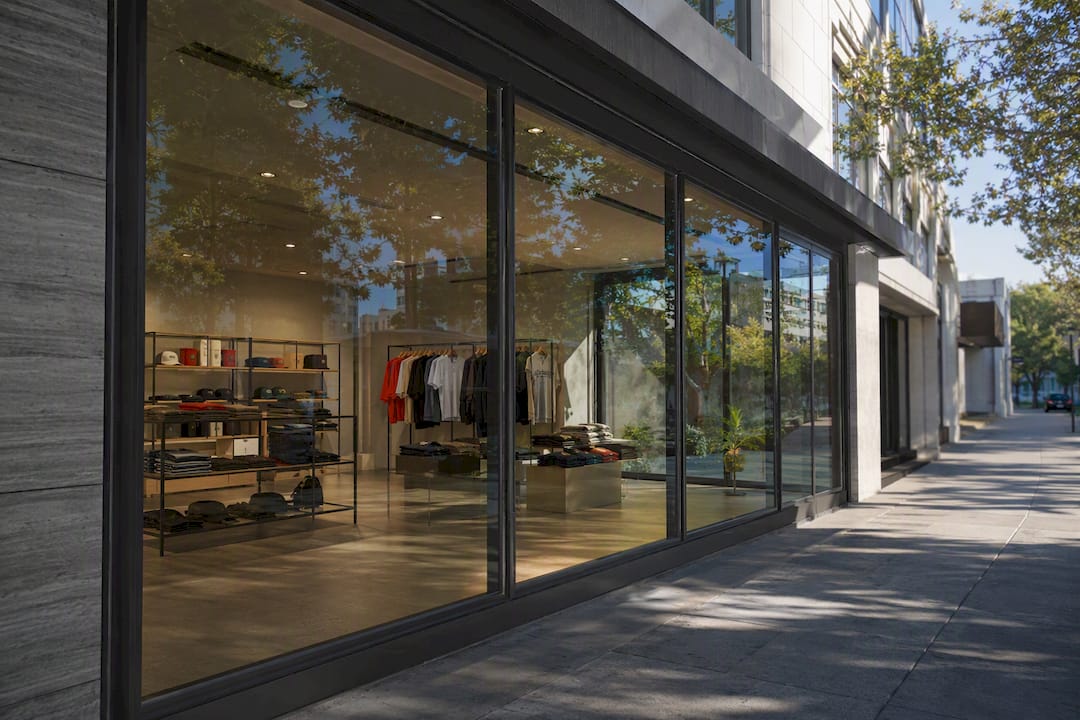
Night visibility is the flip side of the same issue. Retail-focused film guidance consistently flags that choosing film without checking night-time visibility is a common mistake, especially for stores that rely on illuminated window displays after closing. A film that looks great during the day can turn your lit display into a dim silhouette once the sun goes down, undercutting the exact marketing effect you paid for.
The solution is simple in practice: request a sample installed on your actual glass, then look at it both during the day and after dark with your interior lighting on. If your signage or displays lose visibility in either condition, that’s the wrong grade for your storefront, not a limitation of window film in general.
Does Window Film Work With Your Existing Storefront Lighting and Displays?
Yes, but the combination needs a little planning, especially if your displays rely on strong interior lighting to draw people in from the street.
Film and lighting interact in two directions. During the day, film controls how much outside light and heat reach your displays, which affects color temperature and how merchandise photographs in ambient daylight. At night, your interior lighting has to punch back through the film to remain visible outside, so the VLT rating you choose determines how bright your display lighting needs to be to read clearly after dark.
Retailers running LED display lighting generally have an easier time here than those using older, dimmer fixtures, since LEDs push enough brightness to stay visible through most solar control and spectrally-selective grades. If your storefront lighting is already on the dim side, it’s worth discussing your film’s VLT rating with a lighting design specialist before installation, so the two decisions get made together instead of one undoing the other.
Frosted or fully decorative film changes the equation again. Because it obscures rather than tints, it works better paired with lighting placed to illuminate the frosted surface itself rather than lighting meant to shine through to the street. If your store depends on window displays as a primary marketing tool, walk your installer through exactly how your displays are lit before choosing a film grade, rather than after.
Editorial Take: Storefronts Overthink Darkness and Underthink Specs
The mistake most storefronts make is treating window film like a single decision: light or dark, tinted or not. That framing misses what actually matters, which is matching a film’s measurable specs to a specific business risk. A boutique worried about fading merchandise has a different problem than a phone store worried about smash-and-grab theft, and a single “premium film” recommendation serves neither well.
Conventional advice leans hard on darkness as the main variable, when reflectivity and VLT matter more for retail specifically. A film that’s technically lighter but spectrally-selective will often outperform a darker generic film on the metric that matters: keeping displays visible while cutting heat.
If you take one thing from this guide, prioritize the mock-up. Manufacturer specs tell you what a film should do. A sample on your actual glass, in your actual lighting, tells you what it will do. That gap is where most storefront disappointments start.
Get a Retail Window Film Estimate From Twtwindowfilm
Twtwindowfilm installs spectrally-selective solar control, 8-mil security film, and decorative branding film for retail storefronts across Orange County and Los Angeles County, backed by a lifetime warranty on every install. That warranty is the practical difference for a retail owner: instead of guessing whether a film will hold up, you get a documented guarantee from a company that’s been installing 3M and LLumar film locally since 2008.
If you read through the specs above and landed on spectrally-selective for your brand-facing windows, or you’re leaning toward a security upgrade for a high-risk entrance, that’s exactly the conversation Twtwindowfilm has with retail clients daily. The team checks your glass type, brings physical samples to your storefront, and schedules installation around your trading hours rather than the other way around.
Request a free on-site estimate through the retail storefront window film page to get a written quote and see samples against your own glass before you commit to a grade.
Frequently Asked Questions
What is the best window tint for retail storefronts? Spectrally-selective solar control film is the strongest default for most storefronts because it cuts heat while staying nearly clear, preserving how displays and signage look from the street.
Do I need security film if I already have solar control film installed? Not necessarily. Solar control and security film solve different problems, heat versus forced entry, so add 8-mil security film only if your location faces a real theft or vandalism risk.
How long does retail window tinting installation take? A single-pane storefront window often takes just a few hours. Larger multi-pane façades usually need an overnight or weekend window to avoid disrupting business hours.
Will tinted windows make my store signage harder to see? It depends on the film’s reflectivity and VLT rating. Spectrally-selective film keeps visible light transmission high, so signage and displays generally remain visible in daylight.
Do retail storefronts need a permit for window tinting? Rules vary by city and county, and some municipalities regulate reflectivity or coverage on ground-floor glass. Check with your local building or planning department before installation.
How much does retail window film cost? Cost depends on film grade, thickness, square footage, glass complexity, and whether old film needs removal first. Request an itemized quote to compare options accurately.
Sources
Review manufacturer film specs at LLumar and decorative examples at Maritime Window Film, or request an estimate directly from Twtwindowfilm.
- LLumar — Spectrally selective window film (commercial)
- Maritime Window Film — Stand out year-round with decorative window films for retail stores