

Protect Hardwood Floors: 3 Moves Under $50 for Homeowners and Window Film
Stop grit at the door, cap every furniture leg with a felt pad, mop with a pH-neutral cleaner instead of vinegar, and cut the UV hitting your windows. Those four habits do more to protect hardwood floors than any product you can buy after the damage shows up. Refinishing is always an option later, but it is expensive and avoidable if you stay ahead of the finish wearing thin in the first place.
TL;DR:
- Using mats and felt pads prevents grit and furniture scratches, significantly extending the lifespan of hardwood finishes.
- UV rays from sunlight break down both the finish and wood pigments, making window film a cost-effective way to reduce fading on west- or south-facing windows.
- Only use pH-neutral, wood-specific cleaners and avoid vinegar, soap, or steam cleaners, as these can dull or damage the finish within a single mopping.
- Regular inspection and reapplication of protective habits, along with periodic re-coating every 3 to 5 years, maintain floors’ appearance and durability.
- During renovations, covering floors with breathable material and cleaning thoroughly afterward prevent long-term damage from dust and tools.
Table of Contents
- Daily Habits That Actually Protect Hardwood Floors
- How Do You Prevent Scratches and Dents on Hardwood?
- Does Sunlight Really Fade Hardwood Floors?
- Which Cleaners Actually Protect Hardwood Floors?
- When Should You Recoat or Refinish Hardwood Floors?
- Can Window Film Really Protect Hardwood Floors From Sun Damage?
- Protecting Your Floors During a Renovation
- What I’d Prioritize First, and Why
- A Practical Next Step for Sun-Exposed Rooms
- Sources
Daily Habits That Actually Protect Hardwood Floors
Grit is the enemy, not water. Every sandal, sneaker, and paw that crosses your threshold carries tiny rock and dirt particles that act like sandpaper under body weight, grinding into the finish with every step. A two-mat system, one outside the door and one inside, catches most of it before it ever reaches your floor.
From there, the routine is simple:
- Dry-sweep daily with a microfiber mop or soft-bristle broom to lift grit before it scratches.
- Damp-mop weekly with a nearly dry mop head, never a soaked one.
- Skip steam mops entirely. The heat and moisture can seep into seams and cloud or soften the finish.
- Wipe spills the moment they happen. Standing liquid is one of the fastest ways to dull or discolor a finish.
- Keep indoor humidity around 35% to 55%. Swings in either direction cause boards to gap or cup.
- Rotate area rugs and furniture periodically, especially near doors and big windows.
Routine checks like these, paired with a quick annual finish check, are what actually stretch the years between refinishing jobs, according to floor-care maintenance guides.
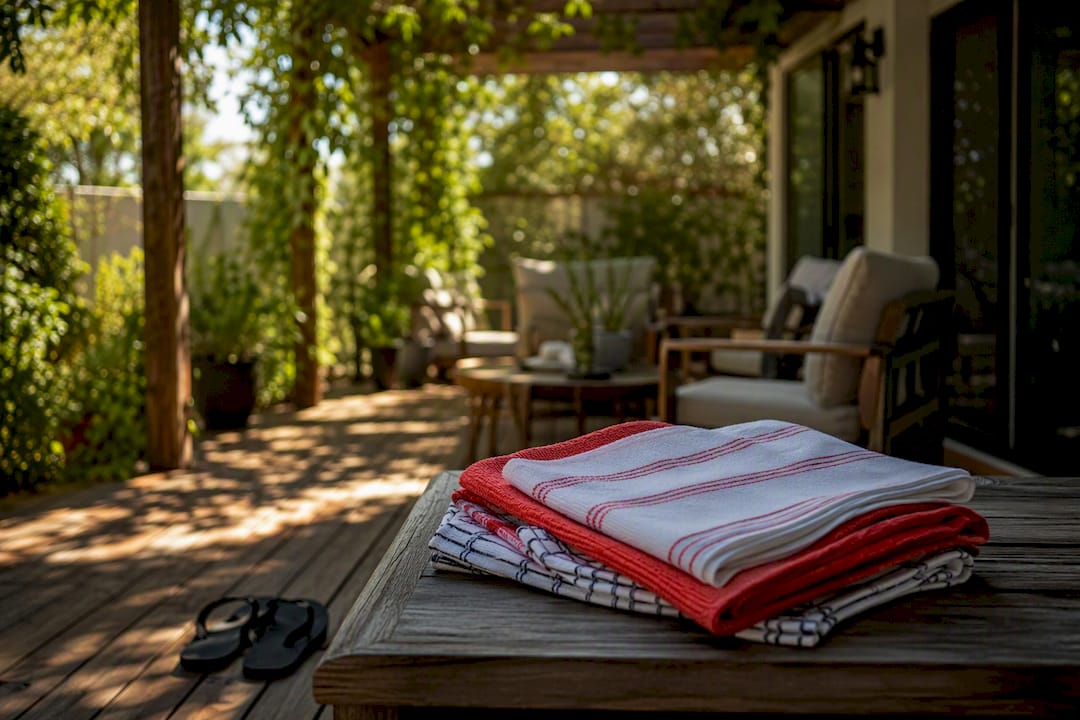
Pro Tip: Keep a stack of old bath towels near high-traffic entry points during rainy weeks. A thirty-second foot wipe-down beats mopping mud out of grooves later.
How Do You Prevent Scratches and Dents on Hardwood?
Furniture legs and pet nails cause more visible damage than foot traffic ever will, and the fix is mostly a matter of maintenance you can knock out in an afternoon.
- Put a felt pad on every single leg of every chair, table, and cabinet that touches the floor. Check them every 6 to 12 months, and swap them out sooner if they look flattened or gritty, since a dirty pad turns abrasive fast, according to scratch-prevention guidance from Family Handyman.
- Replace hard plastic casters on rolling chairs with rubber or soft polyurethane wheels, or drop a glass chair mat under the desk if you work from home.
- Keep pet nails trimmed short and ask guests to leave stiletto heels at the door. Both dig divots that no amount of polish fixes.
- Lay runners down hallways and other high-traffic corridors where nothing else buffers the wear.
- When moving furniture or appliances, lift and carry rather than drag, and slide protective sheets like Masonite or heavy cardboard under anything you have to slide.
Shallow surface scratches often buff out with a matching wax stick or stain marker. Deeper gouges that catch a fingernail need a professional’s attention, not a home fix.
Does Sunlight Really Fade Hardwood Floors?
Yes, and it is not just visible light doing the damage. UV rays break down the finish and the wood’s natural pigments, which is why you get that stark two-tone effect under a rug or a piece of furniture that never moves. Southern Living notes that uneven fading from window exposure is one of the most common complaints homeowners bring to flooring pros, and rotating rugs plus UV-reducing window treatments meaningfully slows it down.
Your options scale by cost and permanence:
- Blinds or shades, the cheapest fix, but you lose the view and the daylight every time you close them.
- UV-blocking window film, a retrofit that stays clear and lets the light in while filtering the rays that cause fading.
- Low-E or LoĒ³ replacement glazing, the most expensive route, reserved for homeowners already planning a window replacement.
The gap between film and full glazing is smaller than most people assume. Premium window film blocks up to most UV rays, while high-performance LoĒ³ glass blocks most UV rays, according to Installix’s comparison of glazing and film. Installed film typically costs a moderate amount per square foot, a fraction of what replacing sound window frames costs. Professional installation matters here: a poorly applied film bubbles or peels within a year, while a correctly applied one can last well over a decade. Combine film with rug rotation and a finish that includes UV inhibitors, and you are covering the problem from both the window and the floor.
Which Cleaners Actually Protect Hardwood Floors?
The right cleaner protects the finish. The wrong one strips it, sometimes within a single mopping. Stick to a pH-neutral cleaner made specifically for finished wood, and skip anything marketed as an all-purpose miracle solution.
- Avoid vinegar, dish soap, bleach, and ammonia. All of them are acidic or alkaline enough to dull or soften polyurethane finishes over repeated use.
- Never use oil soaps. They leave a waxy film that later coats of finish or polish won’t bond to properly.
- Steam cleaners are a hard no. Heat and trapped moisture work against the seal you are trying to protect.
Run the water-bead test to check where your finish actually stands: drop a few tablespoons of water on the floor and watch. If it beads up, the finish is doing its job. If it soaks in within about 30 seconds, the finish has worn through and it’s time to think about recoating, per Patriot Maids’ floor-care breakdown.
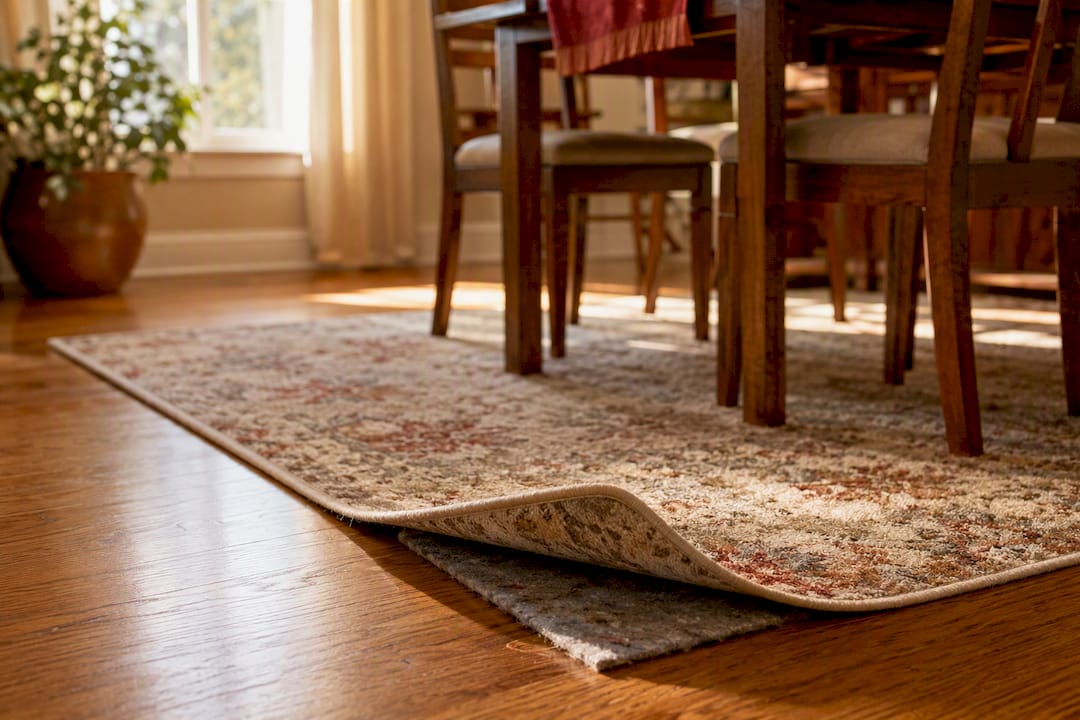
UV-inhibiting floor polish can add a thin layer of extra protection between recoats, but it is a supplement, not a substitute, and over-applying it leaves a sticky residue that attracts dirt. For rugs, choose breathable, felt or wool rug pads over rubber-backed mats. Rubber traps moisture against the finish and can leave a permanent discoloration, a point Floor & Decor’s wood-care guide makes clearly.
When Should You Recoat or Refinish Hardwood Floors?
Screening and recoating, a light buff followed by a fresh top coat, typically happens every 3 to 5 years in normal-traffic homes. A full sand-and-refinish is the bigger job, usually needed every 7 to 15 years depending on how much foot and pet traffic the floor sees.
Call a professional instead of DIYing when you spot:
- Cupping or crowning boards, a sign of moisture getting under the finish.
- Water stains that don’t lift with cleaning.
- Deep gouges that catch a fingernail.
- Boards that squeak or shift underfoot, which points to a structural issue below the surface.
Small nicks are fair game for a wax stick or stain marker touch-up. Anything beyond cosmetic, especially loose boards, belongs to a flooring contractor who can assess whether a board needs pulling and replacing.
Can Window Film Really Protect Hardwood Floors From Sun Damage?
Bare glass offers almost no defense against UV rays, and the fading you see under a rug or sofa is proof of it. A quality window film changes that math directly: premium film blocks up to roughly 99% of the UV that would otherwise be baking into your finish and your wood’s natural color, matching or beating what you get from a full glazing upgrade at a fraction of the cost, according to Installix’s research on UV fading and glazing options.
- Film retrofits work on the windows you already have, no reframing or reglazing required.
- Quality film installed correctly holds up for well over a decade before it needs attention.
- A lifetime warranty on installation, paired with materials from established manufacturers like 3M and LLumar, means you are not gambling on adhesive failure or peeling a few years in.
That last point is where a lot of DIY film jobs go wrong: bubbling, hazing, and edge lift are almost always installation errors, not product failures.
Protecting Your Floors During a Renovation
Renovation dust and dragged tools do more damage in a weekend than years of normal foot traffic, so cover the floor before the first hammer swings, not after the first scratch shows up.
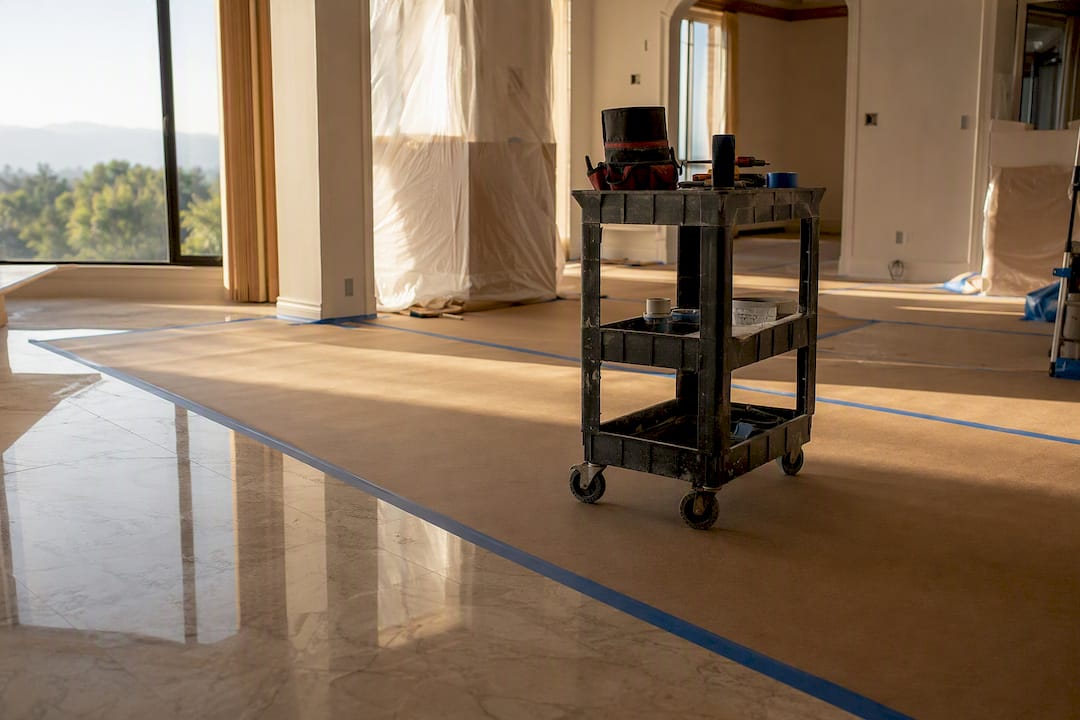
Start with a breathable protective layer, ram board or builder’s paper works better than plastic sheeting, which traps moisture underneath and can cloud the finish in a matter of days. Tape seams with painter’s tape, never anything adhesive enough to pull up the finish when you remove it.
Anywhere contractors will be rolling in tool carts, appliances, or materials, add a second layer of thick cardboard or plywood sheets over the protective board. Wheels and dropped tools go straight through a single layer of paper.
Set ground rules with your crew up front: no dragging cabinets or appliances across bare or covered floors, and any spilled paint, joint compound, or solvent gets wiped immediately, not left to dry. Dust from drywall sanding is abrasive and works into floor seams the same way outdoor grit does, so keep a shop vac running and reseal doorways to unfinished rooms with plastic sheeting on the walls, not the floor.
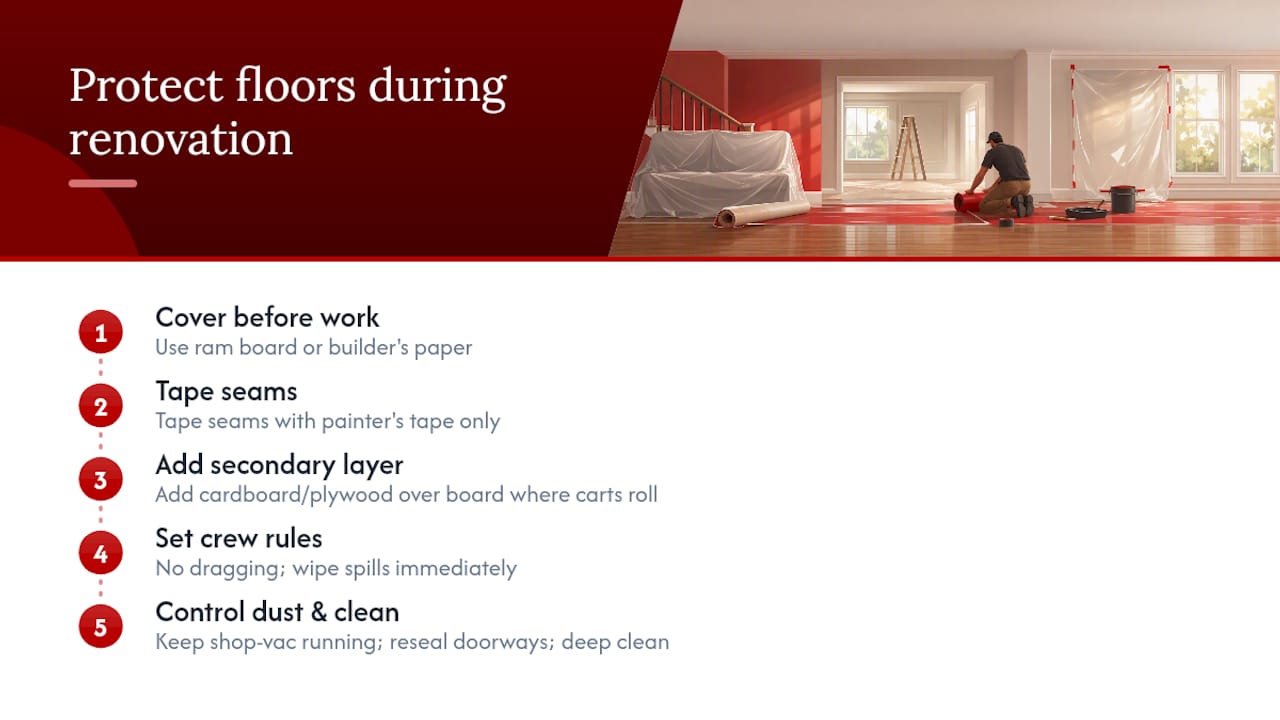
Once the project wraps, don’t skip a proper deep clean before pulling up the protective layer. Fine construction dust left sitting under paper can scratch the finish the moment normal foot traffic resumes.
What I’d Prioritize First, and Why
If you do nothing else this week, put down doormats, add felt pads to every piece of furniture, and run the water-bead test to know where your finish actually stands. Those three moves cost under $50 total and catch most of the damage before it starts.
After that, it’s a rhythm: check pads monthly, rotate rugs seasonally, and watch your home’s humidity through winter heating season. Budget for window film or professional recoating once you know your sun exposure and finish age, not before.
— Jake
A Practical Next Step for Sun-Exposed Rooms
If closing blinds every afternoon isn’t realistic, or you’re not ready to replace windows just to save your floors, window film is the option that solves the actual problem without asking you to change how you live in your home. It works especially well in rooms with large panes facing west or south, in rental properties where you can’t swap out glazing, and for homeowners who’ve priced out full window replacement and want a fraction of the cost for nearly the same UV protection.

Twtwindowfilm has installed solar and UV window film throughout Orange County and Los Angeles County since 2008, using materials from 3M and LLumar backed by a lifetime warranty on the installation itself. Film is not a replacement for felt pads, dry-sweeping, or a pH-neutral cleaner. It’s the layer that handles what daily habits can’t: the UV coming through your glass every single day the sun is out. If you want a firsthand look at what film would do for a specific room, request a free on-site estimate and get a straight answer on cost and expected protection before you commit to anything.
Sources
- How to stop your hardwood floors from fading in the sun — Southern Living
- How to prevent scratches on hardwood floors — Family Handyman
- UV fading: protecting hardwood floors with glazing — Installix
- How to protect your hardwood floors before the damage is done — Patriot Maids
- Wood Care Guide: Maintain and Protect Your Hardwood Floors — Floor & Decor