

Does Privacy Window Film Actually Work at Night?
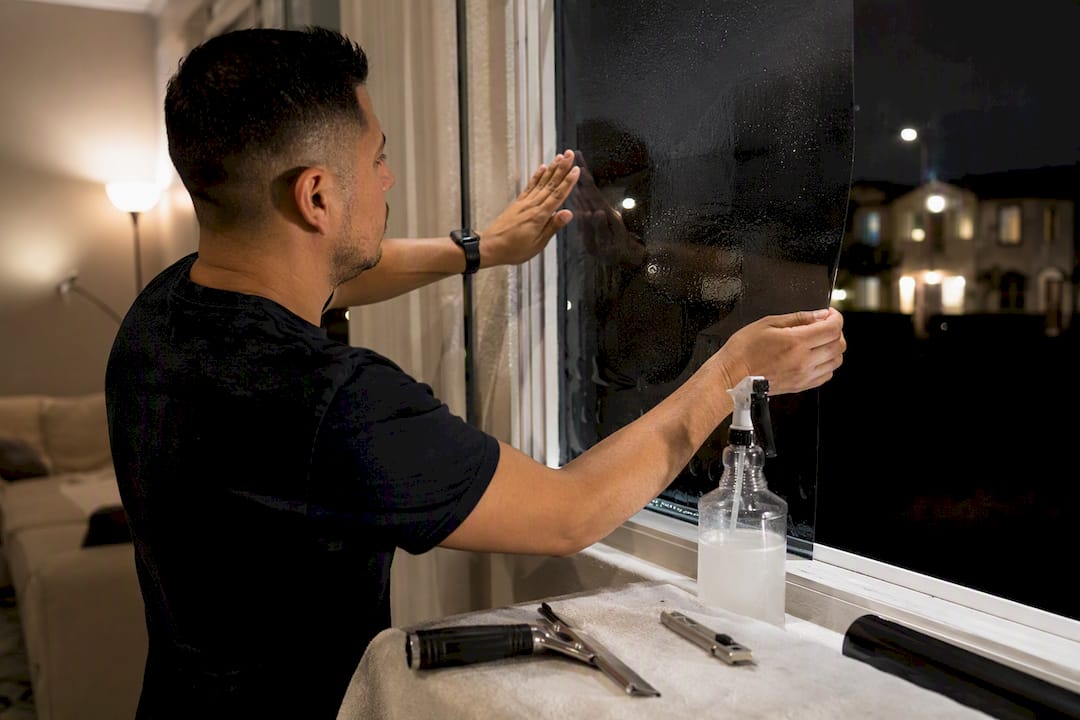
Privacy film works at night only if you pick the right type and manage your interior lighting. Frosted and blackout films hold their privacy after dark because they scatter light rather than reflect it, but reflective one-way films reverse once your lamps outshine the streetlights, turning your window into a lit stage. The realistic fix for most homes is film paired with smart lighting placement, and sometimes a blind for backup.
TL;DR:
- Reflective and one-way mirror films lose their privacy protection at night when interior lights outshine outdoor illumination, requiring blinds for full coverage.
- Frosted, decorative, and blackout films maintain consistent privacy through scattering or blocking light, making them suitable for bedroom or bathroom use.
- Proper lighting management, such as repositioning lamps and using diffusers or dimmers, often provides a cost-free solution to nighttime visibility issues.
- Professional installation and assessment can optimize film performance by considering actual lighting conditions and room usage, offering a lifetime warranty.
- Confusing heat-control films with privacy films can lead to insufficient privacy after dark, as many only provide mild daytime tinting without nighttime benefits.
Table of Contents
- Privacy Window Film at Night: Which Types Actually Hold Up
- How Lighting Conditions Reverse Reflective Film at Night
- Best Practices for Keeping Your Windows Private After Dark
- DIY Film vs. Professional Installation: What It Costs You Either Way
- When a Professional Assessment Changes the Recommendation
- Editorial Take: Stop Blaming the Film
- Get Nighttime Privacy Done Right the First Time
- Sources
Privacy Window Film at Night: Which Types Actually Hold Up
Not every film sold for “privacy” behaves the same way once the sun goes down. The difference comes down to how each type handles light: does it reflect, scatter, or simply block it?
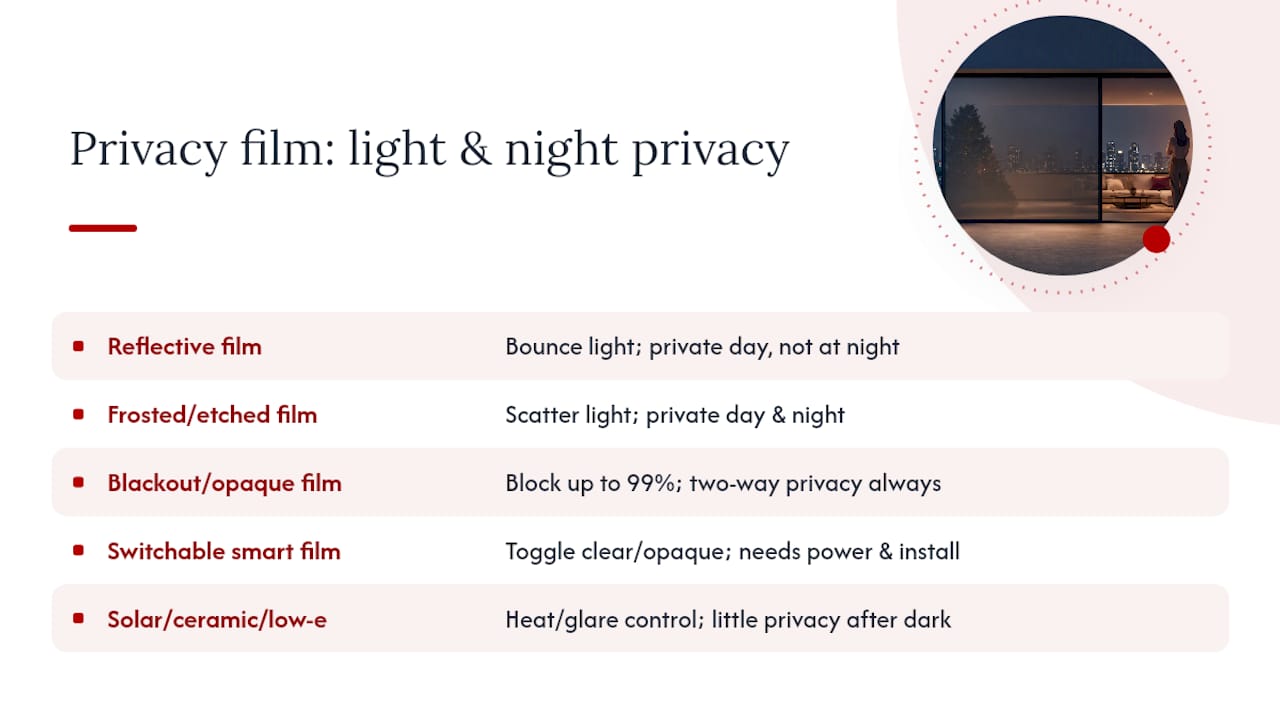
Reflective and one-way mirror films are the ones that trip people up. During the day, they bounce exterior light back outward, so your house looks like a mirror from the sidewalk. At night, that relationship flips. Once your living room lamp is brighter than the street outside, the glass behaves like a normal pane, and anyone outside can see straight in. Solar Screen’s breakdown of nighttime privacy film confirms this is physics, not a defective product. If you go this route, plan on pairing it with blinds for after dark.
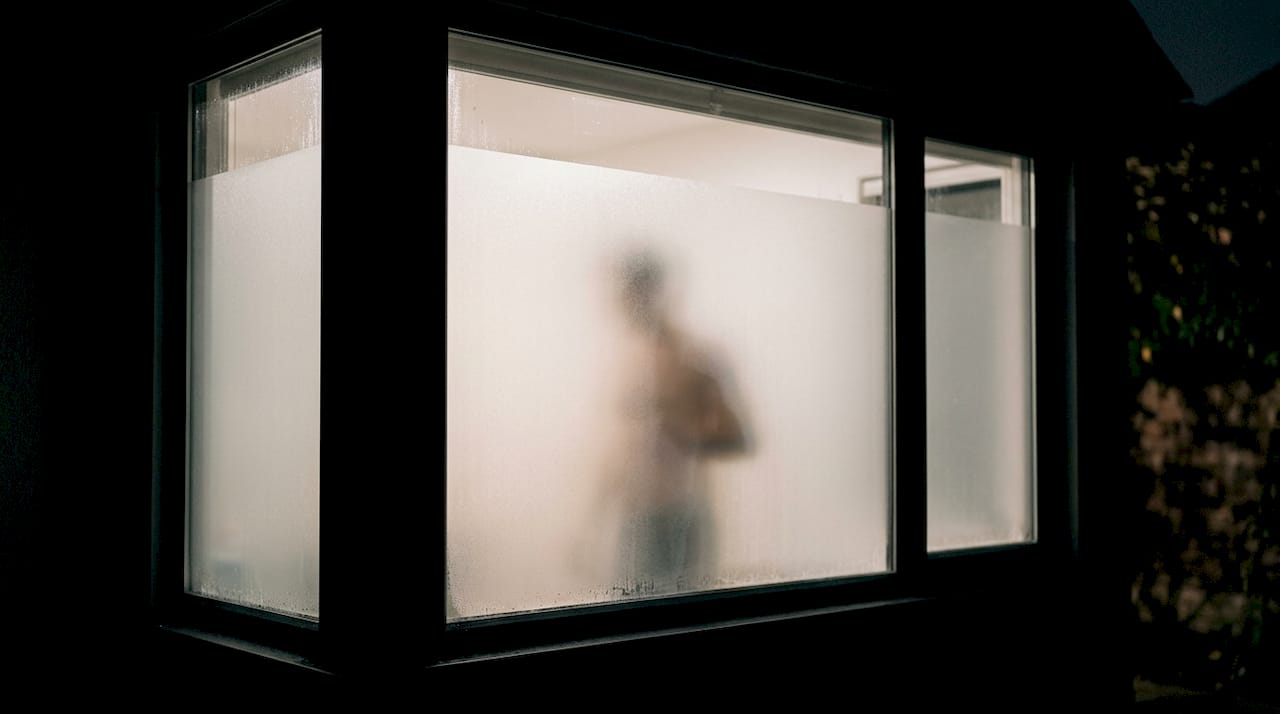
Frosted, etched, and decorative films work differently. Instead of reflecting light, they scatter it, so shapes blur into silhouettes whether it’s noon or midnight. You lose a clear view, but you keep the privacy consistently, which is why frosted patterns show up so often on bathroom windows and street-facing entryways. Twtwindowfilm’s frosted and decorative film options are built around this exact use case.
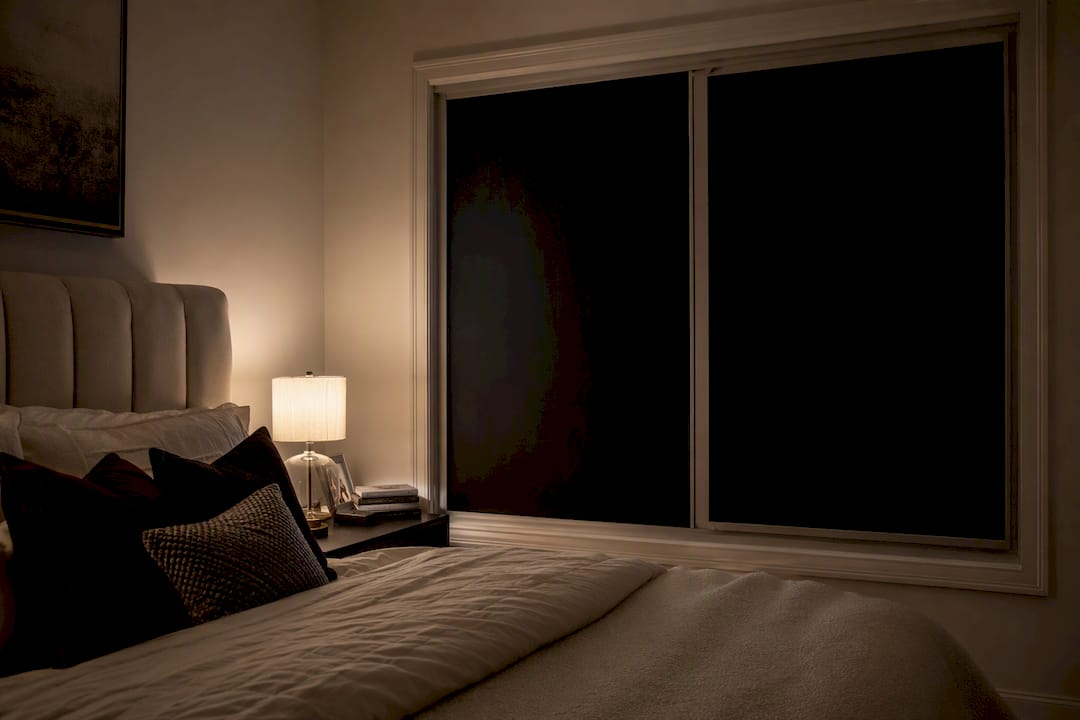
Blackout and opaque films go further still. Testing on blackout products shows they can block up to 99% of light while providing genuine two-way privacy, meaning neither side can see through, day or night. Bedrooms, home theaters, and shift workers who sleep during daylight hours are the classic candidates.
Switchable smart films give you a toggle between clear and opaque on demand, which is appealing but comes with real costs: electrical wiring, a higher price tag, and a professional install requirement in almost every case.
Solar, ceramic, and low-e films are worth a mention because people confuse them with privacy films. They’re built for heat and glare control, and while they add mild daytime tinting, they typically offer little to no privacy benefit after dark. If privacy is your main goal, this category isn’t the answer on its own.
How Lighting Conditions Reverse Reflective Film at Night
The rule that governs every window is simple: whichever side is brighter, the other side sees through to it. During the day, sunlight overwhelms your interior lights by a wide margin, so the glass reflects outward and you get a mirror effect. At night, that balance inverts. Turn on an overhead light or a bright lamp, and your interior becomes the brighter surface, which means the glass stops reflecting and starts transmitting your living room straight to the sidewalk.
3M’s product guidance for its own privacy films makes a similar point: performance depends on the light balance between interior and exterior, not just on the film itself.
A few situations make this worse than average:
- A single bright point light near the glass, like a floor lamp two feet from the window, creates a hot spot that erases whatever privacy the film was providing.
- Light-colored walls and ceilings bounce interior light back toward the window, amplifying the brightness the glass has to compete against.
- Street lighting positioned close to your window can actually help, since it raises exterior brightness relative to your interior and restores some of the daytime mirror effect.
Picture three common rooms. A street-facing living room with a bright overhead fixture on will expose the whole room to passersby, no matter how good the film is. A bathroom with vanity bulbs blazing around the mirror is the worst-case scenario, since vanity lighting is designed to be intense and close to the window. A bedroom with a nightstand lamp positioned away from the glass, on the other hand, tends to keep privacy intact because the light source isn’t feeding the window directly.
Installers who work with one-way and perforated films report that lighting management, not the film choice, is usually the fastest fix when a customer complains about nighttime visibility.
Best Practices for Keeping Your Windows Private After Dark
Most of the fixes here cost nothing beyond rearranging furniture or swapping a light bulb. A few require a small purchase, but none require replacing your film.
Lighting tactics matter most because they’re free and immediate:
- Move lamps and floor fixtures away from windows and toward the interior of the room.
- Swap bare bulbs for shades or diffusers that scatter light instead of throwing a direct beam at the glass, as advised in noise-reducing interior door options that actually work.
- Choose warmer, lower-lumen bulbs for rooms with street-facing windows.
- Install dimmers so you can drop brightness in the evening without sitting in the dark.
Layering tactics close the remaining gap. A frosted lower panel on an otherwise clear window blocks the sightline where people actually look while keeping the top half open for light. Decorative patterns do the same job with more visual interest. Roller shades paired with reflective film give you daytime mirror privacy and a nighttime backup in one window.
Deciding between blackout and translucent film usually comes down to the room. Bedrooms, especially for shift workers who sleep during the day, do better with blackout film because it solves both privacy and light control at once. Bathrooms and street-level windows that still need daylight are better candidates for frosted or decorative film, since total blackout isn’t necessary there.
If you’re not ready for a full film installation, smaller upgrades help immediately: adhesive frosted strips for the bottom third of a window, static-cling privacy film that requires no adhesive, or timed smart blinds that close automatically at dusk.
Pro Tip: Before spending money on a new film, try repositioning your existing lamps for a week. A surprising number of nighttime privacy complaints disappear once the light source stops pointing straight at the glass.
DIY Film vs. Professional Installation: What It Costs You Either Way
DIY window film kits are cheap and satisfying if you’re handy, but the trade-offs show up fast. Independent lab testing found that installation quality has a major effect on both appearance and actual privacy performance, and DIY installs tend to show more bubbles, misaligned edges, and premature peeling than professional work.
Professional installation costs more upfront, but you’re paying for three things DIY can’t match: seamless application, access to premium films like 3M and LLumar that aren’t sold in consumer kits, and a warranty that covers the install itself, not just the material.
What actually drives your cost:
- The number and size of windows being covered.
- Specialty glass, like tempered or curved panes, which requires different handling.
- Removal of old, failing film before the new layer goes on.
- Hard-to-reach windows, such as upper stories or oddly angled bay windows.
Before you hire anyone, ask:
- How long is the installation warranty, and does it cover bubbling or peeling?
- Which film brands do they carry, and are they authorized dealers for 3M or LLumar?
- Can they show you a sample install or photos of similar jobs?
- Do they offer references from homeowners with comparable window setups?
If your existing film has already failed and needs to come off before a new install, professional removal avoids the scratched glass and adhesive residue that DIY removal often leaves behind.
When a Professional Assessment Changes the Recommendation
Twtwindowfilm has been installing window film across Orange County and Los Angeles County since 2008, backed by a lifetime warranty and direct partnerships with 3M and LLumar. That combination matters most in exactly the situations this article covers: a homeowner who bought reflective film expecting 24/7 privacy, then discovered it reverses the moment the lamps come on.
A typical on-site fix looks like this: a street-facing living room with reflective film and a bright overhead fixture gets reassessed, the lighting gets repositioned away from the glass, and the lower half of the window is layered with a frosted pattern while the upper half keeps its daytime mirror function. The result is a window that holds privacy in both directions instead of only half the day.
A professional assessment measures more than just the film. It weighs visible light transmission against exterior reflectance, then matches that balance to how the homeowner actually uses the room at night. That’s the step most retail film kits skip entirely.
That’s also when a lifetime warranty earns its keep. It’s not there for the film that performs as expected. It’s there for the year three sun exposure test that DIY kits rarely survive.
Editorial Take: Stop Blaming the Film
Homeowners fixate on film specs when the real culprit is usually a $12 lamp aimed at the glass. That’s the biggest gap between the marketing pitch and reality: no reflective film delivers guaranteed privacy at night, and any product claiming otherwise is skipping the physics.
Conventional advice tells you to upgrade to a “better” film. Better advice tells you to fix your lighting first, then decide if you still need a different film. Move the lamp, add a shade, dim the switch. If the room is still exposed after that, you’ve learned something the film alone couldn’t have told you: you need frosted or blackout coverage, not another reflective product marketed the same way as the one that let you down.
Where I’d push back hardest on typical guidance is the idea that one film handles every room in a house. A bedroom and a street-facing living room have different jobs to do after dark, and treating them the same is how homeowners end up disappointed twice.
— Jake
Get Nighttime Privacy Done Right the First Time
Twtwindowfilm is the alternative to guessing your way through film options with a retail kit and a return policy. A free on-site assessment measures your actual lighting conditions and window exposure, then matches you with frosted, blackout, or layered solutions from 3M and LLumar instead of a one-size-fits-all reflective product that may not hold up once the sun goes down.

That matters most for the exact scenario this article walks through: reflective film that looked perfect at the showroom but reversed the first night the lamps went on. Every installation carries a lifetime warranty, so if a room’s lighting changes or the film underperforms, it’s covered rather than left as a problem you solve on your own. If you’re weighing options for a home window tinting project anywhere in Orange County or Los Angeles County, request your free assessment and get a recommendation built around how you actually use your rooms after dark, not a generic product label.
Sources
- One Way Window Film That Works At Night | Contra Vision
- The Best Window Films - Top Picks from Bob Vila
- Best window films | Consumer Reports
- 3M™ Privacy Film, Matte, 2 mil, 60 in x 100 ft, 1 Roll/Case | 3M United States