
Lifetime Warranty on SoCal Polycarbonate Window Film Installations
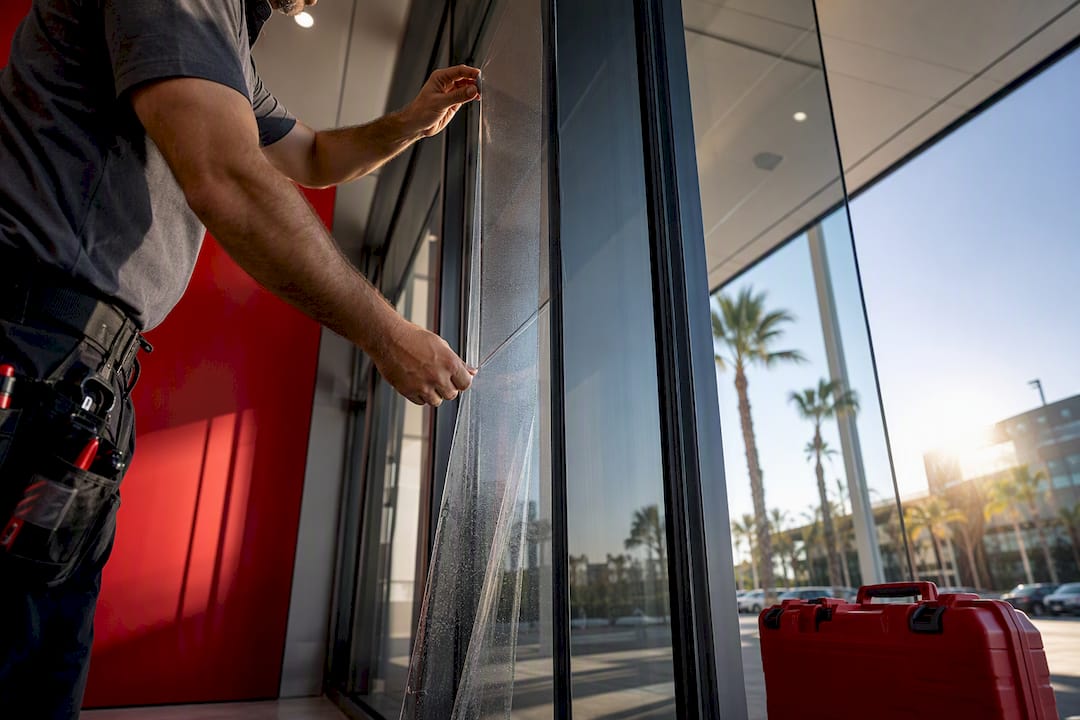
Polycarbonate window film, in the sense most homeowners and facility managers actually search for, means professionally installed solar, privacy, security, or decorative film applied to your building’s glass by a trained crew, typically from brands like 3M or LLumar. It cuts heat and glare, blocks over 99% of UV rays, adds privacy, and reinforces glass against impact or forced entry. For nearly everyone outside a small DIY niche, hiring a qualified professional installer is better than doing it yourself.
TL;DR:
- A proper installation includes a thorough glass assessment, deep cleaning, precise cutting, and careful application, lasting from four hours for homes to several days for large projects.
- Costs range from low single-digit dollars per square foot for basic dyed films to up to $9.50 for premium ceramic options, with additional expenses for complex access or old film removal.
- Compatibility issues, improper edge sealing, and poor handling can cause bubbles, haze, or edge lifting, which are usually repairable under warranty if addressed promptly.
- Professional films block over 99% of UV rays, provide energy savings of 5% to 15%, and enhance impact resistance without significantly darkening the view.
- Choosing an installer with manufacturer partnerships, extensive experience, proper insurance, and visible references reduces risks of failure and ensures lasting performance.
Table of Contents
- What Does Professional Window Film Actually Do?
- What Happens During a Professional Installation?
- How Much Does Professional Window Film Cost?
- What Compatibility Risks and Warranty Terms Should You Know?
- How Do You Choose a Qualified Window Film Installer?
- How Well Does Professional Window Film Perform?
- Does Window Film Offer Environmental or Health Benefits?
- How Does Window Film Compare to Other Glazing Options?
- What Problems Show Up After Installation and How Do You Fix Them?
- Why Twtwindowfilm’s Approach to Window Film Installation Works
- Ready to Get Started With Window Film Installation?
- Sources
What Does Professional Window Film Actually Do?
Window film works by layering polyester sheets, sometimes with metal or ceramic particles embedded, onto existing glass to change how it handles light and heat. Each category solves a different problem, and picking the wrong one is the single most common regret buyers report after the fact.
Solar control film rejects infrared heat and cuts visible light transmission (VLT) enough to lower cooling costs without turning your windows into mirrors. Manufacturer-grade films from LLumar and 3M reject over 99% of UV rays and can trim energy use by 5% to 15% in retrofitted buildings, which matters most on west-facing rooms and glass storefronts that bake all afternoon.
Privacy film uses frosting, gradients, or one-way reflective layers so people can’t see in during the day, without blacking out your view entirely. It’s the default pick for ground-floor bathrooms, medical offices, and classroom doors.
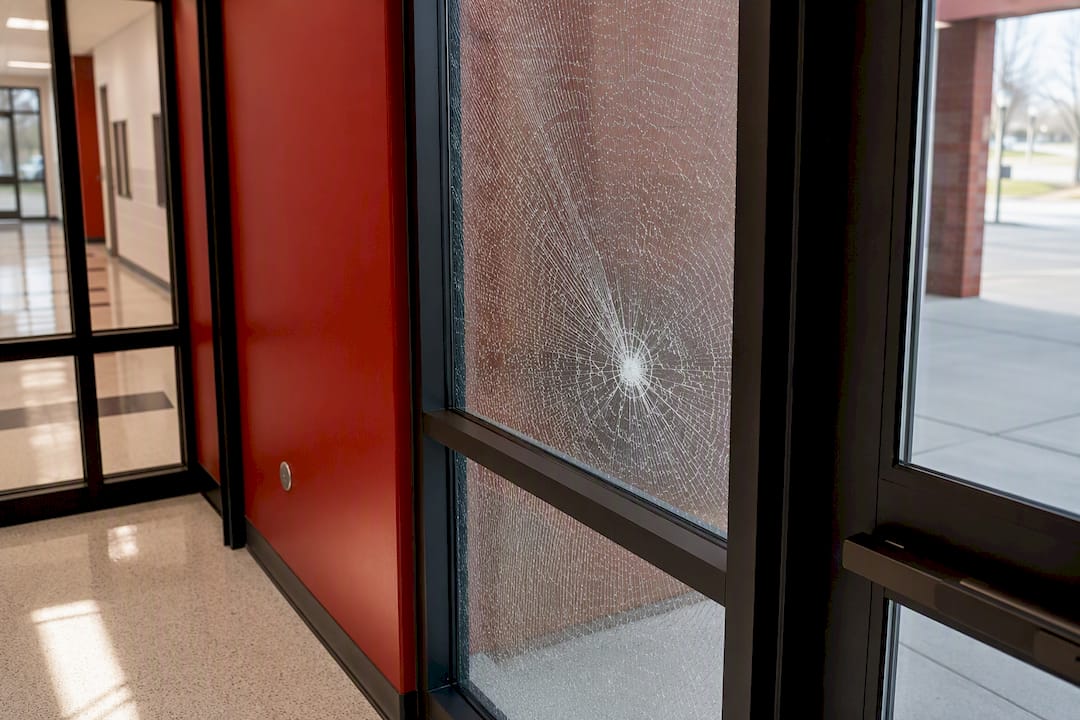
Security film, built from heavier polyester with aggressive adhesives, doesn’t stop glass from cracking but keeps shattered shards bonded to the pane. That’s what buys occupants time during a break-in, a storm, or an accidental impact, and it’s why security and safety film shows up so often in retail and school specifications.
Decorative film is purely aesthetic. Etched patterns, branding graphics, or frosted bands dress up an entryway or reinforce a storefront’s identity.
Here’s how the categories map to common jobs:
- Sun-facing home windows: solar control or ceramic film for heat rejection without heavy tinting
- Storefront glare and window shopping: mid-tier solar film paired with anti-glare coating
- Classroom or office doors: frosted privacy film, often combined with security backing
- Retail display cases: security film for shatter protection plus branding overlays
What Happens During a Professional Installation?
A rushed install is the fastest way to void a warranty. Manufacturers like Avery Dennison publish detailed installation and maintenance guidance for a reason: skipping steps causes bubbling, peeling, and adhesive failure within months.
A proper job follows this sequence:
- On-site consultation and glass assessment. The installer checks glass type, frame condition, and sun exposure to catch thermal stress risk before it becomes a cracked pane.
- Deep cleaning. Every trace of dust, adhesive residue, or old caulking gets stripped, since even a speck under film shows up as a permanent bump.
- Cutting and dry-fitting. The film is cut to size, sometimes with a small overlap trimmed after application.
- Application. Installers use water-activated adhesive (WAA) or pressure-sensitive (PS) adhesive depending on film type, squeegeeing out moisture and air as they go.
- Edge sealing for exterior installs. Neutral silicone sealing at the edges keeps water from creeping under exterior-applied film.
- Curing. Interior films typically need days to a couple of weeks to fully cure, depending on humidity and temperature; some haze during curing is normal and clears on its own.
A small home job with 6 to 8 standard windows usually runs 4 to 8 hours of labor, while larger commercial jobs stretch into multiple days.
Pro Tip: Avoid scheduling exterior film installation during extreme heat or cold. Most manufacturers recommend application between 40°F and 90°F to let the adhesive activate properly, and installers who ignore that window are the ones you’ll hear complaining about bubbles six months later.
How Much Does Professional Window Film Cost?
Price swings hard depending on film grade, and that’s before labor even enters the conversation. Basic dyed films sit at the entry level; ceramic and security films cost notably more per square foot.
Industry cost guides put installed pricing in these bands:
- Basic dyed film: roughly low to moderate single-digit dollars per square foot installed
- Metalized or mid-grade film: moderate step up from dyed
- Premium ceramic film: commonly $5.00 to $9.50 per square foot
- Security and decorative film: often priced above ceramic due to material thickness and handling requirements
A higher-end ceramic quote on a home with several hundred square feet of glass can exceed a few thousand dollars before labor complexities like second-story access or old film removal get added in.
What actually moves your final number: total glass area, height and access difficulty, whether old film needs stripping first, custom cuts around mullions or curved glass, and crew mobilization for large commercial sites. If your budget is tight, bundling every window into one visit spreads the mobilization cost across more square footage. Reserve the ceramic premium for west-facing rooms or security-sensitive storefronts where the extra cost pays for itself in comfort or protection.
What Compatibility Risks and Warranty Terms Should You Know?
Not every pane of glass is a safe candidate for every film, and this is where DIY attempts go sideways most often. Dark or thick film applied to older single-pane glass can trap enough heat differential to crack the pane, a failure mode installers call thermal stress. That’s exactly why a proper glass assessment before selection matters more than any product spec sheet.
Installation errors that void warranties or cause early failure:
- Skipping the deep-clean step, trapping dust or fibers under the film
- Improper edge sealing on exterior-applied film, letting moisture wick underneath
- Re-rolling or rough handling of pre-cut security film, which can crease the adhesive layer
- Using the wrong adhesive activation method for the film type
A lifetime installer warranty on top of the manufacturer’s product warranty is worth asking about directly, since it covers labor errors the material warranty won’t touch.
How Do You Choose a Qualified Window Film Installer?
Anyone can buy a roll of film and a squeegee. Ask these questions before you sign anything, and you’ll filter out the operations that shouldn’t be handling exterior security film on a two-story building.
Checklist before hiring:
- Confirmed brand partnerships with 3M or LLumar, not generic “premium film” language
- Years actively in business, not years the LLC has existed on paper
- Proof of insurance and a written workmanship warranty
- Before-and-after photos from comparable jobs (residential vs. commercial storefronts are different skill sets)
- Willingness to provide references you can actually call
Questions worth asking on the phone or during the estimate visit:
- How do you assess glass and frame compatibility before recommending a film?
- Can I see a physical sample of the film before committing?
- Does the quote separate material cost from labor cost?
- What’s your policy on removing old film, and is it a separate line item?
- For exterior or security film, do you send a two-person crew?
Pro Tip: Ask specifically about crew size for exterior security film jobs. Manufacturers note that handling heavy security film solo risks creasing the adhesive, and a two-person crew is standard practice for a reason.
Red flags: no written warranty, vague answers about glass compatibility, refusal to do an on-site visit before quoting, and heavy pressure toward the most expensive film on the shelf.
How Well Does Professional Window Film Perform?
UV protection is where film earns its keep fastest. Quality professional film blocks over 99% of ultraviolet rays, which slows fading on flooring, furniture, and retail merchandise sitting near glass all day.
Heat rejection depends heavily on film type. Ceramic films use nano-ceramic particles to block infrared heat without the reflective, mirror-like look older metalized films had, and buildings that retrofit with quality film commonly see energy savings in the 5% to 15% range. That’s a meaningful dent in cooling costs for a building with large west or south-facing glass exposure.
Impact resistance is a different performance axis entirely, and it’s often confused with bulletproofing, which it isn’t. Security film doesn’t stop glass from breaking. It holds the shattered pieces together in a sheet rather than letting them scatter, buying critical seconds during a break-in attempt, storm impact, or accidental collision. That distinction matters when you’re specifying film for a school entrance versus a decorative interior partition, where impact resistance isn’t a priority at all.
Visible light transmission (VLT) determines how dark a film looks and how much natural light still gets through. A film with 40% VLT lets noticeably less light in than one at 70%, and that number should be part of every quote you compare, not an afterthought discovered after installation.
Does Window Film Offer Environmental or Health Benefits?
Cutting cooling load is the most direct environmental payoff. A building that reflects and absorbs less solar heat runs its air conditioning less, and that translates into lower energy draw across a cooling season, particularly in climates with long, hot summers.
There’s a health angle too, one that gets less attention than the energy savings pitch. Blocking over 99% of UV radiation reduces UV exposure for people sitting near windows for hours at a stretch, whether that’s an office worker at a desk or a student in a classroom seat by the glass. UV exposure through untreated glass contributes to cumulative skin exposure for people in sun-facing rooms.
Film also extends the life of what’s inside a building. Furniture, flooring, artwork, and retail merchandise fade slower when UV and infrared exposure drop, which means fewer replacement cycles and less material waste over time. That’s a quieter form of environmental benefit: not generating carbon, but avoiding the resource cost of replacing sun-damaged interiors every few years.
None of this replaces proper insulation or HVAC maintenance. Film is a supplement to a building’s thermal performance, not a substitute for it, and buyers expecting it to solve a poorly insulated building’s energy problems on its own will be disappointed.
How Does Window Film Compare to Other Glazing Options?
Full window replacement with double-pane or low-E glass delivers stronger long-term thermal performance, but it costs many times more than film and takes weeks of lead time versus a single-day installation. For most buildings with sound existing glass, film delivers a large share of the comfort benefit at a fraction of the cost and disruption.
Tinted or reflective glass installed at manufacture time offers a similar look to film but can’t be added retrofitted to glass you already own, and it locks in one tint level permanently. Film gives you the flexibility to change your building’s performance without touching the existing glazing.
Interior blinds and shades block glare and add privacy but do nothing for UV exposure or heat gain through the glass itself, since the heat has already entered the room by the time light hits the blind. Film intercepts that heat and UV load before it crosses the pane.
Storm shutters and impact-rated glass outperform security film in extreme wind events, but they cost significantly more and often require permitting. Security film is the practical middle ground for buildings that need better break-in resistance without a full glazing overhaul, particularly for retail storefronts and street-level offices.
For a building with functional existing glass, film is usually the fastest, least invasive upgrade path on the table.
What Problems Show Up After Installation and How Do You Fix Them?
Small bubbles during the first week or two are usually just trapped moisture working its way out during the curing process, and they typically flatten on their own. If bubbles persist past the manufacturer’s stated cure window, that points to poor squeegee technique during application, not a defective film.
Edge lifting, especially on exterior-applied film, almost always traces back to inadequate edge sealing. This is where a two-person installation crew and proper neutral silicone sealing at the perimeter earns its cost. A reputable installer will address edge lifting under warranty rather than charging you for a callback.
Haze or a cloudy appearance during the first few weeks is normal curing behavior for water-activated adhesive films and generally clears as trapped moisture evaporates. Haze that never clears after the manufacturer’s stated cure period suggests a mismatch between film and adhesive method, which a warranty claim should cover.
Discoloration or purple tinting years down the road usually signals a cheaper dyed film reaching the end of its service life rather than an installation failure. This is where the gap between a basic film and a ceramic film shows up most visibly, since ceramic formulations resist UV degradation far longer.
Scratches from cleaning with abrasive materials are avoidable with a simple habit change: use a soft cloth and non-abrasive cleaner, never a squeegee with a metal edge, on cured film. Most “warranty failure” complaints installers field are actually maintenance issues, not manufacturing defects.
Why Twtwindowfilm’s Approach to Window Film Installation Works
Twtwindowfilm has installed window film across Orange County and Los Angeles County since 2008, working with homes, schools, retail storefronts, and government facilities. Every job includes partnerships with 3M and LLumar, meaning the film going on your glass comes from manufacturers with documented UV and heat-rejection performance, not an unbranded off-market roll.
Every installation carries a lifetime warranty, covering both material defects and workmanship, which sets a meaningful bar above the standard manufacturer-only coverage many installers offer. Clients typically come in for one of three reasons: a west-facing room that’s unbearable by afternoon, a storefront that needs privacy without losing curb appeal, or a facility manager trying to reduce break-in risk on ground-floor glass. Free on-site estimates start with the same glass assessment process outlined earlier in this guide, matching film type to your specific glass and frame conditions before any product gets recommended.
— Jake
Ready to Get Started With Window Film Installation?
Twtwindowfilm’s advantage over piecing together a DIY kit or hiring an unbranded installer comes down to three things stacked together: manufacturer-grade film from 3M and LLumar, a lifetime warranty backing the actual installation work, and a free on-site glass assessment before you spend a dollar.
Getting a quote is a straightforward process. First, request a site visit so an installer can inspect your glass, frames, and sun exposure in person. Second, you’ll get a written quote that separates material cost from labor, so you can see exactly what you’re paying for and compare it against other estimates. Third, once you approve the plan, installation gets scheduled around your building’s traffic or your home’s routine.
Whether you’re dealing with a hot upstairs bedroom, a storefront that needs privacy without sacrificing daylight, or a school specifying safety film for entryways, the full range of residential and commercial services covers the assessment through installation. Request your free on-site estimate and get a written quote before your next high-cooling-bill season hits.
Sources
- Architectural Installation Process - International Window Film Association
- Explore the Benefits of Commercial Window Film | LLumar
- Avery Dennison — Installation & maintenance guidance for architectural window film
- Window Film Price Per Square Foot: Cost Breakdown and Realistic Ranges 2026 – Current Cost