
6 Specs to Demand Before Buying Perforated Window Film
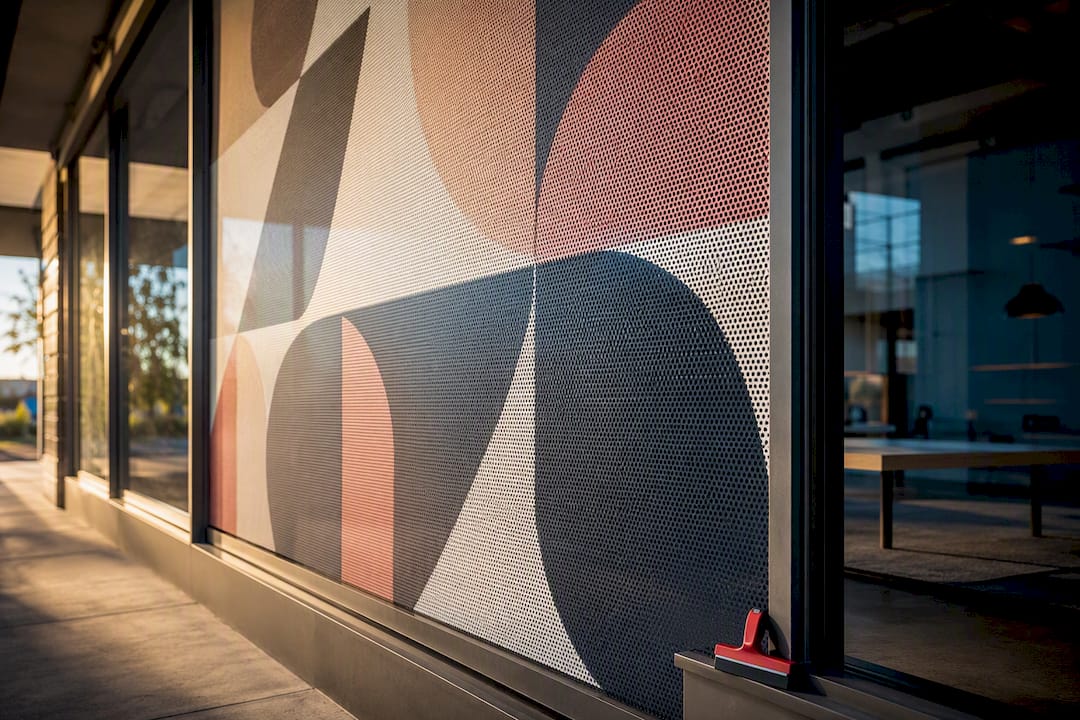
Perforated window film is the right call for storefront advertising, daytime privacy, vehicle graphics, and bird-safe glazing, because it prints full-color images on glass while still letting people inside see out. The trade-off: it loses privacy at night unless interior lighting is controlled, and the perforation ratio you choose trades image sharpness against how clearly you can see through it. The sections below cover the specs, the buying checklist, and what a professional install actually changes.
TL;DR:
- Perforation ratios range from 50/50 to 70/30, with higher printable coverage favoring bold graphics but reducing see-through clarity.
- Daytime visibility and graphics quality depend on light conditions, as outside viewers see images clearly while inside views are dotted, reversing after dark when interior lights outshine outside.
- The most suitable applications are retail storefronts, vehicle rear windows, and spaces requiring daytime privacy, glare reduction, or bird-safe glazing, each influencing perforation choices differently.
- Accurate specifications including perforation ratio, hole size, film thickness, and adhesive type are essential, along with site-specific light condition assessment before installation.
- Professional installation is recommended for multi-pane setups or precise alignment, with routine maintenance limited to mild cleaning to ensure longevity.
Table of Contents
- What Is Perforated Window Film and How Does One-Way Vision Work?
- What Perforation Ratios and Materials Should You Expect?
- Where Does Perforated Film Work Best?
- What Should You Ask Suppliers Before You Buy?
- DIY or Professional Install: What Changes the Outcome?
- An Installer’s View on Getting the Ratio Right
- Get a Professional Perforated Film Quote
- Where These Specs and Claims Come From
- Sources
What Is Perforated Window Film and How Does One-Way Vision Work?
You’ll see it sold under a handful of names: window perf, one-way vision film, or perforated window graphics. All three describe the same product, a vinyl sheet punched with thousands of tiny holes and printed on the outward-facing side.
The optical trick isn’t magic, it’s light. The printed side reflects more light than it transmits, while the unprinted holes let light pass straight through. Add a dark or black backing behind the print layer, and the contrast sharpens enough that someone standing outside sees a billboard while someone inside sees a lightly dotted window, according to Contra Vision’s explanation of the effect.
That balance flips after dark. Once interior light outshines exterior light, the direction of visibility reverses, and anyone outside can suddenly see in. That’s the single limitation every buyer needs to plan around, not a flaw in the product itself.
What Perforation Ratios and Materials Should You Expect?
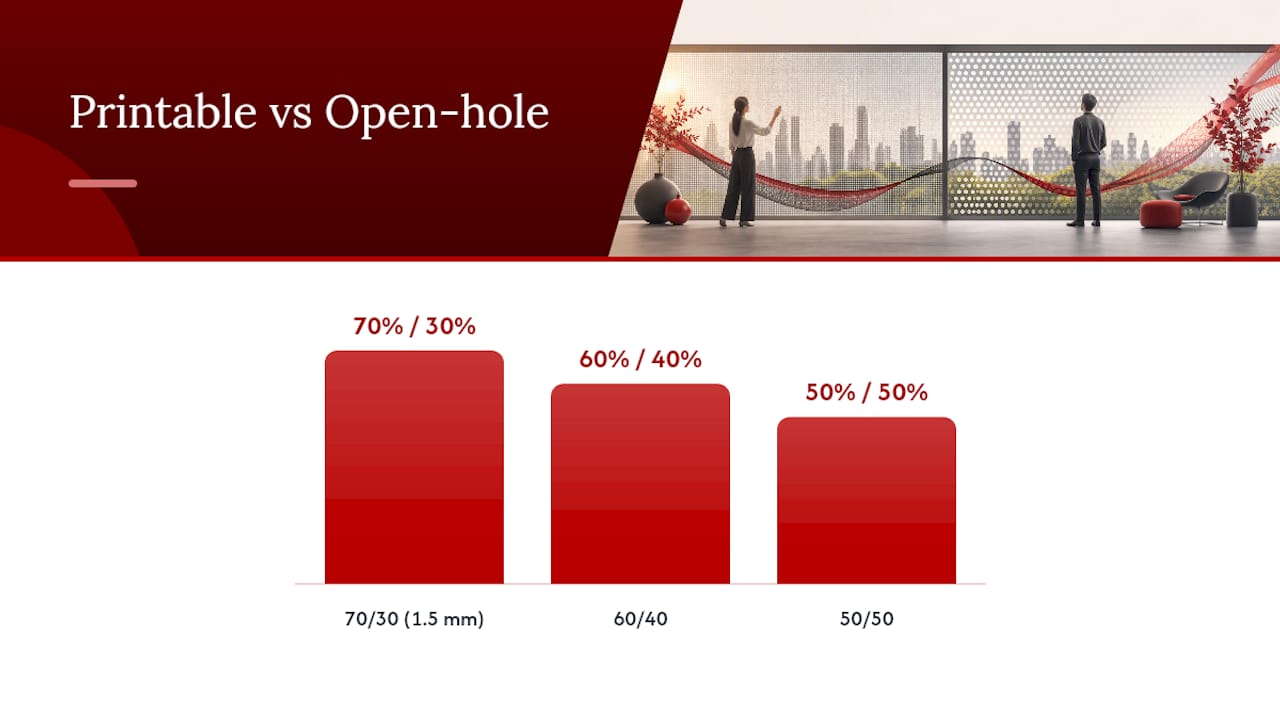
Product pages typically list a ratio like 70/30, 60/40, or 50/50, and that number is the first thing to understand before you compare quotes. It’s the percentage of printable surface versus open hole area. A 70/30 film, such as LexJet’s Simple Perforated Window Vinyl, gives you 70% printable coverage and a 1.5 mm hole size, favoring bold, high-impact graphics over see-through clarity. Drop to 50/50 and the image gets airier but the view-through improves.
Thickness matters too, usually specified in mils, alongside a lay-flat liner that keeps the material from curling during printing. Most perf films are compatible with solvent, UV-curable, and latex inks, though you should confirm which one your printer runs before ordering. For anything mounted outdoors, ask specifically whether the product is rated printable and whether it needs a laminate on top.
Where Does Perforated Film Work Best?
Retail storefronts get the most obvious payoff. A window wrap racks up impressions all day long from foot traffic and passing cars, without turning the shop into a cave. Vehicle graphics are the second-biggest use case, though placement matters: rear windows tolerate dense 70/30 patterns better than side windows, where drivers need a clearer view-through for safety.
Beyond advertising, perf film pulls real functional weight:
- Daytime privacy for offices, exam rooms, and ground-floor homes facing the street.
- Glare and heat reduction, with some micro-perforated privacy products cutting UV transmission by up to 60% while retaining around 40% visible light transmission.
- Bird-safe glazing, where printed patterns integrated into the film have shown strong reductions in bird strikes during flight-tunnel testing, outperforming stick-on dots that birds learn to fly around.
- Vandalism resistance, when paired with a protective laminate over storefront glass.
Each use case pulls the ratio decision in a different direction, which is exactly why the next section matters.
What Should You Ask Suppliers Before You Buy?
Vendor quotes vary wildly, mostly because buyers don’t ask for the numbers that actually predict performance. Request these specs in writing every time:
- Perforation ratio and exact hole diameter (not just “perf film,” get the millimeter figure).
- Printable surface percentage and film thickness in mils.
- Adhesive type and which side mounts to the glass, interior or exterior.
- Expected lifespan outdoors versus indoors, and the warranty terms attached.
- Ink compatibility (solvent, UV, or latex) and whether a laminate is recommended.
- References or example installs from similar projects, storefront, vehicle, or office.
Pro Tip: Ask specifically how long the film can stay on the glass before removal gets difficult. Some some printable perforated products are rated for clean removal within a limited time period, which matters if you rotate seasonal graphics.
Also confirm the surface prep and application temperature range, and whether skipping professional installation voids the manufacturer warranty. Some vendors quietly require licensed installation to honor multi-year coverage.
DIY or Professional Install: What Changes the Outcome?
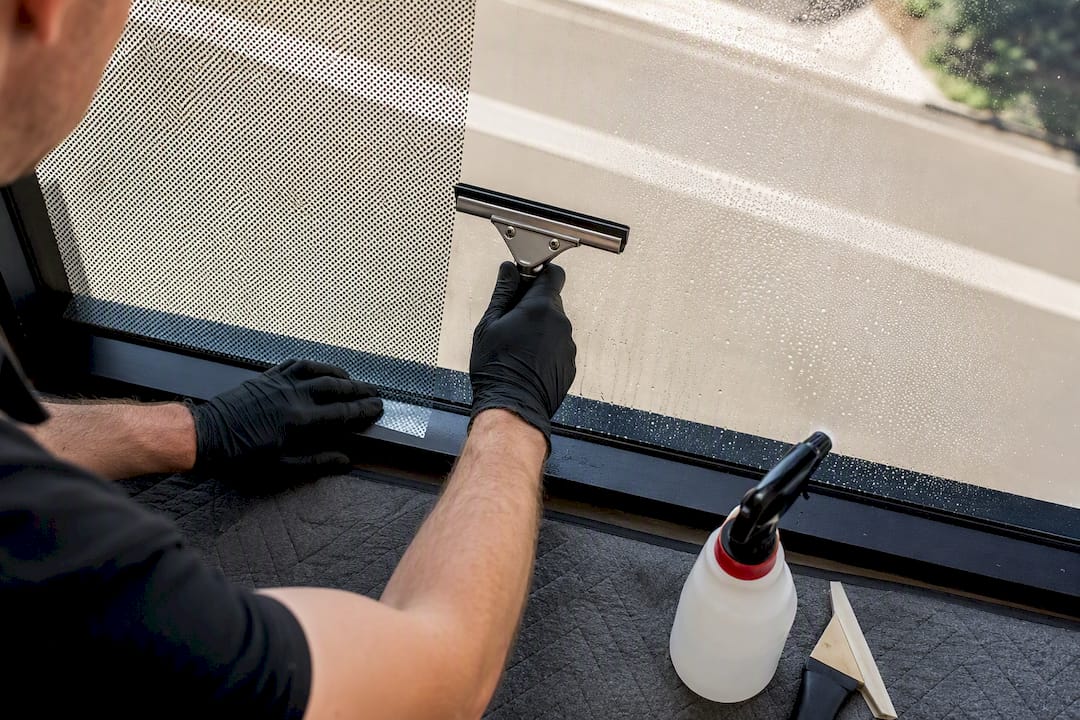
The basic sequence is the same whether you do it yourself or hire it out: clean the glass thoroughly, wet-apply the film, squeegee out air and water from center to edge, then trim along the frame. Exterior mounts need extra attention to edge sealing since they take direct weather exposure, while interior mounts are more forgiving but still demand a dust-free surface.
Where professionals earn their fee is on anything bigger than a single pane. Multi-panel storefronts need printed graphics aligned across seams, which is nearly impossible to eyeball without experience. A pro also knows how ambient light at your specific site should influence the ratio and mount side decision, something a DIY installer usually only learns after a bad install.
Once it’s up, maintenance is minimal:
- Clean with a soft cloth and mild, ammonia-free cleaner.
- Avoid abrasive tools near seams and edges.
- Check laminated edges yearly on exterior installs for lifting.
An Installer’s View on Getting the Ratio Right
Twtwindowfilm has been fitting window film across Southern California since 2008, and the pattern we see most often is buyers choosing a ratio based on the sample image instead of their actual light conditions. A north-facing storefront and a west-facing one need different decisions even with the same graphic.
Every install we complete carries a lifetime warranty, backed by materials from 3M and LLumar. Clients consistently report less glare and steadier indoor temperatures once film goes up. A proper site visit measures ambient brightness before recommending a ratio or mount side, not after.
— Jake
Get a Professional Perforated Film Quote
Twtwindowfilm installs perforated window film for retail storefronts, vehicle fleets, and privacy applications throughout Orange County and Los Angeles County, backed by a lifetime warranty on every job.
A free on-site estimate covers square footage, film type, and installation complexity, the three factors that actually drive your price, not a generic per-window rate. If privacy and heat reduction matter more than graphics, our solar and privacy film line might fit better than perf. Either way, our installers measure your glass and light conditions before recommending a ratio, not after. Ready to see numbers for your property? Request your free estimate and get a quote built around your actual space.
Where These Specs and Claims Come From
Technical specs referenced above, ratios, hole size, print compatibility, and bird-strike testing, come directly from manufacturer product pages and datasheets: LexJet’s perforated vinyl specs, Contra Vision’s optical and product data, and Haverkamp’s bird-safe film testing.
Sources
- LexJet Simple Perforated Window Vinyl (70/30)
- How does one-way vision film work? - Contra Vision®
- MicroPerforated One-Way Vision External Applied - ContraVision
- Bird protection film for windows - Protection against bird strikes