

SoCal Seamless Installs: Gradient Window Film, Patterns & Warranty
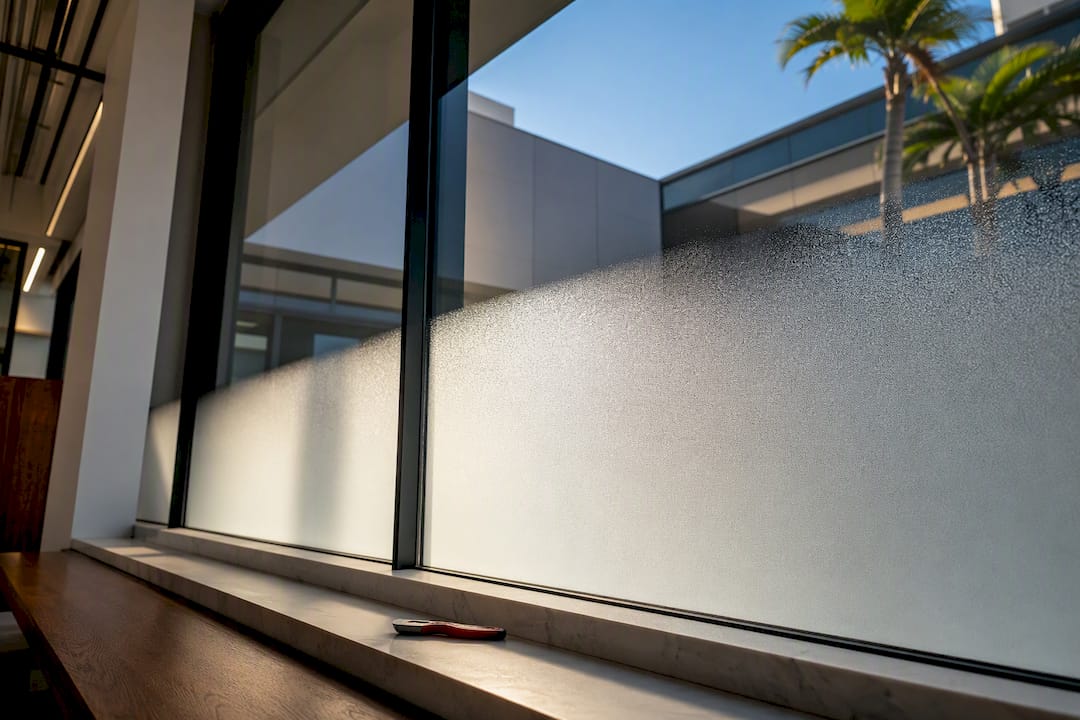
Gradient window film is a decorative adhesive film that fades from opaque to clear, blocking eye-level sightlines while keeping daylight and a design-forward look intact. It’s the right pick when you want privacy at the exact height people look through, not total blackout. If you need round-the-clock privacy regardless of interior lighting, pair it with shades or step up to full frosted film instead.
TL;DR:
- Gradient film is ideal for controlling sightlines at eye level without sacrificing daylight, especially in conference rooms and interior partitions.
- Most patterns are limited to white and gray tones, with texture and gradation length influencing privacy and light diffusion.
- Proper installation is crucial for large panes, with professional application offering seamless coverage and accurate gradation alignment.
- The film’s privacy benefits diminish at night when interior lighting can reverse its daytime privacy effect.
- Lifespan of well-installed professional gradient film exceeds ten years, but cleaning with mild solutions prevents adhesive degradation.
Table of Contents
- What Is Gradient Window Film and How Does It Work?
- Which Patterns Look Best for Different Rooms?
- Where Gradient Film Gets Used and Why It Works
- How Is It Installed, and When Do You Need a Pro?
- What Are the Trade-Offs and Limitations?
- How Long Does Gradient Film Last?
- Why Local Installation Experience Matters Here
- When I’d Recommend Gradient Film (and When I Wouldn’t)
- Ready to Install? Here’s How Twtwindowfilm Makes It Simple
- Where to Learn More About Gradient Film Specs and Patterns
- Sources
- FAQ
What Is Gradient Window Film and How Does It Work?
Gradient window film, sometimes called gradation film, is a polyester (PET) decorative sheet with a light-diffusing texture etched or printed into it. Instead of one flat level of opacity across the whole pane, the film transitions gradually from a dense, frosted zone into clear glass.
That transition can run in a few configurations. Single gradation fades privacy from the bottom up, useful when you want to block a hallway sightline while letting light spill in above. Center gradation puts the opaque band in the middle of the pane, ideal for conference room glass where people sit at eye level. Custom placement lets an installer shift the gradation zone to match specific sightlines, like a reception desk or a bathroom vanity mirror.
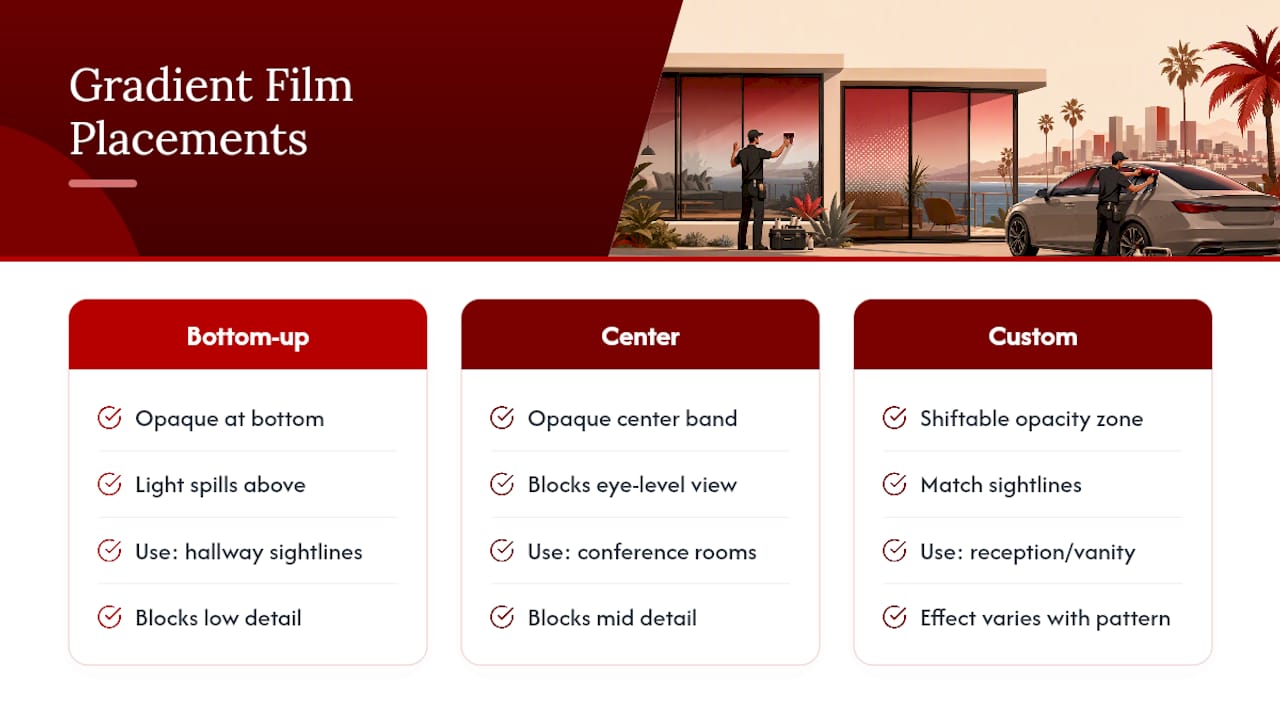
Pattern choice changes how the opacity feels. A longer gradation zone with a denser pattern blocks more detail but sacrifices more daylight, so the decorative film options you pick should match how much light the room can afford to lose.
Which Patterns Look Best for Different Rooms?
Manufacturers group gradation designs into a handful of pattern families, and each one reads differently on glass.
- Mist produces a soft, cloudlike diffusion that blurs shapes without hiding them completely. It suits homes and lobbies where a gentle, airy look matters more than hard privacy.
- Sand mimics sandblasted glass with a fine, even grain. It’s a common choice for offices because it looks clean and doesn’t compete with branding or signage.
- Pop (or Dot) uses a raised, textured pattern that reads as more decorative than the smoother finishes, often chosen for retail storefronts or feature walls.
- Oval creates an elongated, organic diffusion pattern that tends to obscure detail more thoroughly than Mist, since texture choice materially changes how much detail is visible behind the glass.
Most gradation films come in neutral whites and grays, so color rarely drives the decision. Texture and gradation length do.
Where Gradient Film Gets Used and Why It Works
Conference rooms are the classic use case: a center-gradation film blocks the view of people seated at the table while keeping the upper glass clear for daylight. Interior partitions, glass doors, and residential entryways or sidelights follow close behind, since gradient films can be oriented at the top, bottom, or side to solve a specific sightline problem rather than blocking the whole pane.
The benefits stack up:
- Sightline control exactly where people need it, without covering the whole window.
- Daylight retention, since only a portion of the glass carries the dense pattern.
- A designer look that mimics etched or sandblasted glass at a fraction of the cost of processed glass finishes.
- Flexibility across settings, from commercial decorative installations in office lobbies to residential entry doors.
Energy savings and UV protection aren’t inherent to gradient patterns on their own. Those benefits only kick in when the gradation film is combined with a solar-control layer, which is worth asking about if heat gain or fading is also a concern in the room.
How Is It Installed, and When Do You Need a Pro?
Wide-format rolls matter more than most buyers expect. Large conference room glass or floor-to-ceiling residential sidelights need seamless coverage, and some series now offer sheets up to roughly 3,000mm (about 118 inches) tall specifically to avoid seams that break the visual gradation on tall panes.
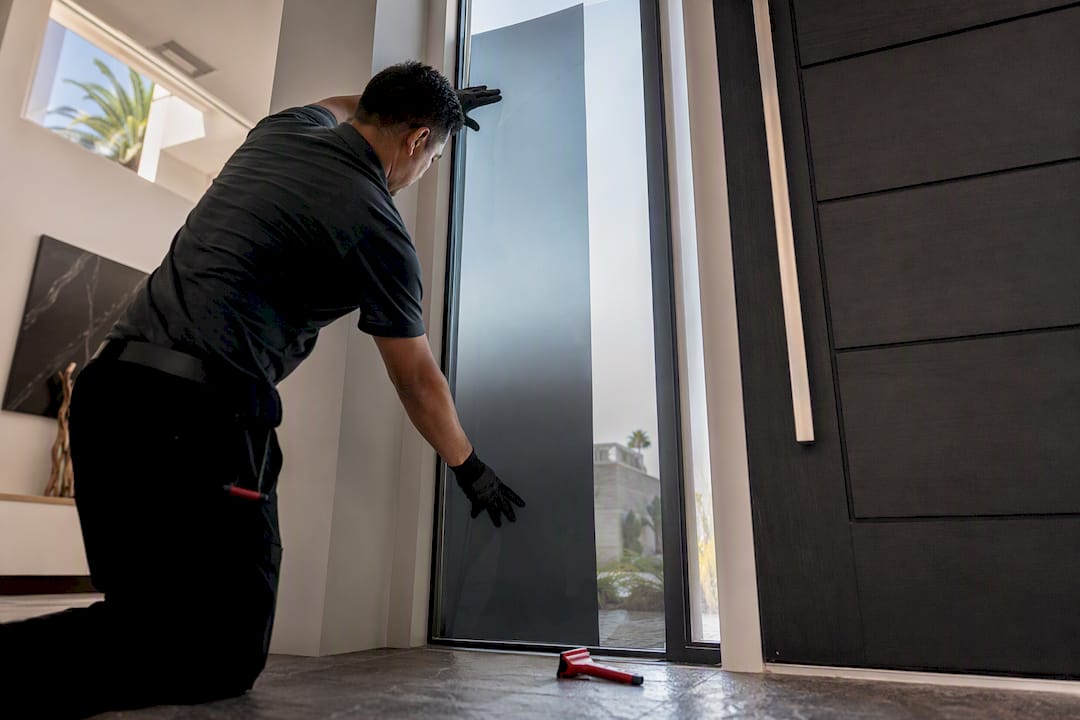
Orientation is a design decision as much as a technical one. Bottom-up gradation suits hallway doors, center gradation suits seated sightlines, and top-down gradation works for skylights or transom windows where privacy from above isn’t the goal.
DIY frosted rolls exist and work fine on small, low-visibility panes, but they come in narrower widths than professional-grade film, which means visible seams on anything larger than a single small window. For large glazing, exterior-facing panes, or any job where a lifetime warranty matters, hiring an installer who preps the surface correctly and lines up the gradation consistently across multiple panes is worth the cost difference.
What Are the Trade-Offs and Limitations?
Gradient film solves daytime sightline problems, but it has a well-known blind spot: light balance. During the day, the brighter exterior light keeps interiors private behind the frosted band. At night, once interior lights come on and outdoor light drops, that effect can reverse, and the same window that hid you at 2 PM may not hide you at 9 PM.
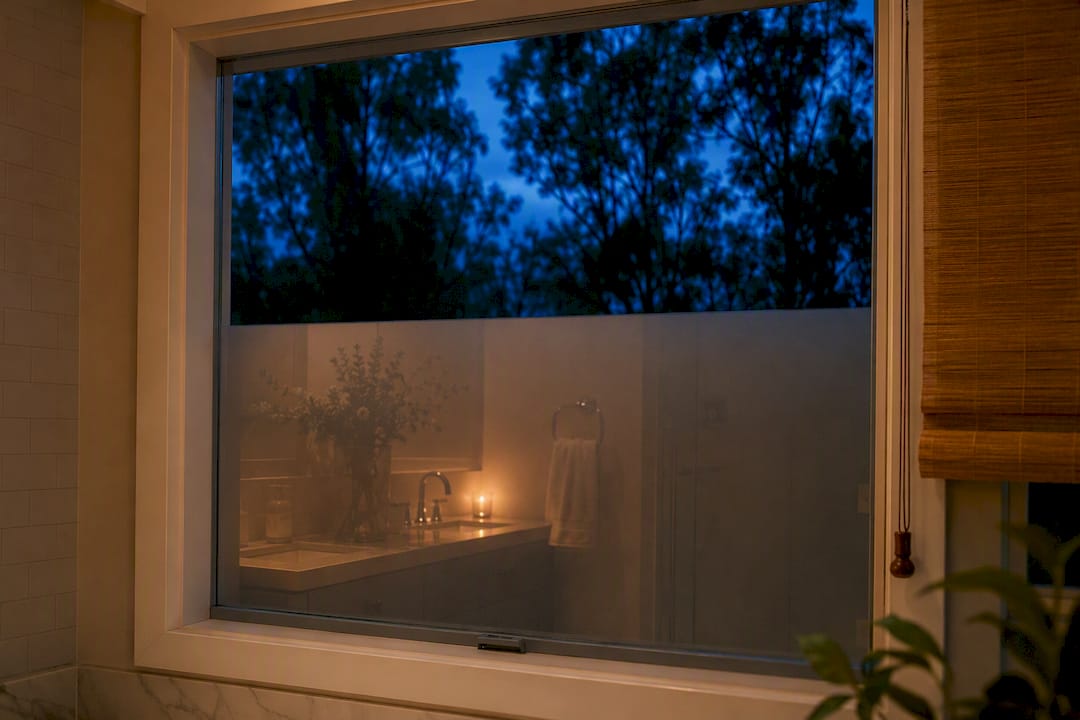
This isn’t unique to gradient film. No single window treatment provides full day-and-night privacy while preserving an unobstructed view. If a room needs guaranteed privacy after dark, pair the film with blackout shades or blinds rather than expecting the film alone to carry that job. Decorative gradient film also isn’t a security or acoustic upgrade. It’s a visual and light-control product, not a bullet-resistant or soundproofing one.
How Long Does Gradient Film Last?
Clean gradient film with a soft cloth or squeegee and a mild soap and water solution. Skip ammonia-based glass cleaners and abrasive pads. Both can degrade the adhesive and dull the textured finish over time.
Lifespan depends heavily on installation quality and material grade. A well-installed, professional-grade film on interior glass can last well over a decade with minimal fading. Bubbling, peeling edges, or a hazy shift in the pattern are signs it’s time to repair a section or re-cover the pane rather than patch around the damage.
Why Local Installation Experience Matters Here
A local window film company has installed window film across Southern California since 2008, working on everything from residential entryways to large commercial glazing throughout the region. That range matters for gradient film specifically, since getting the gradation zone to line up across multiple panes takes practiced hands, not just a sharp blade.
Some window film installers partner with manufacturers like 3M and LLumar, and offer warranties on installations. Clients typically report outcomes such as less glare at eye level, a room that feels more finished, and privacy without a dark, closed-off space. A site visit and estimate usually settles which pattern and gradation height actually fit the glass in question.
When I’d Recommend Gradient Film (and When I Wouldn’t)
Gradient film earns its place on conference room glass, interior partitions, and entry sidelights where you want privacy at eye level without losing light. It’s the wrong call for a bedroom window that needs full night privacy, or for street-facing storefront glass where security is the real concern. In those cases, I’d lean toward full frosted film, security film, or a shade paired with a lighter decorative pattern.
— Jake
Ready to Install? Here’s How Twtwindowfilm Makes It Simple
Ordering gradient film off a roll and hoping the pattern lines up on a 10-foot conference room window is a gamble most people only take once. Some professional installers offer free on-site estimates, sample panels to view against your glass, and warranties that are not available from mail-order rolls.

At the estimate, an installer measures your glass, shows you samples of common patterns, and provides a realistic timeline. Most residential jobs wrap in a single day, and commercial jobs scale from there depending on square footage. If your project also needs heat or glare control, commercial solar and privacy film can be bundled into the same visit. Ready to see gradient film on your own glass? Request a free estimate and get a firm quote before you commit to anything.
Where to Learn More About Gradient Film Specs and Patterns
For pattern names, roll widths, and spec sheets, check LLumar’s gradient series and 3M’s FASARA gradation line. For a broader look at privacy performance and light balance, see this guide to privacy window film. Homeowners weighing glass doors as part of a renovation may also find this look at glass interior doors useful for planning light and privacy together.
Sources
- Mimic Etched Glass with Gradient Decorative Window Film | LLumar
- 3M™ FASARA™ Glass Finishes Gradation | 3M
- A complete guide to privacy window film
FAQ
Is There a Gradient Window Tint?
Yes. Gradient window tint, more accurately called gradation film, is a decorative window film that fades from opaque to clear, typically in a band placed at the top, bottom, or center of the glass.
What Are the Downsides of Using Window Film?
The main downside with decorative gradient film is that it doesn’t guarantee privacy after dark, since interior lighting can reverse the daytime privacy effect. Gradient film also doesn’t add security or sound insulation on its own.
Is There a Window Film That Lets You See Out but Not In?
One-way or reflective films can create that effect during the day, but the privacy reverses at night once interior lights are brighter than the light outside. No film treatment maintains one-way visibility in both lighting conditions without pairing it with shades.
What Type of Window Film Changes Its Opacity?
Gradient (gradation) window film is the type built specifically to change opacity across a single pane, transitioning smoothly from a dense, frosted zone to fully clear glass rather than staying uniform.