

74% of UVA Passes Through Ordinary Home Windows. Is Your Skin at Risk?
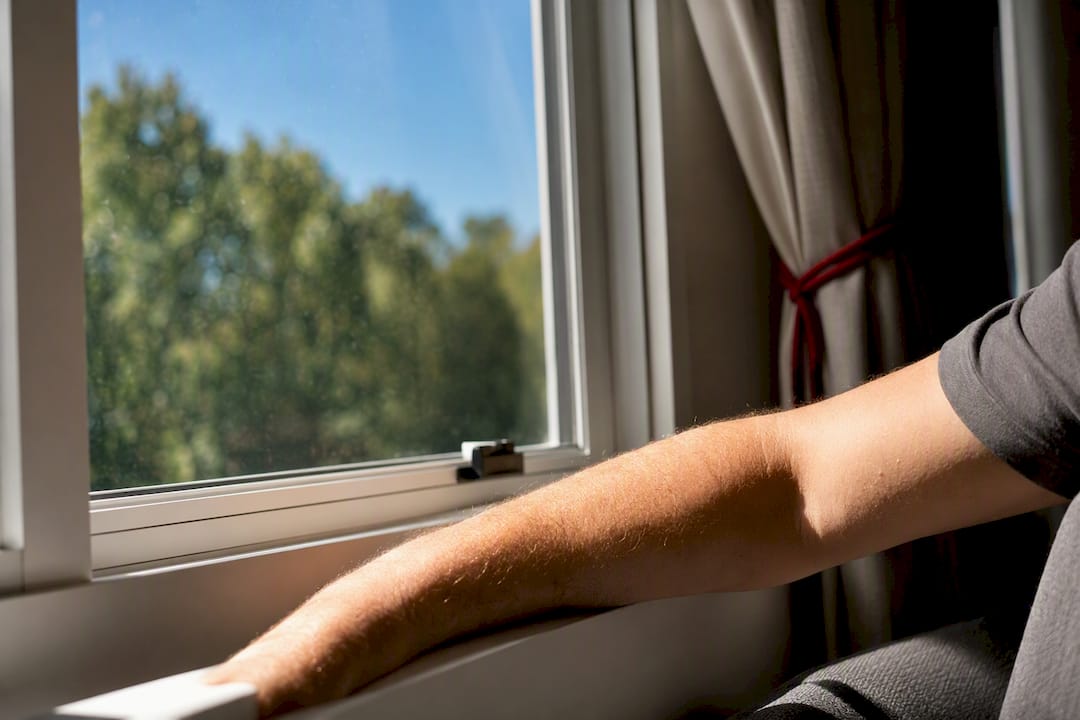
Standard window glass blocks nearly all UVB but lets a large share of UVA through, often a substantial proportion on typical single-pane residential glass. That’s the ray responsible for tanning, premature aging, and long-term skin cancer risk. If sun damage or fading worries you, that gap is worth closing.
TL;DR:
- Ordinary glass blocks nearly all UVB but transmits about 74% of UVA, making it ineffective for long-term UVA protection and skin health.
- Laminated glass and Low-E coatings significantly reduce UVA transmission and are the best factory-built options for UV protection without retrofit.
- Vehicle side and rear windows, often tempered, can transmit up to 56% of UVA, increasing exposure to parts of the body not protected by a windshield.
- To verify UV blocking, check manufacturer specs for UV transmittance or use UV detection tools; fading of fabrics and artwork also signals higher UVA transmission.
- Professional UV-blocking window film offers up to 99% UVA rejection, but the performance varies greatly, so ask for verified UVA reduction and warranty details before installation.
Table of Contents
- Do Windows Block UV Rays? What Different Glass Types Actually Stop
- Are Car Windows Different From House Windows?
- How Do You Know if Your Windows Block UV?
- What Actually Blocks UV Through Windows?
- When Does Indoor UV Exposure Actually Matter?
- What Should You Ask Before Hiring a Window Film Installer?
- The Overlooked Gap in Most UV Advice
- Ready for a Free On-Site UV Check?
- Sources
Do Windows Block UV Rays? What Different Glass Types Actually Stop
UVB is the shorter, more energetic wavelength that causes sunburn. Nearly every type of glass, from a $50 storm window to a luxury storefront pane, stops the overwhelming majority of it. UVA is the longer wavelength that penetrates deeper into skin, breaks down collagen, and contributes to skin cancer over years of exposure. Ordinary glass is far less consistent at blocking it.
A peer-reviewed transmission study found that ordinary smooth glass transmitted about 74% of UVA, while laminated glass blocked it entirely. Blue-tinted glass in the same study still let through a significant portion of UVA, and every sample tested, regardless of color, blocked UVB almost completely. That’s a wide spread for glass that looks equally protective to the naked eye.
Color, thickness, and coatings all shift the numbers, but not predictably. A dark tint might cut visible glare without touching UVA transmission at all, since tint pigment and UV-blocking treatments are separate technologies. Low-E coatings, originally designed for energy efficiency, can reduce UVA transmission significantly as a side effect.
If preventing fading in furniture, artwork, or flooring is the goal, laminated or Low-E glazing beats ordinary glass by a wide margin. If protecting skin is the priority, the same logic applies, since UVA exposure through a sunny window adds up over months even without a visible burn.
- Ordinary glass: worst performer for UVA, best avoided near desks or reading chairs used for hours daily.
- Tinted glass: cosmetic tint alone rarely equals real UV protection.
- Laminated or Low-E glass: closest to eliminating UVA transmission without any add-on treatment.
Are Car Windows Different From House Windows?
Your windshield is laminated by design, a safety requirement that helps substantially reduce UVA transmission. Side and rear windows are usually tempered glass instead, built for shatter resistance rather than filtering light, and it shows in the numbers. A study of vehicles found side-window UVA transmission ranging from 4% to 56% depending on the specific glass and tint.
That means the arm resting on your door during a long commute gets meaningfully more UVA exposure than your face behind the windshield.
- Apply sunscreen to arms, hands, and neck before long drives, not just at the beach.
- Wear UV-blocking sunglasses even on cloudy days, since UVA penetrates cloud cover.
- Check local tint regulations before adding aftermarket film to side windows, since legal limits vary by state.
How Do You Know if Your Windows Block UV?
Manufacturer specs are the fastest check. Look for a stated UV transmission percentage, a Low-E label, or documentation confirming laminated construction. Installation paperwork from a previous owner or builder often lists this detail even when it’s not printed on the glass itself.
- Pull up the window or door manufacturer’s spec sheet and search for a UV transmittance number.
- Buy inexpensive UV-detection cards or stickers online and compare their reaction indoors versus outdoors.
- Watch how fast fabric, wood, or artwork fades near a specific window compared to an interior wall; faster fading usually signals higher UVA transmission.
- For a precise reading, ask an installer about spectrophotometer testing, which measures transmittance across specific wavelength bands rather than estimating it.
Pro Tip: Manufacturers don’t all test the same wavelength range when they advertise “UV blocking,” so a verified independent lab result beats a marketing claim every time, according to Pilkington’s technical guidance on glazing and fading.
What Actually Blocks UV Through Windows?
Factory-built solutions last the lifetime of the glass. Laminated glass and Low-E coatings both reduce UVA significantly without any retrofit, though replacing an entire window or storefront to get there is expensive and slow.
Aftermarket options close the gap faster. Professional window film engineered for UV rejection can block 95% to 99% of UVA, with specs backed by testing and a warranty behind them. DIY film purchased off a shelf rarely comes with that same verified performance data, and curtains or blinds only help while they’re closed, which defeats the point of having windows.
Every option carries trade-offs worth weighing before you commit:
- Darker films cut more heat and glare but reduce visible light, which matters in a home office or retail display.
- Reflective coatings can violate homeowner association rules or historic district codes in some areas.
- Vehicle tint has legal limits that vary by state, so check before installing anything on side windows.
- Film installation on some newer insulated glass units can affect the manufacturer’s warranty, so ask before you book.
Pro Tip: If a vendor can’t tell you the exact UVA percentage their film blocks and show a warranty document backing it, treat that as a red flag, not a minor gap.
For sustained protection with a paper trail behind it, professional-grade film or laminated glazing remains the most reliable route, and it’s worth comparing against a commercial solar and privacy film option if the space in question is an office or storefront rather than a home.
When Does Indoor UV Exposure Actually Matter?
The UV Index matters even indoors: once it hits 3 or higher, cumulative UVA exposure near a window starts contributing to skin aging and cancer risk, and that damage happens without any sunburn to warn you. A desk chair positioned beside a south-facing window for eight hours a day is a meaningfully different exposure than walking past that same window twice.
- Apply sunscreen to exposed skin if you sit near large windows for extended periods.
- Rearrange seating away from direct glare during peak sun hours if that’s an option.
- Add UV-blocking film or coverings to the specific windows behind desks, reading chairs, or a sofa that gets afternoon sun.
- Prioritize rooms with irreplaceable furnishings or where someone spends most of the day.
One consumer myth worth retiring: sitting by a sunny window will not boost your vitamin D levels, since glass blocks roughly 95% of UVB, the band your body actually needs for that synthesis.
What Should You Ask Before Hiring a Window Film Installer?
Professional-grade film can block up to 99% of UVA, turning a leaky, fade-prone window into something closer to laminated glass performance. Twtwindowfilm has installed film backed by 3M and LLumar materials across Southern California homes and businesses since 2008, with a lifetime warranty attached to every job.
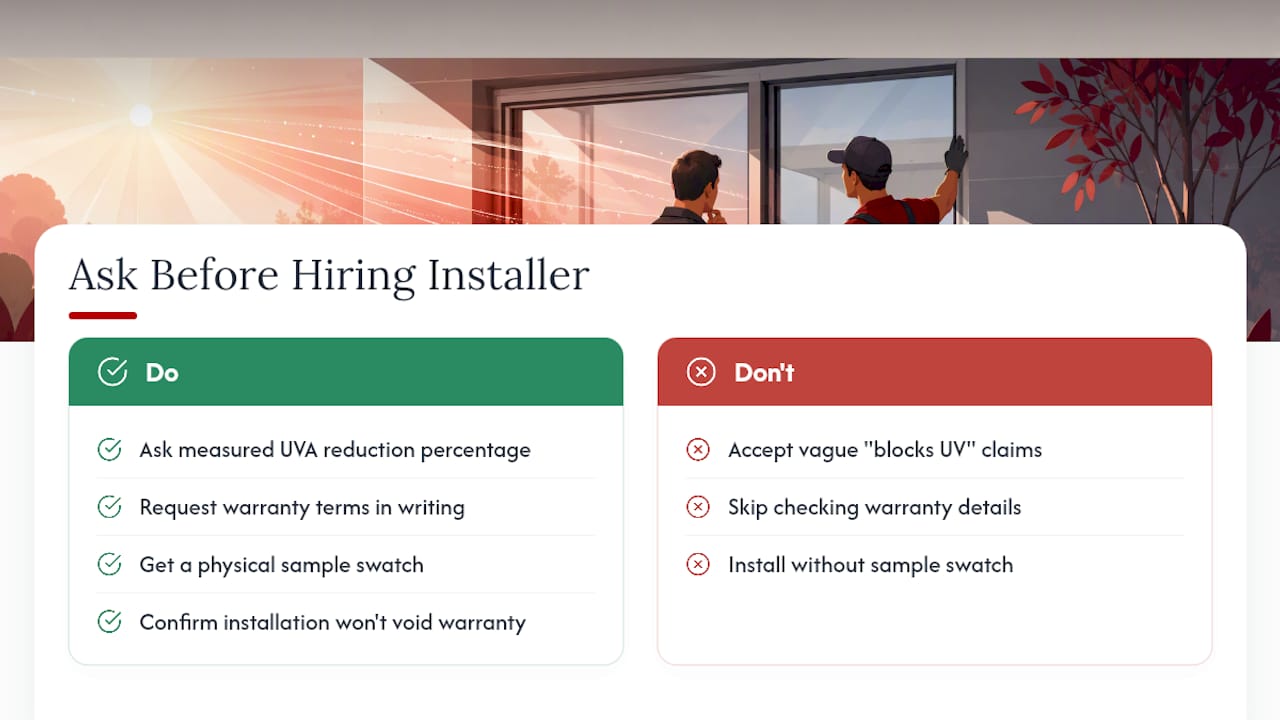
Before hiring anyone, ask for the measured UVA reduction percentage, not just a vague “blocks UV” claim, along with warranty terms in writing, a physical sample swatch, and confirmation that installation won’t void your existing window warranty.
The Overlooked Gap in Most UV Advice
Most consumer guidance treats “UV protection” as a single checkbox, and that’s the biggest problem with how this topic gets discussed. Glass is genuinely excellent at blocking UVB, so the vitamin D myth and the sunburn myth both get debunked easily. That leaves people assuming windows handle UV, full stop, when the far more damaging band for long-term skin health is the one ordinary glass barely touches.
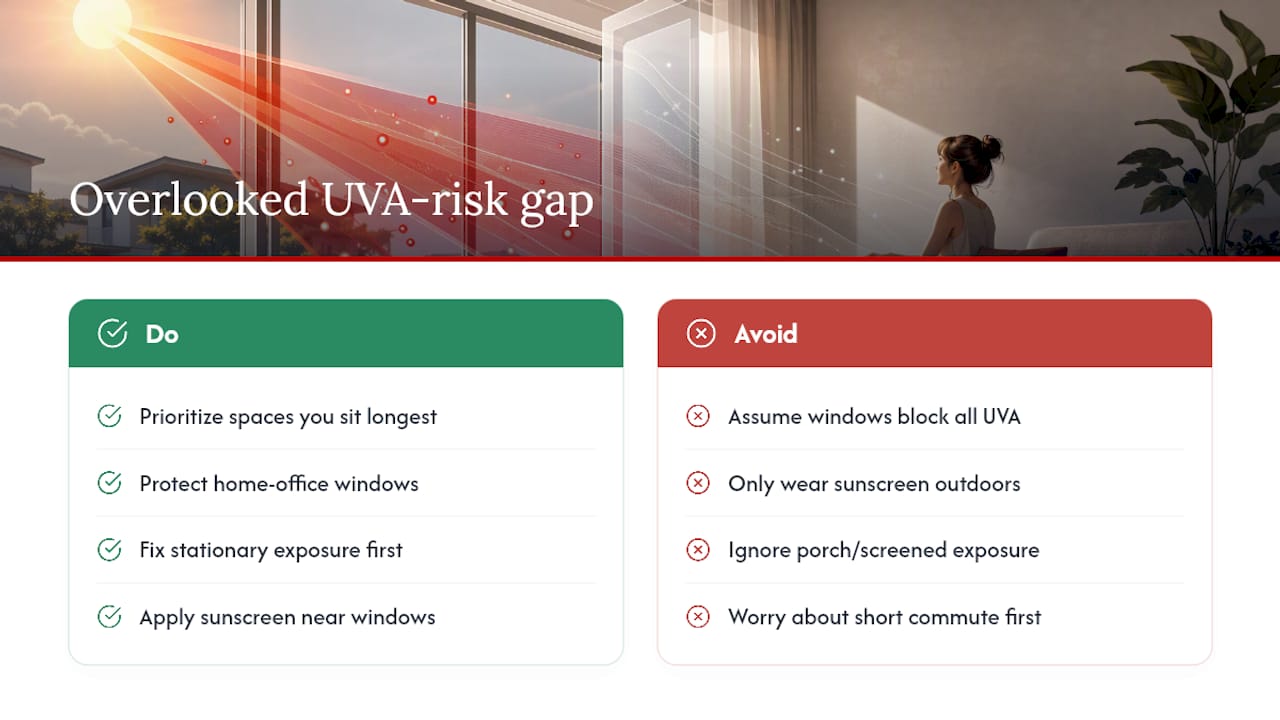
The conventional advice, wear sunscreen outdoors, misses where a lot of real-world UVA exposure actually happens: at a desk by a window, in a car during a commute, on a porch behind a screen door. None of those feel like sun exposure, so none of them get sunscreen.
If you take one thing from the research here, prioritize the spaces where you sit still the longest. A car you’re in for twenty minutes matters less than the home office chair you occupy for eight hours a day next to unprotected glass. Fix the stationary exposure first, then worry about the commute.
— Jake
Ready for a Free On-Site UV Check?
Twtwindowfilm’s advantage over guessing at spec sheets or gambling on DIY film is simple: you get a measured answer, not a marketing claim. A free on-site estimate includes checking your current glass, walking through film options rated for UVA rejection, and explaining warranty coverage before anything gets installed.

The process is straightforward. A technician measures your windows, shows you sample swatches so you can compare light transmission and UVA performance side by side, and explains what the lifetime warranty covers before you sign anything. Homeowners can start with the residential window film page, while facility managers and business owners handling storefronts, offices, or institutional buildings should look at commercial window tinting services. If you’re weighing glass upgrades against film for a remodel, the team at One Day Doors & Closets covers how glass choices affect interior spaces too. Request an on-site measurement and find out exactly how much UVA your current windows are letting through.
Sources
- Laminated glass and UV transmission study (PubMed)
- Can you get sunburnt or UV skin damage through car or home windows? — University of Wollongong (2025)
- UV window film guidance — Skin Cancer Foundation
This article is general information, not a substitute for advice from a qualified doctor. Consult a qualified healthcare professional about your own circumstances before acting on anything here.