
1–3 Week Turnaround: Installer-Ready Custom Window Graphics for Owners
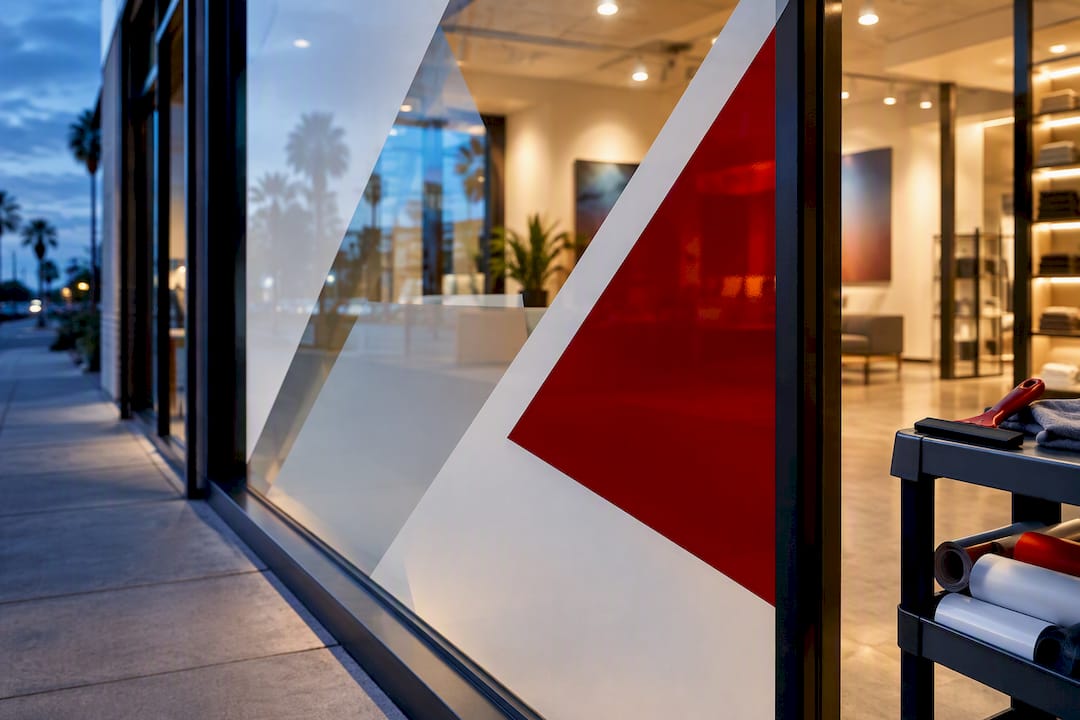
Custom window graphics are printed vinyl or film applied to glass for branding, privacy, decoration, or short-term signage, and the right choice depends mostly on how much light and visibility you need to preserve. Storefronts usually want perforated or die-cut graphics that keep sightlines open; offices lean toward frosted film for privacy; homeowners and pop-up events often just need removable clings. Once you know your goal, the next decisions are material, design specs, and whether to install it yourself or hire a professional.
TL;DR:
- Perforated film is optimal for storefronts needing visibility from inside, with around 65% printed surface and up to 50% natural light entry depending on pattern.
- Opaque vinyl provides complete privacy and maximum branding space but requires interior installation for durability against weather and vandalism.
- Second-surface (inside-glass) application offers longer lifespan and easier maintenance, especially in exterior-facing settings exposed to weather.
- UV-resistant inks and laminates extend the longevity of graphics, with typical lifespans ranging from 3 to 7 years based on exposure and installation environment.
- Cost and lead time vary by size, material complexity, and labor, generally taking 3 to 5 business days for production plus additional days for installation scheduling.
Table of Contents
- Types of Custom Window Graphics and When to Use Each
- Materials, Finishes, and How Long Prints Actually Last
- What File Format and Design Specs Do You Need?
- First-Surface vs. Second-Surface Application: Which One and How
- Why Professional Installers Push Second-Surface Application
- Retail, Office, Vehicle, and Home Uses That Actually Work
- What Do Custom Window Graphics Cost, and How Long Does It Take?
- Maintenance, Lifespan, and How to Remove Graphics Cleanly
- How to Order Custom Window Graphics: A Step-by-Step Checklist
- Are Window Graphics Environmentally Friendly?
- Are There Laws About Window Graphics and Signage?
- Do Window Graphics Affect Safety or Visibility Codes?
- What I’ve Learned From Watching These Jobs Go Wrong
- Get a Custom Window Graphics Quote and Free Estimate
- Sources
- FAQ
Types of Custom Window Graphics and When to Use Each
Not every window graphic does the same job, and picking the wrong type is the most common reason a project underdelivers. Here’s the breakdown:
- Perforated (one-way vision) film shows a full graphic from outside while people inside can still see out through thousands of tiny holes. Most professional-grade perforated film uses a 65/35 pattern with 1.5 mm holes, meaning 65% of the surface is printed and 35% is open. Some perforated options let in up to 50% of natural light depending on the pattern, which is why it’s the default choice for storefronts that still want daylight inside.
- Opaque vinyl blocks the view completely in both directions. It’s the go-to for full storefront wraps, temporary construction coverage, or anywhere you need total privacy and a solid canvas for artwork.
- Clear vinyl with white ink underprint lets the glass itself show through around the graphic, so logos and text appear to float. It reads as more upscale than opaque vinyl and works well on glass doors and small accent windows.
- Frosted or etched-look film mimics sandblasted glass. It’s diffuse rather than fully see-through, which makes it ideal for conference rooms, bathrooms, and any office partition where you want light but not a clear view.
- Die-cut vinyl is cut to the exact shape of a logo, letter, or icon with no background sheet at all. Hours-of-operation lettering, business names, and small icon sets almost always use die-cut rather than a full panel.
- Clings use static or low-tack adhesive instead of permanent adhesive, so they go up and come down without leaving residue. They’re built for seasonal promotions, holiday displays, and anything you plan to swap out within weeks.
Match the type to the constraint that matters most. If visibility from inside is non-negotiable, perforated wins. If you need maximum branding real estate, opaque wins. If it’s temporary, go with a cling every time.
Materials, Finishes, and How Long Prints Actually Last
The vinyl substrate and adhesive you pick will do more to determine how long a graphic looks good than almost any other decision in the process. Printable window vinyl generally comes in three adhesive styles: permanent adhesive for long-term installs, removable adhesive for graphics you expect to swap within a year or two, and static cling with no adhesive at all for the most temporary use. Choosing removable adhesive on a graphic meant to last five years is a mistake that shows up as edge lifting long before the print itself fades.
Lamination is the other lever. A gloss laminate boosts color saturation and makes graphics pop under direct light, while a matte laminate cuts glare and reads better on graphics viewed from an angle, like a car window or an angled storefront panel. Either laminate also adds a physical barrier against scratches, cleaning chemicals, and UV degradation.
- Gloss lamination: richer color, more reflection, best for straight-on viewing
- Matte lamination: less glare, better for angled sightlines and vehicle graphics
- UV-resistant inks: slow color fade on sun-facing exterior installs
- No lamination: lowest cost, shortest realistic lifespan for anything facing direct sun
Statistic: Suppliers report typical lifespans of 3 to 7 years for professional storefront graphics, depending on sun exposure, print quality, and whether the film sits on the inside or outside of the glass.
Interior-facing (second-surface) installs consistently land at the higher end of that range because the glass itself shields the print from weather. UV-resistant printing paired with the right lamination keeps colors vivid well past the point where an unlaminated exterior decal would already look chalky.
What File Format and Design Specs Do You Need?
Getting the artwork file right the first time saves you a reprint and a week of lost turnaround. Follow these specs before you upload anything:
- Send vector files when possible. AI, EPS, or PDF files built in Adobe Illustrator scale cleanly to any size without quality loss, especially for logos and text-heavy designs.
- Use high-resolution raster files for photos. If you’re working with a photograph rather than a vector logo, 150 to 300 DPI at final print size is the safe range; anything scaled up from a low-res web image will look soft or pixelated at storefront scale.
- Design in CMYK, not RGB. Screens display in RGB, but print production runs in CMYK, and colors shift noticeably between the two. Request a printed proof or color-matched digital proof before final production if brand colors need to be exact.
- Build in bleed and account for trim. Add at least a quarter inch of bleed around the edge of any design that runs to the border of the panel, so trimming doesn’t clip your artwork.
- Favor bright, high-contrast colors on perforated film. Because the eye looks through thousands of small holes rather than a solid surface, dark or low-contrast palettes tend to wash out on one-way vision graphics, while bold, saturated designs read clearly from the street.
Most printers offer sizing templates once you confirm your exact glass measurements, so measure twice before you finalize the file.
First-Surface vs. Second-Surface Application: Which One and How
First-surface application means the graphic goes on the outside of the glass, facing the street. Second-surface (also called reverse-print or inside-glass application) means the print faces out but the film itself is mounted on the interior side of the glass. The difference matters more than most first-time buyers expect.
First-surface graphics are exposed directly to rain, sun, road grit, and anyone who wants to pick at an edge or deface a decal. Second-surface graphics sit behind the glass, protected from weather, cleaning chemicals, and vandalism, which is why installers commonly recommend inside-glass mounting whenever the design and window shape allow for it. The trade-off is that second-surface artwork has to be printed as a mirror image, since you’re viewing it through the glass.
If you’re installing yourself, follow this sequence:
- Clean the glass thoroughly with a lint-free cloth and a mild, ammonia-free cleaner, then let it dry completely.
- Choose wet or dry application based on the film. Static clings usually go on dry; larger printed vinyl panels often benefit from a light water-and-soap “wet apply” solution that lets you slide and reposition before it grabs.
- Squeegee from the center outward in overlapping strokes, working out air bubbles as you go rather than trying to chase them out afterward.
- Trim any excess at the edges with a sharp blade, holding the blade at a shallow angle to avoid scratching the glass.
Pro Tip: Order a test decal in your smallest size before committing to a full storefront wrap. It’s a cheap way to confirm color accuracy and adhesive behavior on your specific glass before a much bigger print run is on the line.
Height above eight feet, curved or leaded glass, multi-panel storefronts, or any job that needs coordination with a landlord or property manager are all strong signals to hire a professional installer instead of tackling it solo.
Why Professional Installers Push Second-Surface Application
Ask any experienced installer which side of the glass they’d choose for a storefront campaign meant to last more than a season, and most give the same answer: inside, every time it’s structurally possible.
Second-surface application keeps the printed film shielded from rain, road grime, and the kind of casual vandalism that peels a corner off an exterior decal within weeks. It also means cleaning crews can wipe the exterior glass with standard products without ever touching the print itself, which is the single biggest driver of a graphic actually lasting its full expected lifespan.
Professional installation typically includes more than just the application. A properly run job covers certificates of insurance (COIs) for building management, scheduling around business hours to minimize disruption, clean removal of old graphics before new ones go up, and a warranty that covers the install itself, not just the material. That last piece is easy to overlook and expensive to skip: a defect in adhesive application can ruin an otherwise perfect print, and a warranty is what separates a fixable mistake from a full reprint at your expense.
Retail, Office, Vehicle, and Home Uses That Actually Work
The same graphic type rarely serves two different goals well, so matching format to setting is where most of the value gets decided.
- Retail storefronts typically combine a large perforated wrap for seasonal promotions with die-cut lettering for hours and branding, so the promotional graphic can rotate without touching the permanent signage.
- Offices use frosted privacy film on glass partitions and conference rooms to control sightlines while still letting daylight travel through the space, often with a die-cut logo etched into the frost pattern.
- Vehicles rely on cut vinyl decals for permanent branding and static clings for magnetic-style removable ads, plus temporary clings for one-off events, pop-ups, or trade shows that need signage for a weekend and nothing more.
- Homes use decorative and seasonal decals for holiday displays, privacy film on bathroom or street-facing windows, and etched-look accents on glass doors, most of it through residential decorative film services rather than the heavier commercial-grade vinyl used on storefronts.
The through line across every setting is the same question: does this graphic need to survive weather and time, or does it need to come down in three weeks? Answer that first and the material choice mostly picks itself.
What Do Custom Window Graphics Cost, and How Long Does It Take?
Price scales with size, material complexity, and labor, not just square footage. A few factors drive most of the swing between quotes:
- Size and quantity — a single small decal costs a fraction of a full storefront wrap, and per-square-foot pricing typically drops as the order grows.
- Material and lamination — perforated film, laminated finishes, and UV-resistant inks all add cost over a basic unlaminated opaque vinyl print.
- Design complexity — multi-color, photo-heavy artwork with tight color-matching requirements costs more to proof and print than a simple one-color logo.
- Installation labor — second-surface, multi-panel, or elevated storefront installs take longer and cost more than a single ground-level DIY-friendly panel.
Think in ranges rather than fixed numbers: a single small decal sits at the low end of any quote sheet, a standard single-window job lands in the middle, and a full storefront wrap with multiple panels and professional install sits well above both. Typical production runs 3 to 5 business days once artwork is approved, and larger suppliers running multi-location rollouts build in extra time to kit and ship graphics per site. Add proofing time on the front end and installation scheduling on the back end, and a realistic full timeline from first quote to finished install usually runs one to three weeks.
Maintenance, Lifespan, and How to Remove Graphics Cleanly
How you clean and eventually remove a graphic matters almost as much as how you installed it. Exterior-facing graphics generally wear faster than interior second-surface installs simply because they take the direct hit from sun and weather; that gap is part of why the 3 to 7 year lifespan range skews toward the low end for outside-mounted film and the high end for protected interior applications.
- Clean with a soft cloth and mild, ammonia-free glass cleaner; ammonia-based products can degrade adhesive and print quality over time.
- Avoid abrasive scrubbers or razor blades directly on the printed surface, even to remove stuck-on debris.
- To remove old film, apply heat from a hair dryer or heat gun to soften the adhesive, then peel slowly at a low angle rather than yanking straight off.
- Hire a professional for removal on large panels, tempered or leaded glass, or any surface where adhesive residue removal risks scratching.
How to Order Custom Window Graphics: A Step-by-Step Checklist
A smooth order comes down to nailing measurements and specs before anything goes to print. Work through this sequence:
- Measure and photograph every window you plan to cover, noting width, height, and any curvature.
- Flag obstructions like door handles, alarm sensors, or existing signage that the design needs to work around.
- Choose your material based on purpose and environment: perforated for storefronts that need visibility, frosted for privacy, opaque for full coverage, cling for temporary use.
- Upload artwork in the right format (vector for logos, high-resolution raster for photos) and request a proof matched to your exact measurements before production starts.
- Confirm installation logistics, including whether you need a certificate of insurance for building management, your preferred install date, and what the warranty covers.
Getting each step right the first time is the difference between a one-week turnaround and a frustrating reprint cycle.
Are Window Graphics Environmentally Friendly?
Printed vinyl film isn’t biodegradable, and that’s the honest starting point for any sustainability conversation about window graphics. Most printable window vinyl is PVC-based, which means disposal at end of life typically means landfill unless a recycling program specifically accepts vinyl signage, which many municipal programs don’t.
That said, a few choices meaningfully reduce the footprint. Buying only the size and quantity you actually need cuts material waste at the source, since oversized panels trimmed down after printing waste both vinyl and ink. UV-resistant inks and proper lamination also extend lifespan, and a graphic that lasts seven years instead of two effectively cuts its environmental cost per year of use by more than half, even though the material itself hasn’t changed. Reusable or removable-adhesive films that survive multiple relocations do the same job with less total material consumed over a business’s lifetime compared to replacing permanent vinyl repeatedly.
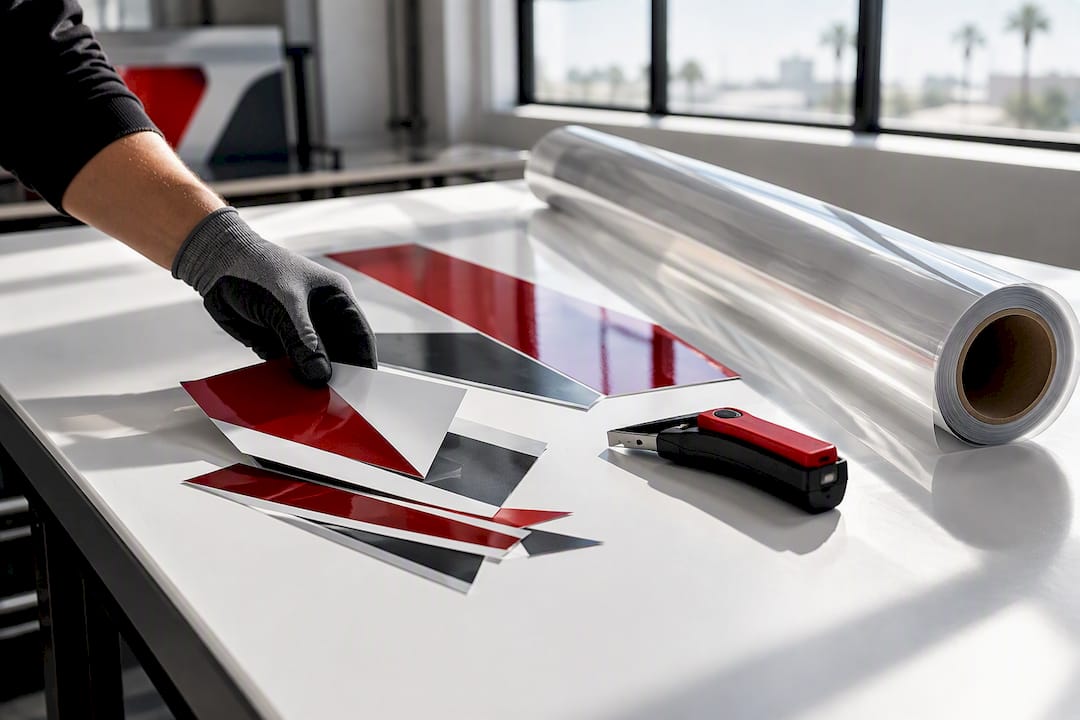
On the disposal side, some sign shops and larger commercial printers now offer take-back or recycling programs for retired vinyl banners and window film, though availability varies significantly by region and provider. If sustainability is a real priority, it’s worth asking your installer directly whether they have an end-of-life plan for removed material rather than assuming standard trash pickup is the only option. Choosing PVC-free or eco-solvent-printed alternatives, where available, is another lever worth asking about at the quoting stage.
Are There Laws About Window Graphics and Signage?
Yes, and they vary enough by jurisdiction that assuming your city has no rules is a costly mistake. Most municipalities regulate the percentage of storefront glass that can be covered by signage, sometimes capping window coverage at a specific percentage of total glass area to preserve street-level visibility and prevent buildings from looking fully blacked out. Some cities also require permits for permanent exterior signage, even when the “sign” is just printed vinyl rather than an illuminated sign box.
Homeowners associations add another layer entirely. HOAs frequently restrict exterior-facing decals, seasonal decorations, or window tint visible from the street, and rules differ dramatically from one community to the next, so checking your HOA’s covenants before installing anything visible from outside is worth the ten minutes it takes.
Privacy regulations can also come into play, particularly for businesses in healthcare, legal, or financial services where frosted or privacy film on interior glass may be less a design preference than a compliance requirement tied to confidentiality standards. Retail storefronts near schools, in historic districts, or within certain commercial overlay zones sometimes face additional signage restrictions specific to that district.
None of this is a reason to skip window graphics. It’s a reason to check local signage ordinances and, if you rent or belong to an HOA, get written approval before production starts rather than after installation, when a reprint becomes both a cost and a delay.
Do Window Graphics Affect Safety or Visibility Codes?
They can, and it’s one of the more overlooked considerations in the buying process. Fire codes and building safety regulations in many jurisdictions require a minimum percentage of clear glass on street-facing storefronts so emergency responders can see inside during a fire or other incident. Covering too much window area with opaque graphics, even temporarily, can put a business out of compliance with those requirements.
Egress windows, meaning windows designated as emergency exits in residential and some commercial buildings, generally can’t be obstructed by opaque film at all, since occupants and first responders need a clear path and view through them in an emergency. This is a real constraint worth confirming before ordering, not an afterthought.
Visibility matters on the everyday safety level too. Glass doors and floor-to-ceiling windows without any marking are a genuine hazard, since people occasionally walk into unmarked clear glass. Many building codes actually require visual markers, sometimes called manifestation markers, on large clear glass panels for exactly this reason, and a well-placed die-cut logo or decorative accent can double as that required marker while still looking intentional.
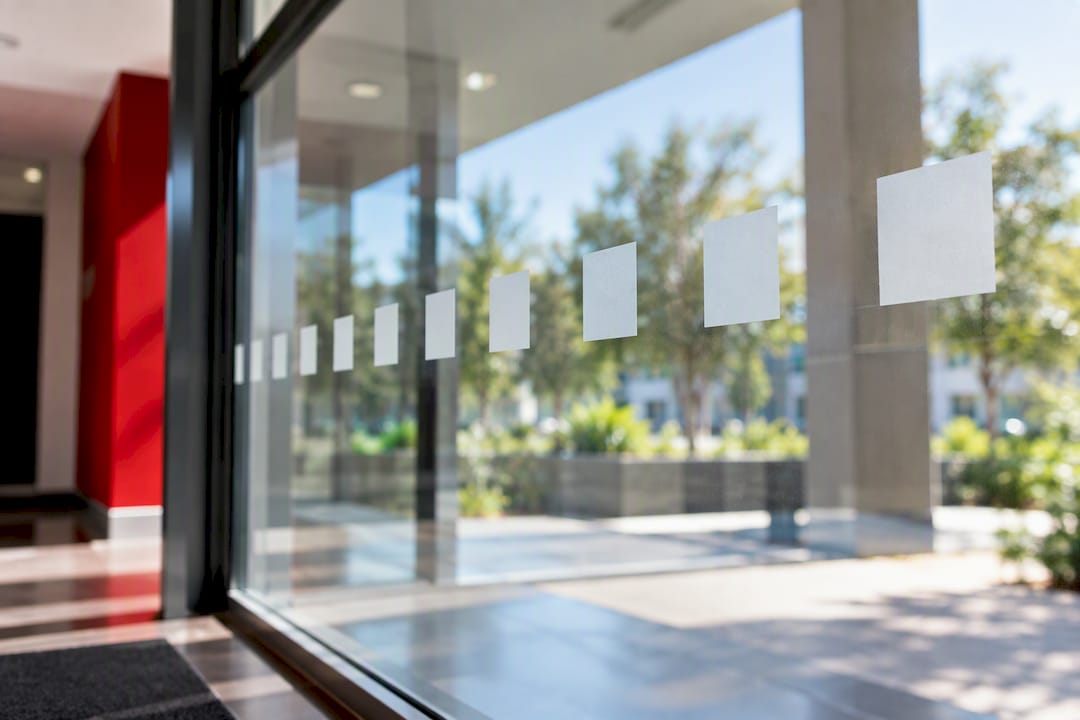
For retail and office spaces, keep sightlines to entrances and checkout areas open wherever possible. A fully wrapped storefront looks bold, but if it blocks staff from seeing an approaching customer or blocks a customer from seeing an open door, it’s working against the business rather than for it.
What I’ve Learned From Watching These Jobs Go Wrong
The single biggest mistake I see isn’t a bad design, it’s a bad color choice on perforated film. Someone falls in love with a moody, dark-toned photo, prints it on perf vinyl, and ends up with a washed-out, barely legible storefront graphic because the eye is looking straight through thousands of tiny holes at whatever’s happening on the other side of the glass. Bright, high-contrast art almost always wins on perf, no exceptions worth defending.
The second mistake is measurement error, usually from someone eyeballing a window instead of measuring twice and photographing the frame. A quarter-inch off on a die-cut panel is obvious the second it’s mounted.
Hiring a professional fixes both problems before they cost you a reprint. Ask for a real proof against your actual measurements, and don’t skip it to save a day.
— Jake
Get a Custom Window Graphics Quote and Free Estimate
A professional window film provider is the option for readers who want the technical decisions in this guide handled by one crew instead of juggled between a print shop, an installer, and a warranty claim later. Every install is done by a certified team, never subcontractors, using premium 3M and LLumar materials, and installations may be backed by a lifetime warranty on the installation itself, not just the film.
A free on-site estimate includes precise measurement of your actual glass, a mockup so you can see the design before it’s printed, and a written quote with no surprise line items. Whether you need a full retail storefront wrap, frosted office privacy graphics, or decorative film for a home renovation, the same design, production, and white-glove install process applies. If your project involves interior fit-outs or a retail remodel, pairing window graphics with complementary touches like indoor plants for office and retail spaces rounds out the finished look. Ready to move forward? Request your free estimate and get a written quote before you commit to a single design file.
Sources
The perforated film specifications referenced throughout this guide, including the 65/35 pattern with 1.5 mm holes, come from manufacturer product specifications. Installation guidance on first-surface versus second-surface application and design recommendations for one-way vision graphics come from industry installer and supplier documentation. Lifespan estimates draw on storefront supplier data covering material and exposure variables.
- Clear Focus ImageVue 65/35 perforated window film — Spandex shop
- First vs second surface guidelines — GraphicTacFilm
- See-through graphics design options — Contravision
- Storefront window graphics & decals — Printec Virginia LLC
FAQ
Where Can I Get Custom Window Decals Made?
Custom window decals are available through commercial print shops, large-format graphics suppliers, and full-service installers who handle design, printing, and application. For business installations that need warranty-backed professional mounting rather than a mailed decal, a service like Twtwindowfilm’s window and wall graphics covers the full process from design through install.
Are Window Decals Legal?
Window decals are generally legal, but coverage limits, permit requirements, and HOA rules vary by city and community. Many municipalities cap the percentage of storefront glass that can be covered, and some require a permit for permanent exterior signage, so checking local ordinances before production avoids a costly reprint.
Can I Get Custom Window Decals Made for My Business?
Yes, most print suppliers and installers accept custom logos, photos, and promotional artwork for storefronts, offices, and vehicles. You’ll typically need a vector or high-resolution file, and production commonly runs 3 to 5 business days once artwork is approved, not counting installation scheduling.
Can I Print My Own Window Clings at Home?
You can print basic static clings at home on specialty cling paper using a standard inkjet printer, though results are limited to small sizes and simple designs. For anything larger than a letter-size sheet, professional-grade full-color printing on proper vinyl substrate produces sharper results and a far longer lifespan than home-printed material.
How Much Do Custom Window Graphics Cost?
Cost depends heavily on size, material, lamination, and installation complexity, so pricing is best confirmed through a written quote rather than a flat number. Some window film providers offer free on-site estimates with a measured mockup and written quote before any production begins; check with your chosen provider for details.