

Fixing Computer Screen Glare From Sunlight in Homes and Offices

If sunlight bouncing off a window is making it impossible to see a monitor, professionally installed anti-glare or solar-control window film is the fastest reliable fix. It cuts the reflection causing computer screen glare without blacking out the room or blocking the view outside.
A well-matched film addresses three problems at once:
- Cuts glare at the source by managing how light reflects off glass before it ever hits a screen
- Preserves the outdoor view, unlike blinds or shades that block sightlines entirely
- Blocks UV rays and cuts heat, protecting both people and equipment near the window
3M’s glare-reduction product line is built specifically to reduce glare without darkening interiors, and blocks up to 99% of UV rays in the process. Ask any installer whether they carry 3M or LLumar film and back their work with a lifetime installation warranty — those two answers tell you almost everything about whether the job will hold up.
Key Takeaways
Professionally installed, brand-backed anti-glare window film removes screen glare at the window itself instead of forcing occupants to manage it with screen accessories or blinds that block the view.
| Point | Details |
|---|---|
| Glare vs. brightness | Anti-glare film targets the sharp reflection causing screen glare, not overall room light. |
| Glass assessment first | Installers must confirm glass type and condition before quoting to avoid safety and adhesion issues. |
| Curing takes time | Minor haze or bubbles after installation typically clear within weeks as trapped moisture escapes. |
| Real tradeoffs exist | Expect a visible tint effect and somewhat reduced natural light in exchange for eliminated glare. |
| Twtwindowfilm’s approach | Offers a lifetime installation warranty, 3M and LLumar film lines, and free on-site glass assessments across Orange County and LA County. |
Table of Contents
- How Does Window Film Actually Reduce Computer Screen Glare?
- What Do Installers Check Before Recommending a Film?
- What Happens During a Professional Window Film Installation?
- How Do You Choose a Reliable Window Film Installer?
- How Much Does Anti-Glare Window Film Cost, and How Long Does It Take?
- Are Screen Protectors or Desk Lamps a Better Fix Than Window Film?
- Does Anti-Glare Film Change How Screens Look or How Colors Appear?
- How Do You Clean and Maintain Anti-Glare Window Film?
- What Are the Downsides of Installing Anti-Glare Window Film?
- How Twtwindowfilm Handles Anti-Glare Window Film Installation
- Frequently Asked Questions
- Sources
How Does Window Film Actually Reduce Computer Screen Glare?
Glare and brightness are not the same problem, and that distinction is the whole reason window film works. Glare is specular reflection: a sharp, directional bounce of light off glass or a screen that overwhelms your eyes at one specific angle. Overall room brightness is diffuse and even. A window can flood a room with usable daylight while still throwing a blinding streak across a monitor at 2 p.m. Anti-glare film targets that streak, not the daylight.
Modern films manage this through selective reflection and transmission rather than simply darkening everything. Multi-layer and ceramic constructions filter specific wavelengths, deflecting the harshest visible light and heat while letting softer daylight through. That’s why a good installation doesn’t leave an office feeling like a cave.
Beyond the direct glare fix, film delivers side benefits that matter just as much for anyone staring at a screen for eight hours a day:
- UV blocking reduces eye fatigue from prolonged bright-light exposure
- Heat rejection keeps workstations near windows comfortable instead of stuffy
- Fading protection on desks, screens, and furniture near the glass
Premium multi-layer options like 3M’s Prestige Series actually perform better as the sun climbs higher, which is exactly when glare is worst.
What Do Installers Check Before Recommending a Film?
A phone quote without an on-site look is a guess. Every credible installer runs through a physical inspection first, because the glass itself determines what film can go on it and how it will behave over the next decade.
- Identify the glass type. Annealed, tempered, heat-strengthened, laminated, and wired glass each interact with film differently, and tempered glass carries a visible manufacturer stamp confirming what you have. IWFA’s architectural installation guidelines require this check before any film goes on, because the wrong film on the wrong glass type can cause thermal stress cracking.
- Inspect for existing damage. Loose panes, failing seals, chipped edges, or degraded frames all raise installation risk, and industry guidance flags these as reasons to pause or reroute the job.
- Map sun angle and exposure. East-facing glass causes morning glare spikes; west-facing glass hits hardest in late afternoon. Reflective surfaces outside, like a parking lot or a neighboring building’s glass facade, can bounce secondary glare onto a window that otherwise wouldn’t need film at all.
- Note interior workstation placement. A desk positioned at a diagonal to a window sees different glare patterns than one facing it directly, and that changes which film performance level actually solves the problem.
Pro Tip: Ask your installer to check the glass stamp themselves rather than take your word for it. Homeowners misidentify tempered glass as standard annealed glass more often than you’d expect, and it changes what film options are even on the table.
What Happens During a Professional Window Film Installation?
The gap between a professional job and an amateur one shows up in the details most people never think to check.
- Measurement and surface prep. Every pane gets measured individually, and the glass is cleaned to remove contaminants, mineral deposits, and old adhesive residue before anything touches it.
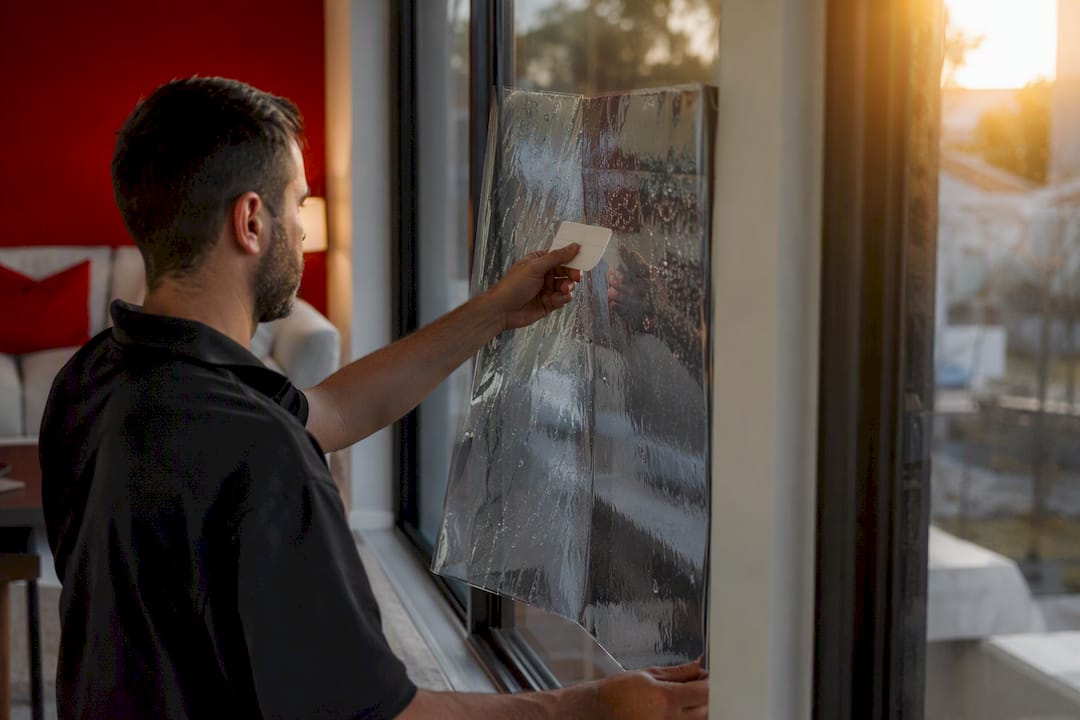
- Wet application. The film goes on with a slip solution that lets installers position it precisely before it sets. 3M’s flat glass installation guide details squeegee sequencing designed to push out water and air without shifting the film.
- Trimming and splicing. Edges get trimmed to the frame with a hand tool, and larger panes that need multiple film sheets are spliced with overlap seams positioned to stay nearly invisible.
- Curing. Water trapped under the film evaporates gradually through microscopic channels in the adhesive. Thicker security and safety films need more squeegee pressure and often show temporary haze while that moisture clears, according to 3M’s own installation documentation.
Precise measurement, contamination control, and a controlled workspace environment are what separate a professional film installation from an amateur one. Installers who treat the work area like a clean room, limiting airflow and particle sources during application, consistently avoid the trapped-dust bubbles that plague DIY jobs, according to field process notes from professional installers.
Bubbles, hazing, and edge lift are almost always traceable to rushed prep, dirty glass, or wrong squeegee technique, not a defective film.
How Do You Choose a Reliable Window Film Installer?
Not every company that says “we do window tint” installs to the same standard, and the differences aren’t always visible until months later.
- Confirm they offer a lifetime installation warranty, not just a manufacturer product warranty. Those are two different guarantees, and a lot of quotes quietly skip the first one.
- Ask which brands they carry. Certified installers for 3M and LLumar have access to premium film lines and manufacturer-backed training that generic suppliers don’t.
- Check insurance and ask for references from jobs similar to yours, whether that’s a home office, a retail storefront, or a full commercial building.
- Ask specifically how they handle thick or security-grade film, since it requires different squeegee pressure and tooling than standard glare film.
- Request before-and-after photos from comparable installations, plus a written estimate tied to actual measured panes, not a rough square-footage guess.
Pro Tip: A written estimate that lists pane count and dimensions is a strong signal of a company that measures before it quotes rather than quoting before it measures.
How Much Does Anti-Glare Window Film Cost, and How Long Does It Take?
Price depends less on square footage alone and more on what performance level you actually need. A basic glare film for a home office runs far less than a security-rated film for a ground-floor storefront, because the film family, glass count, access difficulty, and whether old film needs removal first all stack the cost differently.
- Film performance tier drives most of the price gap: entry-level glare control versus ceramic or security-rated film.
- Access difficulty matters for upper-story commercial buildings or oddly shaped panes.
- Existing film removal adds labor time before the new install can even start.
Most residential jobs finish in a single day; larger commercial buildings may take several days depending on pane count. The curing period after that is separate from installation time. LLumar notes that commercial solar-control film improves comfort quickly, but full clarity can take a few weeks as trapped moisture finishes evaporating, especially with thicker films. Minor bubbles or light haze in that window are normal. Persistent bubbles, peeling edges, or discoloration after several weeks are not, and warrant a callback.
Are Screen Protectors or Desk Lamps a Better Fix Than Window Film?
Plenty of quick fixes get pitched for computer eye strain caused by window glare, and it’s worth knowing what each one actually solves before spending money on it.
A matte screen protector diffuses light hitting the monitor’s surface, but it does nothing about the glare source. It also degrades image sharpness, since it’s essentially adding a layer of texture between your eyes and the pixels. A monitor hood blocks ambient light from the sides and above, which helps in a pinch, but it turns a desk into something that looks like a photography darkroom and does nothing for the rest of the room.
Adjustable lighting and repositioning a desk relative to a window can reduce glare somewhat, but that only works if the desk can move, which isn’t always true in a shared office layout or a home with one obvious window seat. Blinds and curtains block glare entirely, at the cost of blocking the view and the daylight along with it, which defeats the point for anyone who chose that desk for the window in the first place.
Window film is the only option on this list that solves the problem at the pane rather than patching around it. It’s a one-time installation instead of a daily adjustment, it doesn’t touch the monitor itself, and it keeps the room usable the way it was designed to be used. For a home office or a full floor of workstations, that’s the difference between managing a symptom and removing the cause.
Does Anti-Glare Film Change How Screens Look or How Colors Appear?
A well-chosen film has no meaningful effect on how a monitor displays color, because it acts on the window, not the screen. What changes is the ambient light reaching your eyes and reflecting off the glass behind or beside the monitor, which is precisely the variable causing the glare problem in the first place.
Where film does change something is the light quality in the room. Ceramic and multi-layer films are engineered to filter select wavelengths rather than tint everything uniformly, so interiors keep a neutral daylight character instead of taking on an amber or green cast that cheaper dyed films can produce. That neutrality matters more than people expect: a room bathed in warm-tinted light makes screen colors look cooler by contrast, even though nothing about the monitor changed.
The practical upside for anyone doing color-sensitive work, whether that’s photo editing, design, or just reading long documents comfortably, is that eliminating the competing reflection improves perceived screen clarity. Contrast reads better when there isn’t a bright reflection washing out part of the display. Text looks sharper not because the film sharpened anything, but because the eye no longer has to fight two competing light sources at once.
How Do You Clean and Maintain Anti-Glare Window Film?
Anti-glare film needs less attention than most people assume, but a few habits protect the investment. Wait at least 30 days after installation before cleaning the glass, since the film is still curing and abrasive contact too early can disrupt the seal.
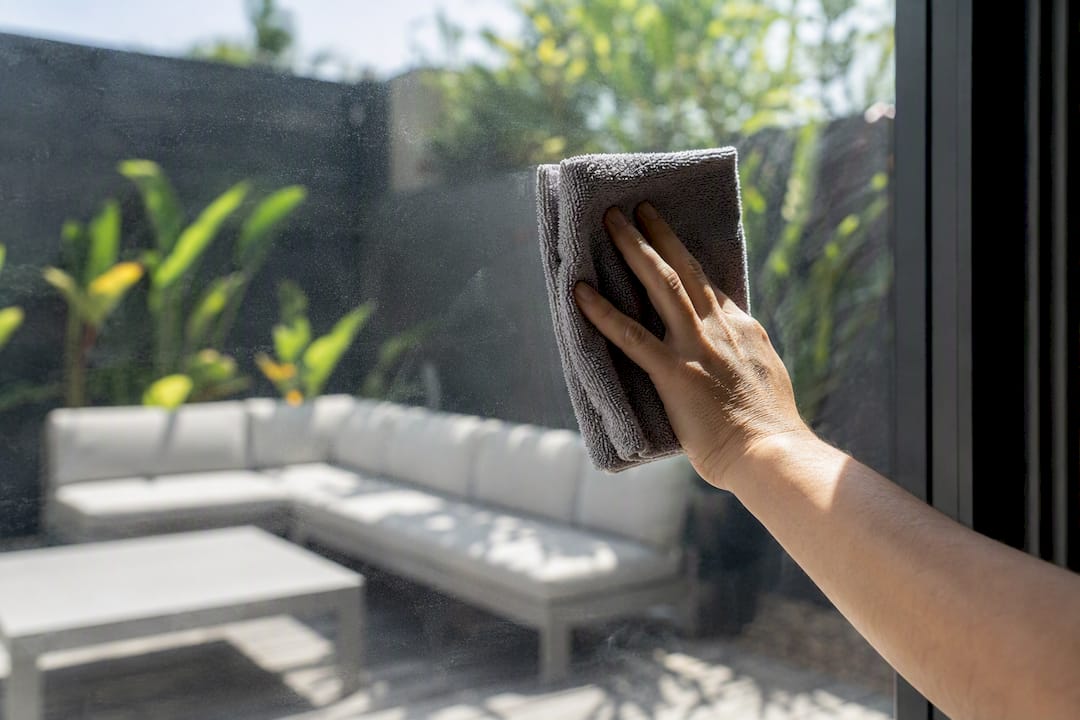
After that window passes, stick to a soft, non-abrasive cloth or a squeegee with a mild, ammonia-free cleaner. Ammonia-based products, common in standard glass cleaners, break down certain film adhesives and coatings over time and will shorten the film’s usable life. A simple mix of water and a few drops of dish soap works fine for routine cleaning.
Avoid abrasive sponges, razor blades, or anything that could scratch the film surface, since scratches can’t be buffed out the way they sometimes can on bare glass. If a residential job used the same crew that handles decorative or frosted film elsewhere in the home, ask them for the specific cleaning product they recommend for that exact film family, since formulations vary between manufacturers.
Done right, a quality film holds its clarity and performance for years with nothing more than occasional gentle cleaning.
What Are the Downsides of Installing Anti-Glare Window Film?
Film isn’t a flawless fix, and any installer who tells you otherwise isn’t being straight with you. The most obvious tradeoff is a visible tint effect. Even light glare-control films slightly change how a window looks from outside and shift the color cast of light entering the room, which some homeowners notice more than they expected.
Reduced natural light is the second real tradeoff. Any film that cuts glare is, by definition, reducing some amount of transmitted light, and in already-dim rooms that can mean relying more on interior lighting during the day. This is where the assessment stage matters: matching film performance to how much light a room actually needs to stay comfortable, rather than defaulting to the darkest available option.
Film also can’t fix everything. Secondary glare bouncing off an outdoor reflective surface, like a metal roof across the street, sometimes needs a combination of film and a physical barrier like an awning. And once film reaches the end of its life, usually a decade or more depending on the product, proper removal is its own job requiring care not to damage the underlying glass.
None of these drawbacks are reasons to skip film. They’re reasons to have an honest conversation with an installer about what tradeoff you’re willing to accept for the glare reduction you need.
A Note From the Field
Most calls we get start the same way: someone can’t see their monitor past 1 p.m. without closing the blinds and losing the view entirely. The fix is rarely complicated once the glass is assessed correctly. What separates a job that holds up for a decade from one that needs a redo in two years is the film quality and the installation technique, not luck. A lifetime installation warranty backed by a real brand like 3M or LLumar means the risk sits with us, not the client, and that’s exactly why comfort complaints and glare callbacks basically disappear after a proper install.
How Twtwindowfilm Handles Anti-Glare Window Film Installation
If the alternatives above all involve managing glare around the problem, Twtwindowfilm exists to remove it at the source, with a lifetime installation warranty backing the work, not just the material. As The Windows Tinting SoCal, the company installs 3M and LLumar anti-glare and solar-control film across homes, offices, retail storefronts, data centers, and places of worship throughout Orange County and Los Angeles County.

Every job starts with a free on-site estimate and glass assessment, the same checklist covered above: glass type, condition, sun exposure, and interior workstation layout, measured pane by pane rather than estimated over the phone. Have your window count, rough dimensions, and the times of day glare hits hardest ready when you call. That alone speeds up the quote. If your building already has film or older tint that needs to come off first, removal services are handled in the same visit when needed.
For anyone dealing with sunlight blowing out monitors in a home office or across a full floor of workstations, the commercial anti-glare window film page is the direct next step, and residential options live on the solar and privacy film page. Request the free estimate and get a pane-by-pane quote instead of a guess.
Frequently Asked Questions
Does anti-glare window film actually stop computer screen glare, or just reduce it? It significantly reduces the specular reflection causing glare rather than eliminating every possible light source. Combined with correct desk placement, most clients see the glare problem resolve completely.
Will window film make my office too dark? Not if it’s matched correctly during the assessment. Ceramic and multi-layer films are designed to cut glare and heat while preserving usable daylight, unlike blinds that block light entirely.
How long does professional installation take? Most homes finish in a single day. Larger commercial buildings with more panes may take several days, with full curing continuing for a few weeks afterward.
Can window film fix glare from outside reflective surfaces, like a parking lot? Film reduces the glare coming through the glass itself, but secondary reflections bouncing off exterior surfaces sometimes need an added measure, like an awning, alongside the film.
Is a cheaper film just as effective as a premium brand like 3M or LLumar? Lower-cost dyed films can reduce some glare, but they typically fade faster, shift color over time, and lack the UV and heat performance of ceramic multi-layer films from established brands.
Sources
Claims in this article draw on published installation standards and manufacturer documentation rather than general opinion. The IWFA Architectural Installation Guidelines set the industry standard for pre-install glass inspection. 3M’s flat glass installation guide details technique differences between thin and thick films, while 3M’s glare-reduction product page covers performance claims for specific film lines. LLumar’s commercial film benefits page supports the comfort and cost-effectiveness claims for larger buildings, and Avery Dennison’s installation and maintenance bulletin explains adhesive curing behavior referenced in the timeline section. Additional context on office-specific tinting practices comes from Tint Advantage’s blog on office window tinting.
- IWFA - Architectural Installation Guidelines (2023)
- 3M — Flat glass installation (installation guide)
- 3M — Reduce glare with window films
- LLumar — Benefits of commercial window film