

Best Bathroom Window Privacy Film: Types, Costs, and Fixes
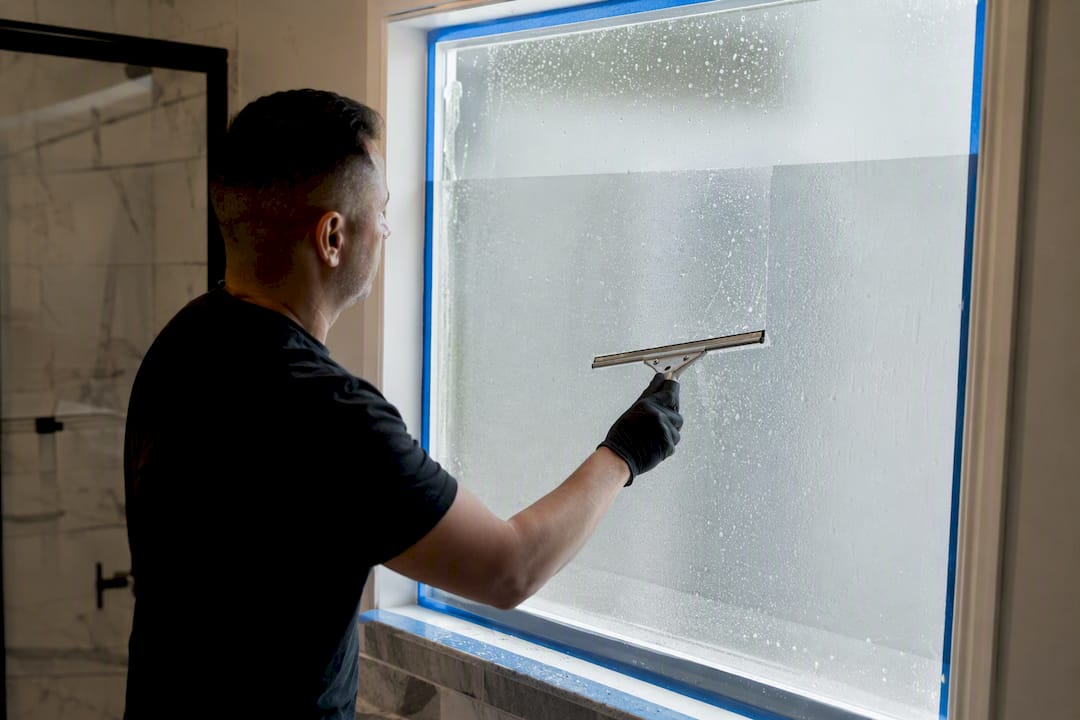
For most bathrooms, the right choice is a frosted or decorative bathroom window privacy film with a moisture-rated pressure-sensitive adhesive. Adhesive film is the long-term fix; static cling works fine for rentals or a quick temporary swap. Frosted and decorative films scatter light instead of blocking it, so they hold up around the clock rather than just during the day, and a proper moisture-rated adhesive keeps holding in a room full of steam long after a cheap static cling starts curling at the corners.
Here’s how to move on this today:
- Measure first. Get the exact glass width and height (not the frame) for every window you’re covering.
- Match the film to the use case. Adhesive frosted film for a permanent bathroom; static cling for an apartment you’ll leave.
- Pick your path. Buy a moisture-rated film sheet and install it yourself, or request a free on-site estimate from a professional installer.
Key Takeaways
Frosted or decorative moisture-rated adhesive film delivers reliable 24/7 bathroom privacy without sacrificing daylight, and it consistently outlasts static cling in humid conditions.
| Point | Details |
|---|---|
| Choose the right film type | Frosted or heavily patterned decorative film gives true day-and-night privacy; reflective film fails after dark. |
| Match VLT to the window | Use heavy frost (~30–40% VLT) for street-facing or shower windows, light frost (~90% VLT) for upper floors. |
| Pick adhesion by timeline | Static cling suits rentals and temporary needs; pressure-sensitive adhesive suits long-term, humid-room use. |
| Budget realistically | Professional installs run roughly $9 to $22 per square foot and take 30 to 60 minutes per window. |
| Consider a warranty-backed pro install | Twtwindowfilm offers a lifetime warranty and 3M/LLumar materials for bathrooms where moisture tests adhesive daily. |
A Note From Jake on Fixing the Mistakes I See Most
The two errors I run into most: skipping the edge gap and rushing the cure time before that first hot shower. A warranty-backed, moisture-rated install skips both problems and skips the repeat callback, too.
Table of Contents
- What Kind of Bathroom Window Privacy Film Works Best?
- Static Cling or Adhesive: Which Holds Up in a Steamy Bathroom?
- How Much Privacy Do You Actually Need?
- Should You Install It Yourself or Hire a Pro?
- Step-by-Step: Installing and Maintaining Bathroom Window Film
- What Should You Budget for Film, and How Long Should It Last?
- Static Cling vs. Adhesive Film vs. Reflective Film: Quick Trade-Offs
- When Hiring a Pro Makes Sense for Bathroom Window Film
- What Should You Ask a Professional Before Hiring Them?
- How Do You Choose the Right Installer?
- Book a Free Estimate for Your Bathroom Windows
- Frequently Asked Questions
- Sources
What Kind of Bathroom Window Privacy Film Works Best?
Four film types cover almost every bathroom scenario, and they don’t perform the same way once the lights go on at night.
- Frosted film. This is the etched-glass look most people picture when they think of bathroom window film. It diffuses light evenly in every direction, so it reads as private day and night, in every lighting condition.
- Decorative or patterned film. Rain glass, linen textures, geometric designs. These add visual interest but privacy depends entirely on pattern density. A lightly patterned clear film can look attractive while providing little actual privacy unless the manufacturer backs it with a real opacity spec.
- Gradient film. Frosted or tinted on the bottom half, clear on top. Good for a window over a tub where you want privacy at eye level but still want a view of the sky.
- One-way or reflective film. Mirrors the outside view back at anyone looking in, during daylight. It fails after dark. Once your bathroom light is on and it’s dark outside, reflective film turns your window into a lit display case rather than a privacy barrier.
That last point is worth sitting with, because it’s the single most common mistake homeowners make when shopping for this category. One-way films are engineered for office glass and street-facing storefronts, not for a room where you’re standing under bright light every evening.
Frosted films typically transmit anywhere from 30% to 90% of visible light depending on how heavy the frost is, and that swing determines both how bright the room feels and how private it is. Decorative and frosted film both scatter light in a way one-way film simply doesn’t, which is why installer guides consistently recommend them for round-the-clock bathroom privacy. If you want design flair and daytime brightness with true 24/7 coverage, frosted or heavily patterned decorative film is the category to shop in.
Static Cling or Adhesive: Which Holds Up in a Steamy Bathroom?
Bathrooms punish window film in a way no other room in the house does. Repeated humidity cycles, hot water condensation, and cleaning sprays all work against whatever is stuck to that glass, so the adhesion method matters more here than almost anywhere else in your home.
Static cling film uses water tension and static charge to grip the glass rather than a true adhesive.
- Removable and reusable, which makes it the obvious pick for renters or anyone testing a look before committing.
- Installs with nothing more than soapy water and a squeegee, and most retail kits are genuinely easy for a first-timer to apply.
- The weak point: over months of steam cycles, edges can lift or bubble, especially near the corners where water tends to pool on the sill.
Pressure-sensitive adhesive film bonds to the glass with a real adhesive layer, often rated specifically for wet-room use.
- Once installed correctly, it stays flat and sealed against moisture wicking underneath the edges.
- It’s genuinely difficult to remove without professional tools, which is exactly why it’s the better call for a home you plan to stay in.
- Bathroom-rated versions are sold specifically as moisture-resistant window film by major retailers, distinct from the general-purpose film sold for living rooms and offices.
Retail static-cling kits often market strong privacy and UV-blocking numbers, and customer reviews back up that they install easily. The complaints that show up in those same reviews tend to center on lifting edges after repeated exposure to steam, not on day-one performance.
Installers reduce that failure risk with two techniques DIYers often skip: leaving a small gap (roughly a sixteenth of an inch) around the frame edge so condensation can’t wick under the film, and giving adhesive film a full curing period before the first hot shower.
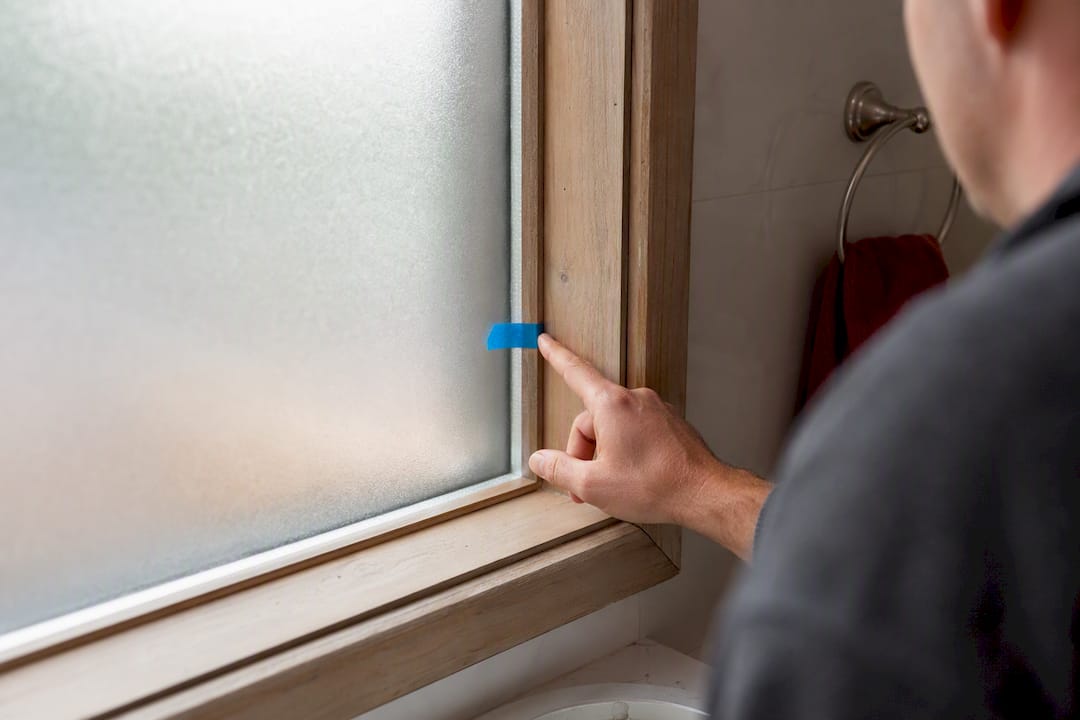
Pro Tip: If you’re installing adhesive film yourself, run a strip of painter’s tape around the window frame first. It gives you a visible boundary for that edge gap so you don’t accidentally seal the film flush to the frame, which is the number one cause of moisture creeping in underneath.
How Much Privacy Do You Actually Need?
Not every bathroom window needs the same opacity, and matching the frost level to the situation keeps you from overpaying for darkness you don’t need or underbuying privacy you do.
| VLT band | Typical use case | What it feels like |
|---|---|---|
| Light frost (~90% VLT) | Upper-floor windows, no direct sightline from neighbors | Barely visible film, room stays bright |
| Medium frost (~40% VLT) | Side-facing windows, partial sightlines, shared driveways | Soft, milky diffusion, still plenty of daylight |
| Heavy frost has a lower visible light transmission (VLT) level | Ground-floor windows, shower windows, street-facing glass | Strong privacy, room reads as fully obscured |
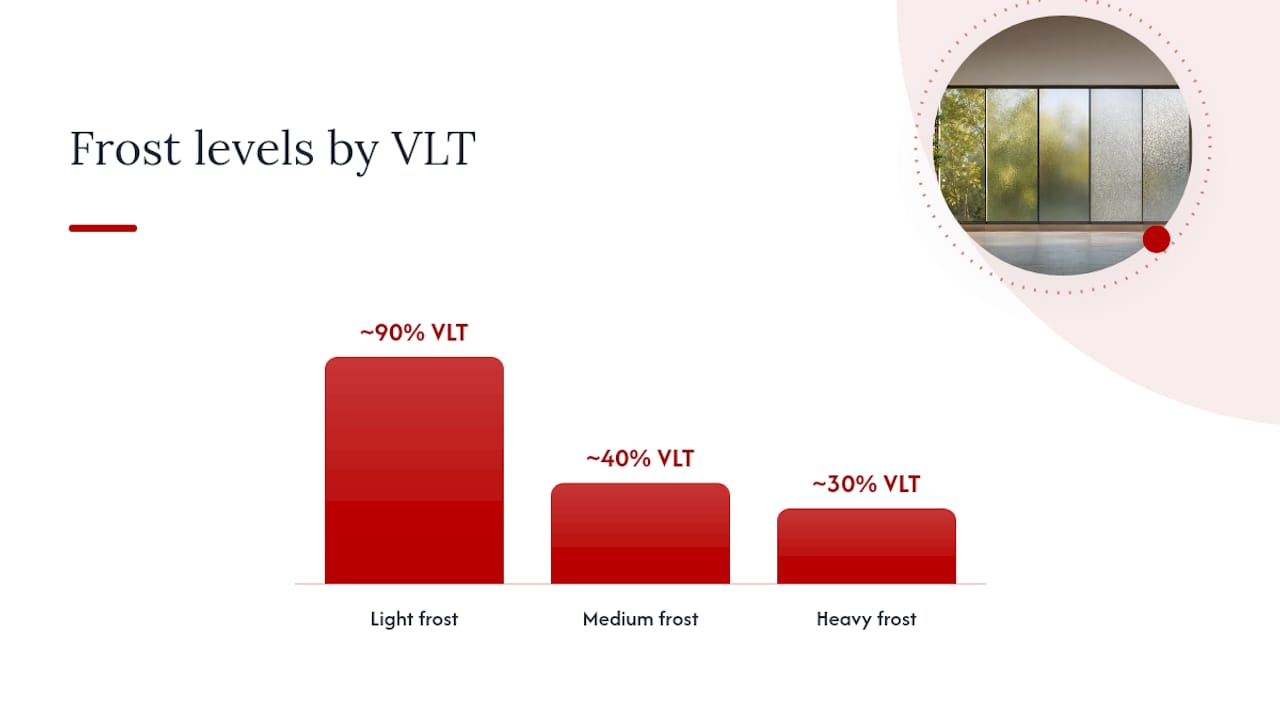
Light frost can run as high as 90% VLT while still giving moderate visual coverage, and heavy frost drops down near 30% VLT for full privacy. Shower windows and any ground-floor glass facing a sidewalk or a neighbor’s yard call for that heavy end of the range, since that’s the sightline someone would actually use. Upper-floor bathroom windows, where the only realistic view is sky or rooftops, usually do fine with a lighter frost that keeps the room brighter.
Here’s the part people underestimate: a diffusing film at 40% VLT doesn’t feel as dark as a solid tinted film at 40% VLT. Because frosted film scatters light rather than absorbing it, the room reads brighter than the raw percentage suggests. That’s part of why real users on forums like Houzz report occasional shadow or silhouette issues at night even with decent film, usually tied to installation gaps or unusually bright interior lighting rather than the film itself.
Should You Install It Yourself or Hire a Pro?
The honest answer depends on how much you value your Saturday and how much you care about a warranty if something goes wrong.
- Skill and window complexity. A single flat rectangular window is a reasonable DIY project. Multiple panes, obstructed corners near grout lines, or oddly shaped bathroom windows raise the difficulty fast.
- Common DIY mistakes. Trapped air bubbles from rushing the squeegee pass, skipping the edge gap entirely, and cutting the film short around trim or grout lines are the three mistakes that show up most often in amateur installs.
- What a professional brings. Precise factory-style cuts around obstructions, moisture-rated adhesive films that aren’t always stocked at retail, and warranty coverage if the film delaminates or bubbles down the line.
- The time and cost tradeoff. A DIY install can eat an hour or more per window once you count measuring, cutting, and redoing a bubbled attempt. Professional installs typically take under an hour per standard bathroom window, done right the first time.
If you’re covering one simple window in a rental and you’re comfortable removing it later, DIY static cling is a fine weekend project. If you’re renovating a forever home, a pro install protects the investment.
Step-by-Step: Installing and Maintaining Bathroom Window Film
- Measure the glass, not the frame. Record width and height at the narrowest points, since older frames are rarely perfectly square.
- Clean the glass thoroughly. Use a mild soap solution, not glass cleaner with ammonia, and dry the edges completely before applying film.
- Cut with margin. Leave roughly a quarter inch of excess on all sides, then trim tight after the film is wet-applied and squeegeed flat.
- Leave the edge gap. Trim back that final margin to leave a small, consistent gap around the frame so condensation has somewhere to escape.
- Cure before showering. Give adhesive film at least 24 to 48 hours before running a hot shower nearby, so the bond sets before it faces steam.
- Clean gently going forward. A soft cloth with mild soap and water is safe on nearly every film; skip ammonia-based cleaners and abrasive scrubbers, which cloud or scratch the surface over time.
- Watch for failure signs. Bubbling, yellowing at the edges, or corners that lift and won’t reseal mean it’s time to remove and replace, not patch.
Pro Tip: Keep the bathroom exhaust fan running for the first few showers after installing new film. Cutting down ambient moisture while the adhesive finishes curing meaningfully lowers your odds of an early edge lift.
What Should You Budget for Film, and How Long Should It Last?
DIY film sheets are inexpensive, but the price gap between a cheap static cling and a real moisture-rated adhesive film tells you most of what you need to know about how long each will last.
- DIY static-cling sheets run cheap and are widely available on marketplaces like Amazon, often with UV-blocking claims and soapy-water install instructions built into the packaging.
- Professional installation of frosted or decorative film typically runs $9 to $22 per square foot, which covers materials, precise cutting, and labor.
- Lifespan gap is real. A quality adhesive film installed correctly in a bathroom can last many years without lifting; a budget static cling in a steamy shower window often shows edge issues well before that.
- Warranty terms matter more than price. Ask specifically whether coverage includes delamination and adhesive failure, not just manufacturing defects, before you buy or book an install.
Static Cling vs. Adhesive Film vs. Reflective Film: Quick Trade-Offs
- Static cling: Cheap, removable, ideal for rentals. Downside: prone to edge lifting and bubbling after months of steam exposure.
- Adhesive frosted or decorative film: Longer-lasting, moisture-rated options available, holds up to daily humidity cycles. Downside: harder to remove and typically needs professional-grade cutting for a clean fit.
- Reflective or one-way film: Strong daytime privacy and glare reduction. Downside: loses all privacy once interior lights are on after dark, making it a poor fit for most bathrooms.
When Hiring a Pro Makes Sense for Bathroom Window Film
If your bathroom window is oddly shaped, faces a busy sidewalk, or you simply don’t want to redo a bubbled DIY job in six months, that’s the moment to call a professional. Twtwindowfilm has installed residential and commercial window film throughout Southern California since 2008, and that track record shows up most in the details a DIY install tends to miss.
- A lifetime warranty backs every installation, which matters most in a room where moisture is constantly testing the adhesive bond.
- Partnerships with 3M and LLumar give access to moisture-rated film families that aren’t always sitting on a retail shelf.
- A free on-site estimate lets a technician measure your exact glass, flag any tricky obstructions near grout or trim, and confirm which frost level fits your privacy needs before any film gets cut.
A warranty-backed install isn’t about the first six months looking good. It’s about the film still sitting flat and sealed three years in, after thousands of hot showers have tried to work it loose.
What Should You Ask a Professional Before Hiring Them?
A few direct questions upfront save you from a bad surprise later.
Does the film you’re proposing carry a moisture rating for bathroom use? Not every decorative film in an installer’s catalog is rated for wet rooms, so confirm this specifically rather than assuming.
What does the warranty actually cover? Ask by name whether delamination, edge lifting, and adhesive failure are included, not just the film material itself.
How long will the install take, and what’s the curing window before I can shower normally? A straightforward bathroom window typically takes under an hour to install, but the adhesive curing period matters more for your daily routine.
Can I see a sample of the exact frost or pattern level before it’s cut? Opacity varies enough between light and heavy frost that a physical sample avoids any surprise once it’s on the glass.
What happens if it fails within the warranty period? A reputable installer will spell out a straightforward reinstall or repair process, not a vague promise.
Do you carry insurance and how long have you been installing residential film? Longevity in the business, paired with a clear answer on insurance, tells you a lot about whether callbacks get handled properly.
Getting clear answers to these six questions before any film gets cut is the difference between a smooth install and a frustrating one.
How Do You Choose the Right Installer?
Credentials matter less in this trade than a documented track record and a warranty that actually holds up. Look for three things specifically: years of operating history, a warranty that names delamination and adhesive failure rather than vague “satisfaction guaranteed” language, and a body of reviews that mentions bathroom or wet-room installs specifically, not just office glass or storefronts.
Ask to see examples of past bathroom work if the installer has photos, since bathroom windows often involve tighter cuts around grout lines and trim than a standard living room window. A company that’s been operating long enough to have a lifetime warranty policy in place, rather than a shorter promotional guarantee, is generally a stronger bet for a room where humidity keeps testing the adhesive year after year. Check whether the installer works with recognized film brands rather than unbranded material, since manufacturer-backed film typically comes with its own warranty layered on top of the installer’s guarantee.
If a bathroom window also gets significant afternoon sun, ask whether a ceramic window film option makes sense alongside the privacy layer, since ceramic blends can cut heat and glare without sacrificing the frosted look.
Book a Free Estimate for Your Bathroom Windows
If you’ve read this far and you’re leaning toward a professional install rather than fighting with a squeegee and a static-cling sheet, that instinct is usually the right one for a room this exposed to moisture. Twtwindowfilm has been solving exactly this problem across Southern California since 2008, pairing 3M and LLumar materials with a lifetime warranty that covers the adhesive failures cheap DIY film is most prone to.

Requesting an estimate costs nothing and takes just a few minutes. A technician measures your exact glass, walks you through frost-level samples so you can see the opacity in person before committing, and gives you a straightforward quote for the job, including the timeline. Most standard bathroom windows are done in under an hour once the crew is on-site. If you’re in Orange County or Los Angeles County and you’re ready to stop worrying about bubbling edges or a static cling that’s already curling at the corners, book a free on-site estimate for your residential windows and get it done right the first time.
Frequently Asked Questions
Does bathroom window privacy film work at night with the lights on? Frosted and decorative films do, because they diffuse light rather than reflect it. One-way reflective films do not; they lose all privacy once your interior light is brighter than the outside light.
What’s the best VLT for a shower window?
Can I install bathroom window film myself? Yes, for a simple rectangular window. Static cling is the easiest DIY option since it needs only soapy water and a squeegee, though adhesive film is more durable long-term if you’re comfortable with a careful cut and an edge gap.
How long does bathroom window film last? Quality moisture-rated adhesive film can last years without lifting when installed correctly; budget static cling in a steamy bathroom often shows wear sooner.
Will privacy film affect my ability to open the window? No, film applies to the glass surface only and does not interfere with the window’s hardware or operation.
Sources
- Privacy film for bathroom windows: types, costs, and what to know before you buy - Ecovision Window Films
- Tint bathroom windows for privacy without losing light? - Extreme Window Film
- Walmart
- Lowes